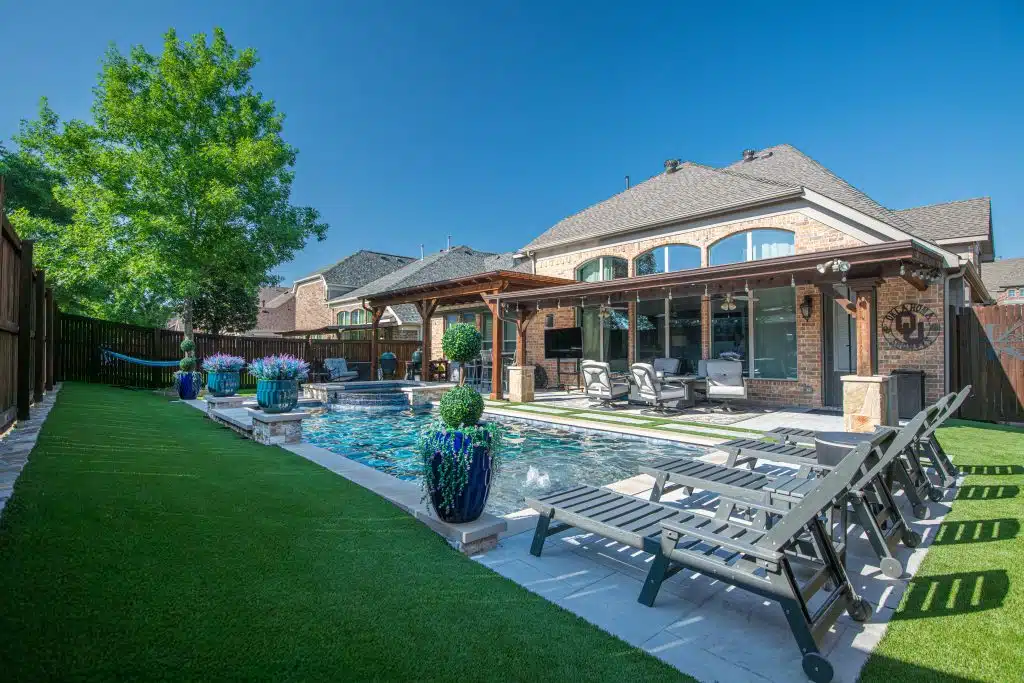
If you’ve driven through a Treasure Valley neighborhood lately, you’ve probably noticed a few yards that look suspiciously green even during August’s scorching heat or February’s frozen mornings. Artificial turf is having a moment in Idaho, and it’s not hard to understand why. Water bills are climbing, drought restrictions tighten every summer, and nobody wants to spend their weekends fighting a losing battle against patchy, heat-stressed grass.
But before you pull the trigger on a synthetic lawn, there are some things worth knowing about the product itself, about Idaho’s specific climate conditions, and about how to make sure your investment actually pays off. At Idaho Organic Solutions, we’ve helped hundreds of Treasure Valley homeowners navigate this decision. Here’s what we tell them.
Why Idaho Homeowners Are Considering Artificial Turf
The Treasure Valley is classified as a semi-arid high desert. That means hot, dry summers, cold winters, alkaline soil, and limited water resources. For natural grass, this is a challenging environment. Kentucky bluegrass one of the most common lawn types here needs consistent irrigation to survive summer heat, and even with regular watering, it can brown out, thin out, or struggle in shaded areas.
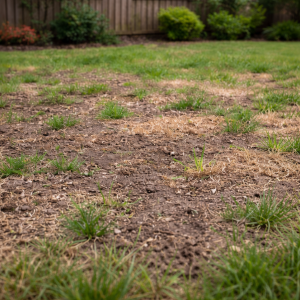
Our lawn care professionals see it constantly: homeowners who are exhausted from reseeding, over-watering, and dealing with bare patches that just won’t fill in. For some properties, artificial turf genuinely makes sense. For others, it’s the wrong solution and knowing the difference before you invest several thousand dollars matters.
The Real Benefits of Artificial Turf in Idaho’s Climate
Water Savings Are Significant
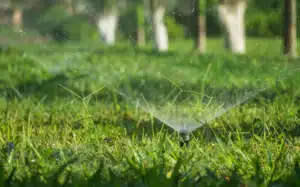
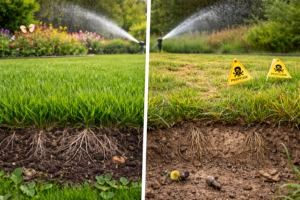
The average Idaho lawn requires somewhere between 1 and 2 inches of water per week during the summer growing season. On a 2,000-square-foot lawn, that adds up quickly both in water usage and on your utility bill. Artificial turf eliminates irrigation needs almost entirely. You’ll still want to rinse it occasionally to remove dust or pet waste, but the volume of water used is a fraction of what natural grass demands.
This makes artificial turf particularly appealing for properties in Nampa, Meridian, and Caldwell, where summer water restrictions can leave natural lawns struggling.
No Mowing, No Fertilizing, No Seasonal Treatments
Natural grass requires a full seasonal care cycle spring aeration, summer fertilizing, regular weed control, and fall preparation. Artificial turf skips all of that. Once it’s installed, the maintenance load drops dramatically. That’s a real quality-of-life improvement for busy families and property owners who don’t want to spend their weekends doing lawn work.
It Handles Problem Areas
Some spots just don’t grow grass well heavily shaded corners under mature trees, high-traffic pathways where foot traffic compacts the soil, or slopes that are difficult to irrigate evenly. Artificial turf can solve these problems in ways that no amount of reseeding or soil amendment will fully fix.
If you’re dealing with tree care challenges alongside turf issues for instance, heavy tree canopy killing grass underneath synthetic turf can be a practical long-term fix for those shaded zones.
Year-Round Appearance
Idaho winters can be rough on natural grass. Frost damage, dog urine spots, and heavy foot traffic through muddy spring conditions all take a toll. Artificial turf maintains its appearance year-round and holds up better to freeze-thaw cycles than many homeowners expect.
What You Should Know Before Installing Artificial Turf
Heat Retention Is a Real Consideration
High-quality artificial turf has improved significantly over the past decade, but it still absorbs and retains heat in ways that natural grass doesn’t. On a 95-degree Idaho summer afternoon, synthetic turf surface temperatures can reach significantly higher than the air temperature. If you have small children or pets who spend a lot of time directly on the lawn, this is something to factor into your decision.
Proper installation including the right infill material can help mitigate heat retention. This is one reason why working with an experienced installer matters.
Drainage Matters in Idaho
The Treasure Valley gets occasional heavy rain events, particularly in spring. A well-installed artificial turf system should include proper drainage infrastructure underneath. Poor drainage leads to pooling water, odor issues if you have pets, and potential damage to the turf base over time.
If your property already has drainage challenges, addressing those first through landscape drainage solutions is an important step before any turf installation.
It’s a Long-Term Investment
Quality artificial turf for a residential application typically runs between $8 and $20 per square foot installed, depending on the turf grade and site preparation required. For a 1,500-square-foot lawn, that’s a meaningful investment. The good news is that well-maintained synthetic turf can last 15 to 20 years, and the water savings alone can offset much of the cost over time in Idaho’s climate.
It’s Not Right for Every Property
If you’re in a neighborhood with an HOA, check the rules before proceeding; some HOAs in the Treasure Valley restrict or regulate synthetic turf installations. Also consider whether you want any natural grass areas remaining; many homeowners opt for a hybrid approach, keeping natural grass in some areas and installing turf in others. Our hardscaping and landscaping team can help you design a layout that balances both.
Artificial Turf vs. Natural Grass: An Honest Comparison
For Idaho homeowners, neither option is universally superior. Here’s a straightforward breakdown:
Choose Artificial Turf If:
- Water conservation is a top priority
- Your property has problem areas where grass won’t grow
- You want to eliminate regular lawn maintenance
- You have pets that damage natural grass
- You need a durable surface for high-traffic recreational areas
Stick With Natural Grass If:
- You prefer the feel and environmental benefits of living turf
- Your lawn is in good condition and responds well to your local climate
- You want to support soil health and local ecosystem activity
- You’re concerned about heat retention for young children or pets
- You’re interested in an organic lawn care program to maintain a healthy, sustainable yard
The honest truth is that many Treasure Valley homeowners who call us about artificial turf actually have lawns that can be rehabilitated with the right care. Before assuming synthetic turf is the only solution, it’s worth having a professional assess your current lawn’s condition.
The Installation Process: What to Expect
If you decide artificial turf is the right choice, here’s a general overview of how a quality installation works:
- Site assessment: Measuring the area, evaluating drainage, and reviewing the existing soil and base conditions.
- Removal of existing grass: The natural lawn and topsoil are removed to the appropriate depth.
- Base preparation: A compacted aggregate base is installed to provide stability and drainage.
- Turf installation: The synthetic turf is cut, fitted, seamed if necessary, and secured at the edges.
- Infill application: Infill material (typically crumb rubber, silica sand, or organic options) is applied to support the turf fibers and add weight.
- Final inspection: Seams, edges, and drainage are verified before the job is considered complete.
A professional installer will also connect or disconnect your existing sprinkler system as part of the process, since irrigation to the turf area is no longer needed. If you’re keeping some natural grass areas, your irrigation zones may need adjustment.
Serving Homeowners Across the Treasure Valley
Idaho Organic Solutions provides artificial turf installation and full-service lawn and landscaping care throughout the Treasure Valley. Whether you’re in Nampa, Meridian, Eagle, Boise, Caldwell, Kuna, Star, or Middleton, our team can assess your property and help you determine whether artificial turf, a natural lawn program, or a combination of both makes the most sense for your specific situation.
Frequently Asked Questions
Does artificial turf hold up to Idaho winters?
Yes. Modern artificial turf is designed to handle freeze-thaw cycles without cracking or deteriorating. Snow can be removed with a plastic shovel (avoid metal blades that can damage fibers), and the turf will resume its normal appearance once temperatures warm. Cold weather actually helps reduce the heat retention issue that can be a concern in summer.
Is artificial turf safe for pets?
Quality artificial turf is generally considered pet-safe. The main considerations are heat (turf surfaces get hot in direct sun, which can be uncomfortable for paws) and sanitation. Pet waste should be removed promptly and the surface rinsed regularly to prevent odor buildup. Look for turf products with antimicrobial infill options if pets are a primary concern.
Will artificial turf affect my property’s drainage?
A properly installed system will actually have better drainage than compacted natural soil. The permeable backing and compacted aggregate base allow water to drain through rather than pool. However, if your property already has drainage issues, those should be evaluated and addressed as part of the installation process.
How do I maintain artificial turf?
A: Maintenance is minimal compared to natural grass. Brush the turf fibers periodically with a stiff broom to keep them upright, remove debris like leaves with a leaf blower or rake, and rinse the surface occasionally more frequently if you have pets. Inspect seams and edges seasonally to make sure nothing has shifted or lifted. Beyond that, there’s very little ongoing work required.
Can I install artificial turf myself, or do I need a professional?
While DIY artificial turf kits exist, professional installation is strongly recommended for most Idaho homeowners. Proper base preparation and drainage are the most critical factors in how long your turf lasts and how well it performs and these are the steps most likely to go wrong in a DIY installation. Poor drainage in particular can lead to odor problems, turf base failure, and costly repairs down the road.
Ready to Explore Your Options? Let’s Talk.
Whether you’re seriously considering artificial turf or just starting to think it through, the best first step is a professional assessment of your property. The team at Idaho Organic Solutions has been helping Treasure Valley homeowners make smart lawn decisions for over 20 years. We’ll give you an honest evaluation of your current lawn’s condition, walk you through whether synthetic turf makes sense for your specific situation, and provide a free, no-obligation estimate if you decide to move forward.
Call us today at 208-884-8986 or request your free estimate online, we serve homeowners throughout Nampa, Meridian, Boise, Caldwell, Eagle, Kuna, Star, and Middleton.