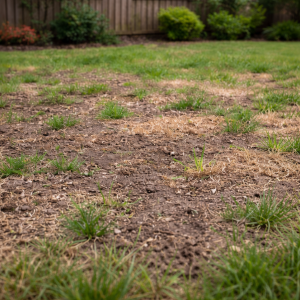
The snow finally melts, you walk out to check on the lawn, and the grass is crisscrossed with strange little trails. Or maybe you keep finding raised ridges that squish underfoot, or fresh mounds of soil appearing overnight. Something has been living under your Treasure Valley lawn all winter, and now you can see the evidence.
The good news is that the damage almost always comes down to one of three culprits: voles, moles, or gophers. Each one leaves a different calling card, each one is after something different, and each one is stopped a different way. Get the identification right and the fix becomes obvious. Get it wrong and you can spend a whole season fighting the wrong animal. Here is how to tell exactly what you are dealing with, and how to deal with it without spreading poison across a yard where your kids and pets play.
First, figure out which one you actually have
Almost every homeowner who calls us about tunneling damage starts by guessing the wrong animal, and it is completely understandable. The three pests look similar in the damage they leave until you know what to look for. Here is the quick way to tell them apart.
| Clue | Voles | Moles | Gophers |
| The damage | Narrow surface trails of clipped, matted grass at ground level, often with small open holes | Raised ridges you can feel underfoot, plus round volcano shaped mounds | Fan or crescent shaped mounds of loose soil with a plugged hole off to one side |
| What they eat | Grass, roots, bulbs, and the bark of young trees and shrubs | Insects, grubs and earthworms, not your plants | Roots and whole plants from below |
| Where the tunnels are | Right at the surface, like little runways through the lawn | Just under the surface, pushing the soil up into ridges | Deeper underground, out of sight |
| When you notice it | Right after snow melts in late winter and early spring | Spring and fall when the soil is soft | Spring through fall as mounds appear |
If your lawn has shallow, winding surface trails of chewed down grass, especially ones that appeared over winter, you are almost certainly looking at voles. They are the most common of the three across the Treasure Valley, and they are the focus of most of this guide.
Why voles love a Treasure Valley winter
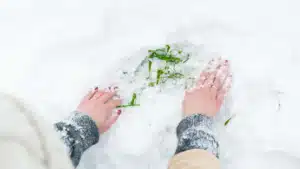
Voles, sometimes called meadow mice, are small rodents that stay active all winter long. The reason you often do not see the damage until spring is the snow itself. A blanket of snow gives voles a safe, hidden layer to travel and feed under, protected from hawks and owls. They tunnel along the ground surface, eating grass down to the crown and creating those signature runways, and when the snow melts the whole map of their winter is suddenly laid bare.
They do not stop at grass, either. Voles will gnaw the bark around the base of young trees and shrubs, which is a bigger problem than a few lawn trails. If they chew all the way around a trunk, they can girdle and kill a young tree. Anything that gives them cover close to the ground makes your yard more attractive: tall grass along fences, thick mulch pushed up against trunks, leaf piles, dense ground cover, and wood or debris left sitting on the lawn.
How to get rid of voles the organic, kid and pet safe way
The instinct is to reach for poison bait, and we understand why. But rodenticide is exactly the kind of thing we built this company to avoid. Bait does not stay where you put it, a poisoned vole becomes a poisoned meal for a curious dog or a neighborhood cat or a hawk, and it does nothing to stop the next generation from moving in. There is a better sequence, and it actually lasts.
Take away their cover. This is the single most effective thing you can do, because voles will not settle where they feel exposed. Mow the lawn a little shorter heading into late fall so there is no tall grass to hide in over winter. Pull mulch, leaves and ground cover back away from tree trunks, foundations and fence lines. Clear away debris, wood piles and anything sitting on the grass. Keep a tidy, bare border around young trees. When the hiding places disappear, most of the population moves on.
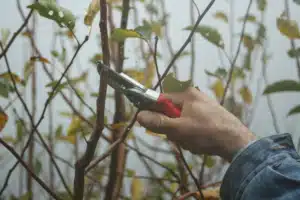
Protect your trees and shrubs. Wrap the base of young or thin barked trees with a cylinder of hardware cloth, buried an inch or two into the soil and standing higher than the expected snow line. This is cheap, it is permanent, and it stops the most expensive kind of vole damage before it happens.
Let the predators help. Hawks, owls and even the family cat are a vole’s natural check. Keeping grass short and cover minimal is really about handing your lawn back to those predators, who do the work for free.
Trap, do not poison. For an active infestation, simple snap traps set right in the runways, placed under a cover so pets and children cannot reach them, are effective and keep control in your hands rather than in a poison you cannot see. If the problem is widespread or keeps returning, this is where a professional, organic focused approach pays off, because getting placement and timing right across a whole yard is a different job than setting one trap.
What if it turns out to be a mole or a gopher
If your identification pointed somewhere else, the plan changes.
Moles are not eating your grass at all. They are hunting grubs and earthworms, and the ridges and mounds are just the byproduct of that hunt. That means the real lever is often what is in the soil. Reducing a heavy grub population can make a lawn far less appealing to moles, which is one reason grub control and mole trouble tend to go hand in hand. Trapping works for moles too, but the food source matters.
Gophers are the most destructive of the three because they pull entire plants down from below and their tunnel systems are extensive. Those crescent shaped mounds are the giveaway. Gophers are also the hardest to control as a do it yourself project, and this is usually the point where it is worth bringing in a professional rather than losing plants one by one.
Whichever animal you are facing, our pest control team can identify it correctly on a walkthrough and put together a plan that fits an organic, family safe yard.
How to repair the damage they left behind
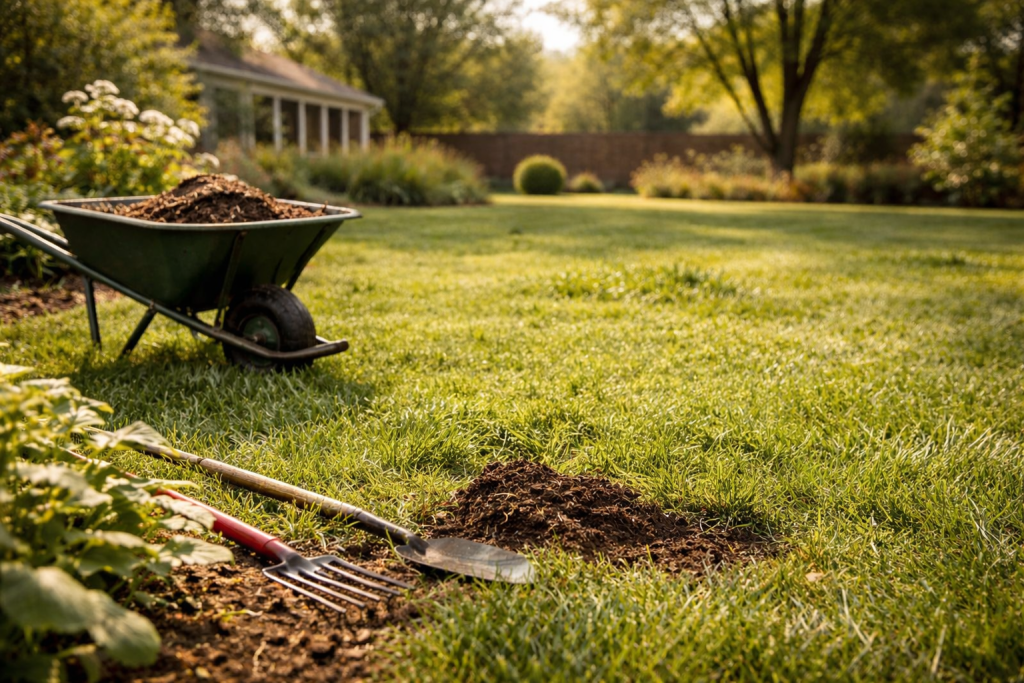
Once the animal is handled, the lawn still needs to recover, and this is the step people skip. Those dead runways and bare patches will not fill in on their own quickly, especially in our clay heavy soil.
Start by raking out the matted, dead grass and any loose soil the tunneling pushed up, then level the low spots. Bare and thinned areas then need new seed worked into good soil contact, and early spring is a natural window to do exactly that while you are already cleaning up from winter. This is where overseeding turns a scarred lawn back into a thick one. Our overseeding and lawn renovation service is built for precisely this kind of recovery, and a thick, dense lawn is also far less inviting to the next round of pests.
Frequently asked questions
What is making shallow trails all over my lawn?
Winding surface trails of clipped, matted grass, especially ones that show up when snow melts, are almost always voles. They travel and feed at ground level under the cover of snow all winter.
How do I tell a vole from a mole or a gopher?
Voles leave surface runways and eat plants. Moles leave raised ridges and volcano shaped mounds and eat grubs and worms, not your grass. Gophers leave fan or crescent shaped mounds with a plugged hole and pull plants down from below.
How do I get rid of voles without poison?
Remove their cover by mowing shorter in fall and clearing mulch, leaves and debris away from trunks and fences, protect young trees with hardware cloth, encourage natural predators, and use covered snap traps in the runways. This organic approach is safer around kids and pets and lasts longer than bait.
Do voles come back every winter?
They can, especially where snow and thick ground cover give them shelter. The durable fix is habitat control. A tidy, short, low cover yard heading into winter is far less likely to host them year after year.
Will voles kill my trees?
They can. Voles gnaw bark around the base of young trees and shrubs, and if they ring the trunk completely they can girdle and kill it. Protect trunks with hardware cloth guards before winter.
How do I fix the trails and bare patches?
Rake out the dead grass, level the surface, and overseed the thinned areas for good seed to soil contact. Early spring is an ideal time, and a thicker lawn resists future damage.
Let us help you take your Treasure Valley lawn back
Tunneling pests are frustrating, but they are very beatable, and you do not have to choose between a healthy lawn and a yard that is safe for your family. That is the whole idea behind how we work.
Organic Solutions has been caring for Treasure Valley lawns for over twenty years, from Nampa and Meridian to Boise, Eagle, Kuna and beyond, using kid and pet safe methods that fix the cause instead of masking it. If voles, moles or gophers have gotten the better of your yard, reach out for a free estimate and we will identify what you are dealing with, clear it out the organic way, and help your lawn grow back thick.