Pruning is one of the most valuable things you can do for a tree, and one of the easiest to get wrong. Cut at the wrong time and you can invite disease or lose next year’s flowers. Cut the wrong way and you can leave a wound that never heals properly. But get the timing and the technique right, and pruning makes a tree healthier, safer, stronger and better shaped for decades. Here is a straight guide to when to prune Treasure Valley trees, what to tackle now, and the mistakes to avoid.
The best time to prune most trees is late winter to early spring, while the tree is dormant and leafless, typically here in the valley from roughly January into March before buds break. Dormant pruning lets you see the structure clearly, causes the least stress, and means the tree heals fast as it wakes up. The exceptions are spring-flowering trees, which you prune right after they bloom, and dead or hazardous branches, which you can and should remove at any time of year.
Here is the full picture, season by season, plus how to make clean cuts that help rather than harm.
Why does timing matter so much?
Pruning is a controlled wound, and when you make that wound decides how well the tree handles it.
In late winter, the tree is dormant, its energy stored safely in the roots, and it is not actively growing or fighting the demands of leaves and fruit. A cut made then causes minimal stress, and because spring growth follows soon after, the tree seals the wound quickly once it wakes. Just as importantly, a bare, leafless tree lets you actually see what you are doing, so crossing branches, weak forks and dead wood are obvious rather than hidden under foliage. Pruning in late winter also sits ahead of many insects and fungal diseases becoming active, so fresh cuts are less likely to be colonised. For all these reasons, dormant pruning is the arborist’s default for most trees.
A season-by-season guide
Different jobs suit different times of year, so here is the quick reference.
| Season | Best for | Notes |
| Late winter to early spring (dormant) | Most structural pruning, shade trees, fruit trees, shaping | The ideal window. Structure is visible, stress is lowest, healing is fast |
| After flowering (late spring) | Spring-flowering trees like lilac, flowering plum, ornamental cherry | Prune just after bloom so you do not cut off next year’s flower buds |
| Summer | Light shaping, slowing growth, removing water sprouts | Useful for size control, but avoid heavy cuts in heat |
| Fall | Little to nothing, except hazards | Avoid routine fall pruning, as cuts heal slowly and some fungal spores are active |
| Any time | Dead, damaged, diseased or hazardous branches | Safety and disease removal does not wait for a season |
The one to underline is fall. It is tempting to tidy trees during the autumn cleanup, but fall is generally the worst time for routine pruning, because wounds heal slowly heading into dormancy and some wood-decay fungi are releasing spores. Save the real pruning for late winter.
What should you prune, and what should you leave?
Good pruning is about removing the right wood, not simply cutting a tree back. Prioritise in this order.
First, the three Ds, dead, damaged and diseased branches. These come off first and can come off any time, because they help nothing and can spread decay or fall. Next, branches that cross and rub against each other, since the rubbing wounds the bark and opens the door to disease. Then weak, narrow V-shaped forks that are prone to splitting, especially on younger trees where you are shaping future structure. After that, suckers from the base and water sprouts shooting straight up, which sap energy and clutter the canopy. Finally, selective thinning to let light and air move through the crown, and raising low branches for clearance where needed.
What to leave alone is just as important. Resist the urge to cut back more than you need, never remove more than about a quarter of the live canopy in a single year, and never cut the top out of a tree to reduce its height. That practice, called topping, is genuinely harmful.
The right way to make a cut
Technique is what separates a cut that heals from one that rots.
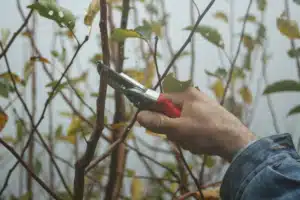
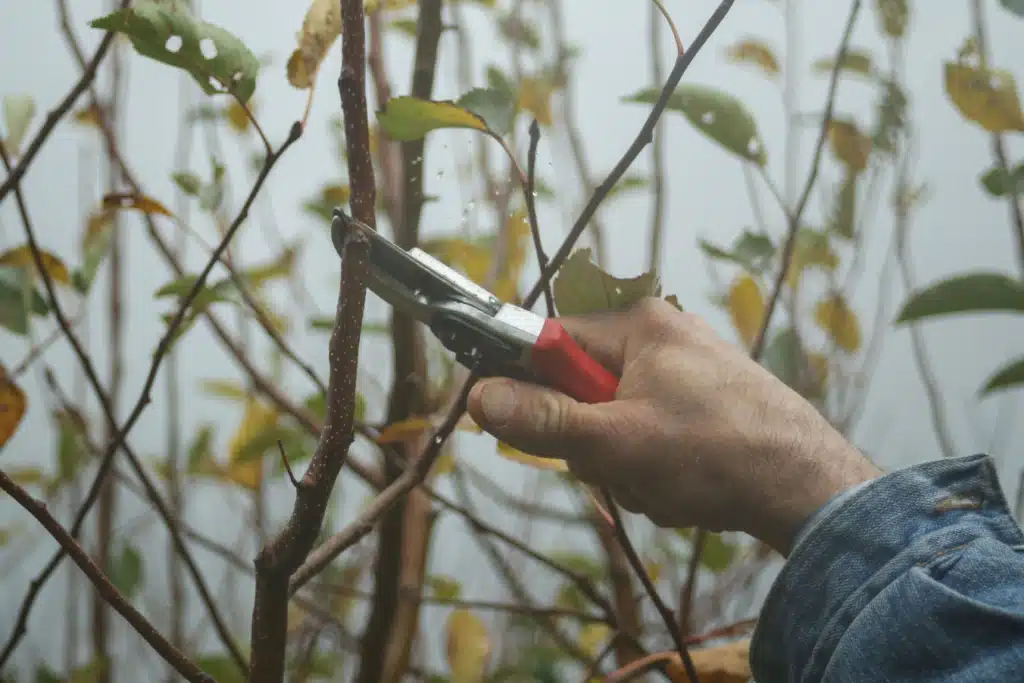
Cut back to just outside the branch collar, the slightly swollen ring of bark where a branch meets the trunk or a larger limb. That collar contains the tissue the tree uses to seal the wound, so you leave it intact, cutting just beyond it rather than flush to the trunk. Do not leave a long stub either, as it dies back and invites decay. For any branch heavy enough to tear, use the three-cut method: an undercut a short way out, a second cut just beyond it to drop the weight cleanly, then a final neat cut at the collar. And skip the old advice about painting wound sealant on cuts, as research shows trees seal better on their own and sealants can trap moisture. A clean cut in the right place at the right time is all a healthy tree needs.
Are there trees you should prune at a specific time?
Yes, a few deserve special timing. Spring-flowering ornamentals such as lilac, flowering plum and ornamental cherry set their flower buds the previous year, so prune them right after they finish blooming, not in winter, or you cut off the coming show. Fruit trees like apple, pear and cherry are best pruned in the dormant late-winter window to shape them and encourage fruiting, which is a job worth doing annually. And for certain species prone to specific diseases, the dormant season also helps avoid attracting the insects that spread them. If you are unsure what you have, that is exactly the kind of thing our team identifies during a tree care visit.
When should you call a professional?
Plenty of light pruning on small, reachable branches is a reasonable homeowner job with clean, sharp tools. But some pruning is genuinely a job for a professional, both for the tree’s sake and your safety. Call an expert for anything requiring a ladder or chainsaw overhead, for large limbs, for branches near power lines, for mature shade trees where structural cuts need judgement, and for any tree that is diseased or hazardous. Big cuts made badly can permanently harm a valuable tree or injure the person making them, and a trained eye knows exactly which branches to remove to improve a tree rather than just reduce it. Our tree trimming and pruning service handles exactly this, safely and with the tree’s long-term health in mind.
Pairing pruning with winter protection
Late-winter pruning pairs naturally with the other dormant-season tree jobs, which is part of why this is such a productive window. With the structure cleaned up, it is the right moment to think about a dormant treatment to smother overwintering pests before bud break, and to check young trees for winter protection. Bundling the pruning with tree spraying and a general health check means the tree enters spring clean, balanced and protected, rather than carrying problems into the growing season.
Frequently Asked Questions
When is the best time to prune trees?
For most trees, late winter to early spring while they are dormant and leafless, roughly January into March in the Treasure Valley before buds break. This causes the least stress, lets you see the structure clearly, and means the tree heals quickly as it starts growing. Dead or hazardous branches can be removed any time.
Can you prune trees in the fall?
It is best avoided for routine pruning. Cuts heal slowly heading into dormancy, and some wood-decay fungi release spores in fall, so wounds are more vulnerable. The exception is removing dead, damaged or hazardous branches, which is fine in any season for safety.
When should I prune spring-flowering trees?
Right after they finish blooming, not in winter. Trees like lilac, flowering plum and ornamental cherry form their flower buds the year before, so pruning them in dormancy removes next spring’s flowers. Pruning just after bloom gives them the whole season to set new buds.
How much of a tree can I prune at once?
No more than about a quarter of the live canopy in a single year. Removing too much at once stresses the tree and forces weak, excessive regrowth. If a tree needs major reduction, it is better done gradually over a couple of seasons.
What is tree topping and why is it bad?
Topping is cutting the top out of a tree to reduce its height, leaving large stubs. It is harmful because it creates big wounds that rot, triggers weak, fast regrowth that is prone to breaking, and stresses the tree. Proper pruning reduces and shapes a tree without topping it.
Should I put sealant on pruning cuts?
No. Current arboriculture advice is to leave cuts to seal naturally. Trees close their own wounds from the branch collar, and wound paints can trap moisture and actually slow healing. A clean cut just outside the collar is all a healthy tree needs.
Prune at the right time, for a healthier tree
Pruning rewards good timing more than hard work. Save the real structural cuts for late winter while the tree is dormant, prune spring bloomers after they flower, deal with dead and dangerous wood whenever it appears, and always cut back to the collar. Done that way, pruning adds years of health, safety and good looks to your trees.
Organic Solutions has cared for Treasure Valley trees for over twenty years, across Nampa, Meridian, Boise, Eagle and beyond. Whether it is dormant-season pruning of a big shade tree or a full tree care plan, request a free estimate or call 208 884 8986, and we will prune it right.