If weeds seem to reappear in your lawn every single spring no matter what you do, the problem may not be what you are doing in April. It may be what you did not do in March. Pre-emergent herbicide is one of the most powerful tools available for keeping grassy weeds and broadleaf invaders out of your lawn, but its entire value depends on timing. Apply it too late and you have wasted your effort. Apply it at the right moment and you can stop a season’s worth of weeds before they ever show themselves above ground.
This guide explains exactly how pre-emergent herbicide works, which weeds it targets in Idaho, and the specific timing windows that matter for lawns in the Treasure Valley and surrounding areas. Whether you manage your own lawn care or are weighing whether to bring in professional help, understanding pre-emergents puts you ahead of the problem rather than always chasing it.
How Pre-Emergent Herbicide Works
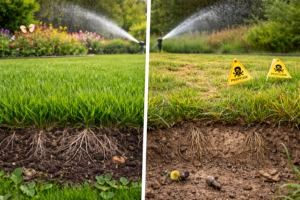
The name tells you a great deal. Pre-emergent herbicide acts before a weed emerges from the soil. It does not kill established plants and it does not destroy seeds sitting in the ground. Instead, it creates a chemical barrier in the top layer of soil that disrupts the germination process. When a weed seed begins to sprout and its root tip or shoot makes contact with the treated zone, cell development is interrupted and the seedling dies before it can break the surface.
This is a critical distinction. Once a weed has already broken ground and is actively growing, a pre-emergent product will do nothing to it. At that point you need a post-emergent approach, which is a different category of product entirely. The pre-emergent window is a one-shot opportunity that opens and closes based on soil temperature, not the calendar date.
The key trigger: Most summer annual weeds like crabgrass begin germinating when soil temperatures reach 50 to 55 degrees Fahrenheit at a depth of two inches, measured consistently over several days. This is the threshold that determines when your pre-emergent application needs to be in place.
Common Idaho Weeds Pre-Emergent Herbicide Controls
Idaho’s climate, with its cold winters, dry summers, and alkaline soils, creates conditions where certain weeds thrive year after year. Understanding which weeds pre-emergents address helps you choose the right product and know what to expect.
Summer Annual Weeds
These weeds germinate in spring as soils warm, grow through summer, set seed, and die with fall frost. They are the primary target of spring pre-emergent applications.
Crabgrass is the most notorious summer annual in Idaho lawns. It spreads aggressively in thin turf and thrives in the heat of Nampa and Boise summers. A single plant can produce tens of thousands of seeds. Pre-emergent herbicide applied before germination is the most reliable way to prevent a crabgrass outbreak without repeated post-emergent spraying all season long. Paired with a solid weed control program, it is highly effective.
Goosegrass germinates slightly later than crabgrass and requires somewhat higher soil temperatures, but it responds well to the same pre-emergent applications. It is a common problem in compacted or heavily trafficked areas of Idaho lawns.
Spurge, both spotted and prostrate, is another summer annual that blankets bare spots and thin turf in hot weather. Pre-emergent applications in spring significantly reduce spurge pressure throughout the growing season.
Winter Annual Weeds
These weeds germinate in fall as soils cool, survive winter as small plants or seeds, then mature and set seed in spring before dying in summer heat. Henbit, hairy bittercress, and annual bluegrass (Poa annua) fall into this category. Controlling them requires a fall pre-emergent application timed to when soils cool back below germination thresholds, typically in late August through September in the Treasure Valley.
When to Apply Pre-Emergent in Idaho
Idaho’s geography creates meaningful variation in timing across the state. The Treasure Valley, which includes Nampa, Boise, Meridian, Caldwell, and surrounding communities, sits at roughly 2,700 feet elevation and sees spring soil temperatures rise earlier than areas at higher elevations in central or northern Idaho.
Spring Application Window: Treasure Valley
For Nampa, Boise, Meridian, Caldwell, Eagle, and Kuna, soil temperatures in the upper two inches typically reach the 50 to 55 degree threshold in mid-March to early April. This means pre-emergent herbicide for crabgrass and other summer annuals should ideally be applied in late February through mid-March, before that threshold is crossed.
A useful rule of thumb used by local turf professionals: apply your spring pre-emergent when forsythia shrubs are in full bloom and before lilacs open. These flowering plants respond to the same temperature and daylight cues that trigger weed germination and serve as reliable biological indicators specific to the Treasure Valley’s microclimate.
| Target Weeds | Application Type | Timing (Treasure Valley) | Soil Temp Trigger |
| Crabgrass, spurge, goosegrass | Spring pre-emergent | Late February to mid-March | Before soil reaches 50°F |
| Henbit, Poa annua, bittercress | Fall pre-emergent | Late August to mid-September | As soil cools below 70°F |
| Second crabgrass flush | Split spring application | 6 to 8 weeks after first app | Before June heat intensifies |
The Split Application Strategy
For lawns with heavy crabgrass history, many turf professionals recommend a split application. Rather than one heavy dose in early spring, apply half the recommended rate in late February or early March, then follow up with the second half six to eight weeks later. This extends the protective window into June when late-germinating crabgrass seeds would otherwise find an unprotected soil environment. This approach is especially useful for lawns in Star and Middleton where thin turf in newer developments is often vulnerable.
Pre-Emergent and Lawn Health: What You Need to Know Before Applying
Pre-emergent herbicides do not distinguish between weed seeds and desirable grass seeds. If you have recently seeded or plan to overseed bare areas, applying a pre-emergent will prevent that grass seed from germinating just as effectively as it stops crabgrass. There are two approaches to this conflict.
First, you can seed in late summer or early fall, allow the new grass to establish over at least two to three months, and then apply fall pre-emergent after the turf is mature enough to tolerate it. Second, you can choose to skip pre-emergent in heavily seeded areas and rely on dense, healthy turf as a competitive barrier against weeds, supplemented by spot treatment of any emerging weeds with post-emergent products.
A well-established lawn that is thick and healthy is your best long-term defense against weeds. A solid lawn care program that includes proper fertilizing, consistent watering, and correct mowing height reduces bare spots where weeds take hold. Pre-emergent herbicide is a valuable tool within that program, not a substitute for it.
Watering Pre-Emergent In: A Step Most Homeowners Miss
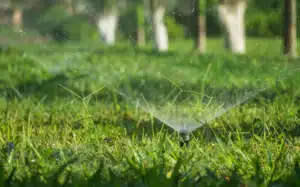
Most granular pre-emergent products require water to activate. Without at least a quarter inch of irrigation or rainfall within a few days of application, the active ingredient does not move into the soil where germinating seeds contact it. The granules just sit on the surface and eventually break down without forming the protective barrier they are designed to create.
If you have a properly functioning sprinkler system, run a watering cycle immediately after application. If Idaho’s unpredictable spring weather has you waiting on rain, plan your application timing to coincide with an expected rain event or be ready to irrigate manually. A well-timed watering is the difference between a pre-emergent that works and one that does nothing.
Organic and Low-Impact Pre-Emergent Options
Not all pre-emergent herbicides rely on synthetic chemistry. Corn gluten meal is a natural byproduct of corn processing that has pre-emergent properties. When applied at high rates before seed germination, it inhibits root development in germinating seeds. Its effectiveness is lower than synthetic products and it requires consistent application over multiple seasons to build up in the soil, but it is a safe option for households where minimizing chemical exposure is a priority.
At Idaho Organic Solutions, our approach to weed prevention emphasizes treatments that are effective for your lawn while being mindful of your family, your pets, and the broader environment. Whether the right solution involves organic inputs, reduced-risk synthetic products, or a combination approach, we tailor recommendations to your specific lawn’s needs and history rather than applying a one-size-fits-all product.
Signs Your Pre-Emergent Strategy Is Working
If you applied pre-emergent at the right time and watered it in properly, you should notice a dramatically reduced crabgrass presence by midsummer. The occasional crabgrass plant that appears likely germinated before your application, came from a neighboring property as a mature plant (pre-emergent does not prevent this), or emerged through a gap in coverage such as a missed strip or a heavily worn area.
No pre-emergent application produces a 100 percent weed-free lawn. Weed pressure from surrounding properties, soil disturbances from digging or dethatching, and timing errors all create openings. Pairing your pre-emergent program with ongoing weed control treatment and a consistent lawn care routine fills those gaps and keeps your lawn looking its best throughout the season.
Frequently Asked Questions
How do I know when the soil temperature is right to apply pre-emergent in Idaho?
You can purchase an inexpensive soil thermometer at most garden centers and check the temperature two inches below the surface in the morning for several days in a row. When readings consistently approach 50 degrees Fahrenheit, your window has arrived and ideally you want your pre-emergent already in place. Many local county extension offices also publish spring soil temperature maps for Idaho that can help you track the warming trend without doing your own daily measurements.
Will pre-emergent herbicide harm my existing lawn grass?
Applied correctly, pre-emergent herbicides should not harm established turf. The active root systems of mature grass plants are well below the treated zone, and the grass blades are already through the soil before the product is applied. Where homeowners run into trouble is applying pre-emergent over areas they plan to overseed, since the product cannot tell the difference between a weed seed and a fescue seed. Avoid pre-emergent applications in any area where you intend to establish new grass from seed within the same season.
Can I apply pre-emergent and fertilizer at the same time?
Yes, and this combination is quite common. Many professional-grade products are formulated as combination weed-and-feed products that deliver pre-emergent herbicide alongside a slow-release nitrogen fertilizer in a single granular application. Applying both at once is efficient and ensures your lawn gets the nutritional boost it needs heading into the growing season at the same time as weed prevention. Just confirm the fertilizer formulation is appropriate for your grass type and the current season before applying.
What happens if I apply pre-emergent too late in Idaho?
If crabgrass has already begun germinating when you apply pre-emergent, the application will have no effect on those already-sprouted seedlings. It may still prevent later-germinating seeds from establishing, but you will need to add post-emergent spot treatment for the crabgrass plants that are already visible. For a lawn with a serious late-start situation, the more practical approach is often to focus on post-emergent control for the current season and commit to a correctly timed pre-emergent program the following spring.
How long does pre-emergent herbicide last in the soil?
Most pre-emergent products remain active in the soil for 60 to 90 days depending on the specific active ingredient, the rate applied, soil temperature, and rainfall. Heavy irrigation or rain can reduce the duration of activity by leaching the product deeper into the soil profile. This is why a split application approach is sometimes recommended for extended protection through the full spring and early summer germination period, rather than relying on a single application to cover the entire window.