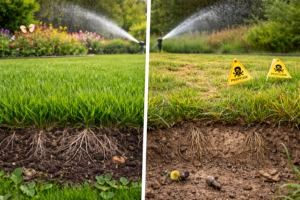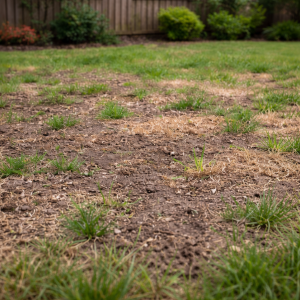
Brown patches are one of the most common lawn problems homeowners face across Idaho, especially in the Treasure Valley. You may notice sections of your lawn turning dry, discoloured, or thinning while surrounding grass remains green. These patches can appear suddenly or develop gradually, depending on the underlying cause.
The key to fixing brown patches is not just treating the surface, but understanding what is happening beneath it. In most cases, brown spots are the result of stress, poor soil conditions, watering issues, or pest activity. Once you identify the cause, you can apply the right organic solution and restore your lawn’s health.
What Brown Patches Actually Mean
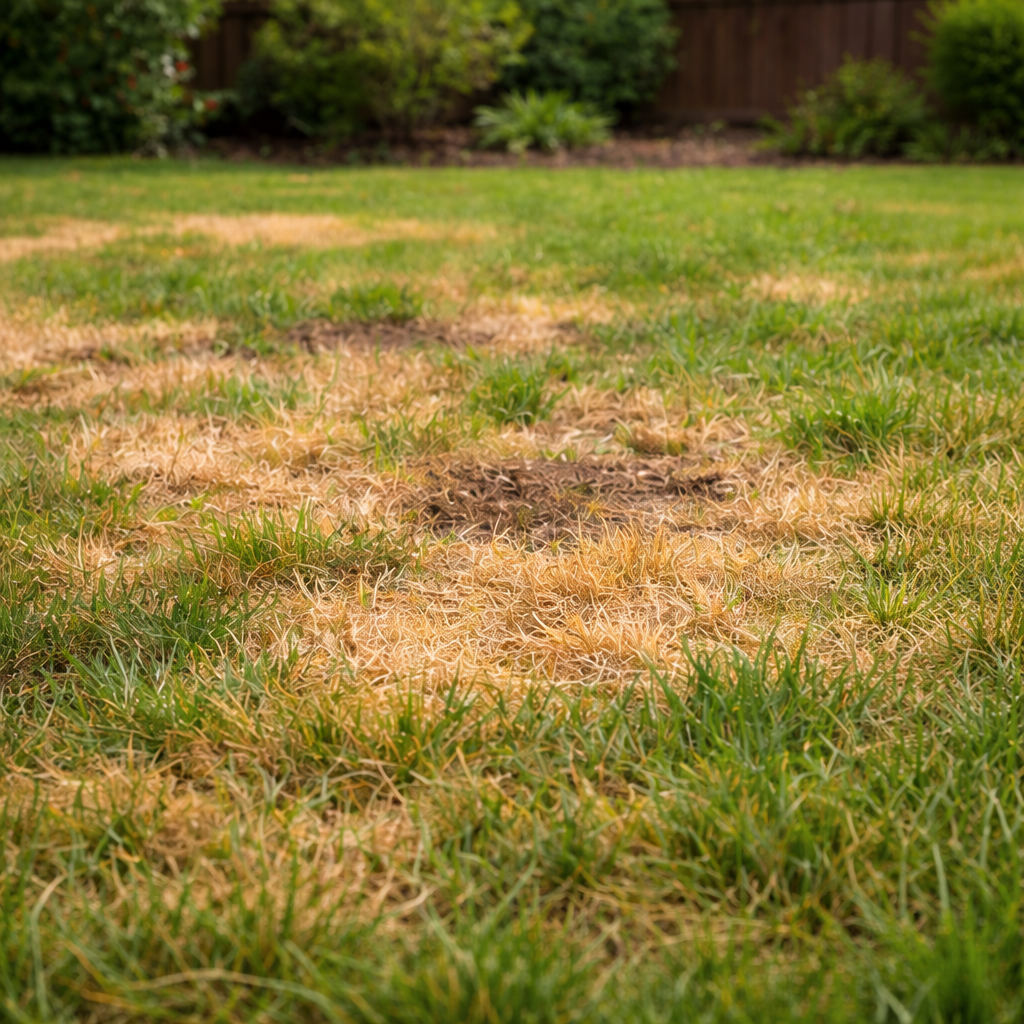
Brown patches are not always a sign that your lawn is dying. In many cases, they are a symptom of temporary stress or environmental imbalance.
Grass naturally reacts to conditions such as heat, drought, or inconsistent care. When it cannot access enough water or nutrients, it may go dormant or appear damaged. The important thing is to determine whether the grass is still alive at the root level.
If the roots are healthy, recovery is usually possible with the right adjustments.
Common Causes of Brown Patches
Brown patches can have several different causes, and identifying the correct one is essential for effective treatment.
Heat and Drought Stress
Idaho summers can be intense, with temperatures frequently reaching the high 90s or above. During these periods, grass may struggle to retain moisture, especially if roots are shallow.
Dry, crispy patches often indicate that the lawn is not receiving enough deep watering. Inconsistent irrigation can make this problem worse, as some areas receive more water than others.
Improper Watering Practices
Watering too little is only part of the issue. Overwatering can also cause problems by creating soggy conditions that damage roots and encourage disease.
Shallow, frequent watering leads to weak root systems. When roots remain near the surface, grass becomes more vulnerable to heat and dries out quickly.
Soil Compaction
Compacted soil prevents water, air, and nutrients from reaching the root system. This is a common issue in high-traffic areas or lawns with heavy clay soil.
When soil is too dense, grass cannot develop strong roots, leading to thin growth and brown patches over time.
Pest and Insect Activity
Certain insects, such as grubs, feed on grass roots and weaken the lawn from below. This type of damage often appears as irregular brown patches that do not respond to watering.
You may also notice birds digging in affected areas, as they search for insects in the soil.
Fungal Diseases
Fungal issues can develop when moisture levels are too high or airflow is limited. These diseases often create circular or expanding brown patches.
Poor drainage, excessive watering, and humid conditions can all contribute to fungal growth.
How to Diagnose the Problem
Correct diagnosis is the most important step in fixing brown patches. Treating the wrong issue can make the problem worse instead of better.
Check Soil Moisture
Start by examining the soil beneath the affected area. If the soil is dry several inches below the surface, drought stress is likely the cause. If it is overly wet, drainage or overwatering may be the issue.
Inspect the Roots
Gently pull on the grass in the brown patch. If it lifts easily and the roots are damaged or missing, pests may be responsible. Healthy grass should remain firmly rooted in the soil.
Look for Pattern Differences
The shape and distribution of brown patches can provide clues. Irregular patterns often point to watering or pest issues, while more defined circular patches may indicate fungal disease.
Compare Sun and Shade Areas
Grass in full sun typically requires more water than shaded areas. If brown patches appear only in sunny spots, heat stress or watering inconsistencies may be the cause.
Organic Fixes for Brown Patches
Once you identify the cause, you can begin restoring your lawn using organic methods that support long-term health.
Improve Watering Habits
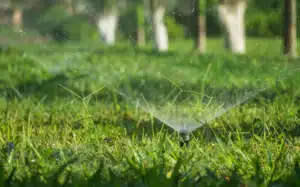
Adjusting your watering routine is often the first step. Deep watering two to three times per week encourages roots to grow deeper into the soil.
Avoid frequent, shallow watering, as it leads to weak root systems. Early morning watering is ideal because it reduces evaporation and allows moisture to reach the roots.
Aerate Compacted Soil
If soil compaction is an issue, aeration can significantly improve conditions. By creating small openings in the soil, you allow water, air, and nutrients to reach the root zone more effectively.
Over time, this helps grass develop stronger roots and recover from stress.
Strengthen Soil Health
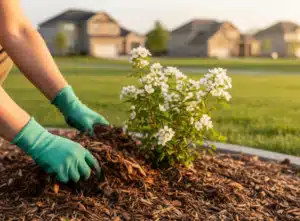
Healthy soil supports healthy grass. Adding organic matter such as compost improves soil structure and increases nutrient availability.
Organic fertilisers provide a slow, steady release of nutrients, helping your lawn recover without causing rapid, uneven growth.
Address Pest Problems Naturally
If pests are causing damage, organic treatments can help manage populations without harming beneficial insects.
Encouraging natural predators and maintaining balanced soil conditions helps reduce the likelihood of future infestations.
Improve Drainage
If excess moisture is contributing to the problem, improving drainage is essential. This may involve adjusting watering schedules, aerating soil, or addressing low areas where water collects.
Balancing moisture levels helps prevent both root damage and disease.
Preventing Brown Patches in the Future
Prevention is always easier than repair. By maintaining consistent lawn care practices, you can reduce the chances of brown patches developing.
Keeping grass at the correct height, watering deeply and consistently, and improving soil health all contribute to a stronger lawn. Regular inspections also help identify small issues before they become larger problems.
A well-maintained lawn is naturally more resistant to stress, pests, and disease.
When Brown Patches Are Temporary
Not all brown patches require immediate action. In some cases, grass may enter a temporary dormant state during extreme heat or dry conditions.
Dormant grass may appear brown but is still alive at the root level. Once temperatures cool and watering improves, it can recover naturally.
Understanding the difference between dormancy and damage helps avoid unnecessary treatments.
FAQs
Why does my lawn have brown patches even though I water regularly?
This can be caused by uneven sprinkler coverage, shallow watering, or compacted soil preventing water from reaching the roots.
Can brown grass turn green again?
Yes. If the roots are still healthy, grass can recover with proper watering and care.
How do I know if pests are causing the problem?
If grass pulls up easily or you notice birds digging, pests may be feeding on the roots.
Is it better to water more often or less often?
Less frequent but deeper watering is more effective. It encourages stronger root growth.
Should I reseed brown patches?
If the grass is completely dead, reseeding can help restore those areas. If it is dormant, it may recover on its own.
Restore Your Lawn Naturally
Brown patches can be frustrating, but they are often fixable once you understand the cause. By focusing on soil health, proper watering, and consistent maintenance, you can restore your lawn and prevent future issues.
Organic lawn care methods not only solve current problems but also strengthen your lawn for the long term. With the right approach, your lawn can recover and remain healthy throughout Idaho’s challenging seasons.