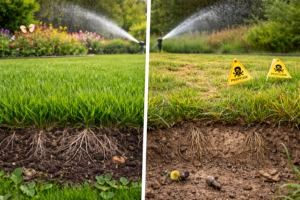
Weeds feel like an inevitable part of living with a lawn in the Treasure Valley, but trust us when we say that prevention is genuinely possible without spraying herbicides on your beautiful lawn. Organic Solutions has helped our clients with keeping their Nampa lawns weed-free for years, and most of the time, we found that the lawn itself isn’t the problem. It’s what is underneath: the soil.
In this article, you’ll learn how to fix the foundation of your lawn and naturally keep weeds away for good.
Understanding the Real Weed Problem
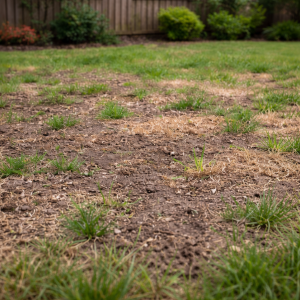
Weeds don’t manifest on healthy lawns – it’s always the weak ones that get overwhelmed by goatheads and whitetops in the spring and summer.
Weak lawns are those with thin grass, poor soil, shallow roots, compacted ground, and treated with wrong watering strategies. All of these create the perfect condition for weeds to flourish… and if you’re thinking “Will it be solved if we fix all those?”, then you’ve gotten the program.
1. Build a Thick, Healthy Lawn Through Proper Fertilization
This is the most important weed prevention tool, but also the least exciting.
A dense lawn crowds out weeds. There’s simply no room for them to establish when grass grows thick and healthy. This is why your neighbor’s chemically treated lawn might have fewer weeds in week one, but your organically managed lawn eventually outcompetes weeds without needing herbicides.
You can replicate this by applying organic fertilizers 4 to 6 times per year on the right schedule. That way, you support grass to grow densely enough that they can suppress weeds naturally. Kentucky bluegrass and perennial ryegrass – the workhorse grasses in the Treasure Valley – are aggressive growers that crowd out competition if given the right opportunity.
This works better in Nampa than people realize because our climate naturally produces thick, healthy cool-season grasses when they’re properly fed.
Say you do this in year one and successfully establish thickness, by year two, your thick lawn will do the weed prevention work for you – no herbicides needed.
2. Apply Corn Gluten Meal as a Pre-Emergent
Corn gluten meal (CGM) is a byproduct of corn milling containing proteins that inhibit root development in germinating seeds (Iowa State University).
| Factor | Details |
| Rate | 20–40 pounds per 1,500 square feet |
| Activation | Water lightly after application to activate |
| Drying time | Keep soil dry for 48 hours (no rain, no watering) |
| Spring timing | Late March–mid-April (critical window) |
| Fall timing | Mid-August to catch late-season weeds |
| Bonus | Contains 10% nitrogen – doubles as gentle fertilizer |
With each correct application, you can expect 4 to 6 weeks of weed suppression. However, CGM works best when you combine it with other methods like dense lawn management.
Here’s a free tip from us: skip August applications if you’re planning fall overseeding since CGM will affect all seeds and not just weeds.
3. Maintain Proper Mowing Height and Frequency
One of the worst things you can do for your lawn’s weed resistance is scalping it to try and achieve the manicured look.
The rule is to never remove more than one-third of the grass blade height in a single mowing (set your mower to 3 inches or a bit higher). You’ll want to mow regularly – usually weekly during active growth seasons, every 10 to 14 days during slower seasons – so you’re never trying to remove massive amounts of growth at once.
Shorter grass produces less energy through photosynthesis, so there’s less energy that goes into root growth and survival. Additionally, short grass exposes soil to direct sunlight, which helps weed seeds germinate.
You want to keep your grass nice and tall, which covers up soil, reduces weed seed germination pressure, and produces more energy for root growth and thickness. It’ll also leave more material for mulch-mowing – the practice of leaving clippings on the lawn instead of bagging them. Those clippings decompose and return nitrogen and carbon to the soil, giving you free fertilizer and soil amendment.
4. Mulch Garden Beds and Problem Areas
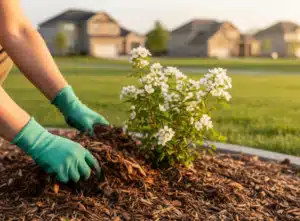
Mulch is simple weed prevention that works immediately. A 3 to 6-inch layer of organic mulch prevents light from reaching soil where weed seeds are trying to germinate.
The following is a table with all the mulch materials we’ve worked with:
| Type | Use? | Why |
| Wood chips/bark nuggets | ✓ Yes | Large, chunky material suppresses weeds; low in nutrients |
| Shredded bark | ✓ Yes | Effective and breaks down at reasonable rate |
| Aged wood fiber | ✓ Yes | Safe and established |
| Fresh green wood chips | ✗ No | Contains seeds; can introduce problems |
| Hay and straw | ✗ No | Their own seeds will sprout |
| Clippings from treated lawns | ✗ No | Herbicide residue risks |
| Well-rotted sawdust | ⚠ Maybe | Works but can eventually contribute to weed growth |
Here’s how to apply them:
- Apply mulch to a depth of 4–6 inches initially
- Refresh with 1–2 inches annually as it breaks down
- Keep mulch a few inches away from tree trunks and shrub bases to prevent rot
Mulch works best on garden beds and problem areas on the property edge. It can be a bit labor-intensive to apply initially but requires minimal maintenance once established.
5. Hand-Pull Weeds When They’re Young
The best time to pull weeds is when they’re young. The longer you leave them, the deeper and more robust their root systems become and the farther they spread their seeds.
An emerging dandelion takes 30 seconds to pull. A mature dandelion with a 4-inch taproot? Five minutes and often breaks off underground.
There are two things to take into account if you’re thinking of weeding by hands:
- Weather conditions: Roots come out more easily from wet soil, so aim for after it’s rained or post-irrigation while the soil is still moist. It’s also best to pull early morning or late evening to minimize wilting.
- Best season for perennials: Fall (not spring). When plants are directing energy into roots, fall-pulled dandelions and bindweed have depleted carbohydrate reserves and are less likely to regenerate from root fragments.
Hand-pulling, while impractical for lawns with heavy weed infestations, but if you’ve a lawn that’s already thick and mostly weed-free, it’s an easier and more economical maintenance step than mixing sprays or applying products. It’s also perfectly safe – no gloves required, no concerns about pet or child exposure.
6. Water Strategically to Support Grass Over Weeds
Your watering strategy can also help you suppress weeds, surprisingly.
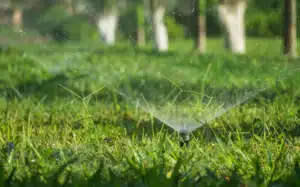
Deep, infrequent watering encourages grass roots to grow deeper and establishes drought tolerance, while shallow, infrequent watering encourages both grass and weeds to stay surface-dependent and stressed.
Cool-season grasses in Nampa (Kentucky bluegrass, fescue, ryegrass) need roughly 1 to 2 inches of water per week during active growth, applied in one or two deep watering sessions rather than daily sprinkling.
Weed seeds in compacted or shallow soil germinate better with frequent, shallow moisture. Deeper soil moisture and deeper-rooted grass compete better against shallow-rooted weeds.
By shifting to deep watering, you simultaneously support deeper grass roots and suppress shallow-rooted weeds.
Timing matters, as well. Water early morning to reduce fungal disease pressure while ensuring water reaches roots before soil evaporates it. Evening watering leaves foliage wet overnight, which encourages disease.
7. Overseed Annually to Maintain Density
Annual overseeding maintains and improves lawn density – the foundation of long-term weed suppression.
Fall (late August–September) is an ideal time to do this for cool-season lawns. Soil is still warm enough for seed germination while cooler air temperatures reduce heat stress on seedlings. Natural fall moisture helps establish seed as roots develop throughout fall and into winter, creating strong, established plants by spring growth.
For the uninitiated, here’s how to overseed:
- Rough up soil slightly with a rake or vertical mower
- Apply seed at recommended rates for your grass type
- Keep soil consistently moist for 10–14 days until germination
The more frequently you overseed and maintain high density, the fewer opportunities weeds have to establish. This is especially important if you’re transitioning from chemical to organic management. Heavy overseeding in year one and two creates density that crowds out weeds before they multiply. By year three, maintaining that density is less work.
What to Expect by Timeline
| Year | Reality Check |
| Year 1 | Might still show weeds as you build grass density. Focus on establishing the foundation. |
| Year 2 | Weed pressure drops noticeably. You’re doing less reactive pulling and treating. |
| Year 3+ | Spending minimal time on weed management. The system maintains itself. |
FAQ
How does a thick lawn actually prevent weeds better than herbicides?
Weeds need space and light to germinate and grow. A dense lawn has neither. By applying organic fertilizers 4–6 times per year on the right schedule, you support grass growth thick enough to suppress weeds naturally. Year one requires effort to establish thickness, but by year two, that dense lawn does the weed prevention work without herbicides.
When exactly should I apply corn gluten meal, and what happens if I miss the window?
Apply 20–40 pounds per 1,500 square feet in late March–mid-April to catch spring weeds, then reapply mid-August for late-season weeds. Timing is critical – CGM inhibits root development in germinating seeds. Miss the window and you’re waiting for next season. Skip August applications if you’re planning fall overseeding, since CGM affects all seeds.
Why does mowing taller actually reduce weeds instead of just looking nicer?
Shorter grass produces less energy through photosynthesis and puts less energy into root growth. Shorter-cut grass also exposes soil to direct sunlight, which helps weed seeds germinate. Taller grass (3+ inches) shades soil, reducing weed germination pressure, and produces more energy for root growth and thickness. Taller grass also leaves more clippings for mulch-mowing, which returns nitrogen to soil.
Is hand-pulling weeds practical for large lawns, or just small properties?
Hand-pulling is impractical for heavy infestations but works well for maintaining a lawn that’s already thick and mostly weed-free. Pull when soil is moist after rain or irrigation – roots come out more easily. For perennial weeds like dandelions, fall pulling is more effective than spring because plants direct energy into roots, and fall-pulled plants have depleted carbohydrate reserves.
How does watering strategy support grass over weeds?
Deep, infrequent watering (1–2 inches per week in one or two sessions) encourages grass roots to grow deeper. Shallow-rooted weeds prefer frequent, shallow moisture. By shifting to deep watering, you simultaneously support deeper grass roots and suppress shallow-rooted weeds. Water early morning to reduce fungal disease while ensuring water reaches roots before evaporation.
Ready to Stop Fighting Weeds and Start Preventing Them?
Get a consultation to discuss how these strategies could work for your Nampa lawn. We’ll assess your specific conditions and create a tailored plan.
Call Organic Solutions! Inc.: 208-884-8986