If you’ve been staring at a patchy, thin lawn wondering what went wrong, the answer is often hiding underground. Idaho’s clay-heavy, alkaline soils compact quickly under foot traffic, irrigation, and freeze-thaw cycles cutting off the oxygen, water, and nutrients your grass roots desperately need. Aeration and overseeding are two of the most powerful tools for fixing this problem, but only if you do them at the right time of year.
This guide walks you through exactly when to aerate and overseed your Treasure Valley lawn, what to expect from the process, and how to get the best possible results from Idaho’s challenging growing conditions.
Why Idaho Lawns Need Aeration More Than Most
Aeration is the process of removing small plugs of soil from your lawn to loosen compaction and open channels for air, water, and fertilizer to reach the root zone. In many parts of the country, lawns can go years without needing it. In Idaho particularly in the Nampa, Meridian, Boise, and Caldwell areas aeration is practically an annual necessity.
Here’s why:
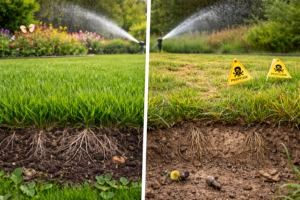
Idaho soils compact fast. The Treasure Valley’s clay content is notorious. Clay particles pack tightly together, especially when the soil gets wet and then dries out repeatedly under summer irrigation cycles. The result is a dense barrier that roots can’t penetrate and water can’t move through efficiently.
Alkaline pH locks out nutrients. Idaho’s soil pH typically runs between 7.5 and 8.5 well into alkaline territory. This makes it harder for grass to absorb iron, manganese, and other micronutrients. Compaction makes this worse by reducing the microbial activity that helps break nutrients into plant-available forms.
Freeze-thaw cycles cause surface stress. Winter temperatures in the Treasure Valley regularly dip below freezing, then warm up in early spring. This repeated expansion and contraction stresses the soil surface, tightening the upper layer and pushing thatch (dead grass material) deeper into the turf.
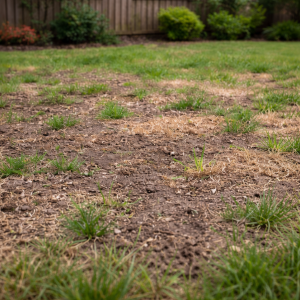
The result of all this? Thin grass, brown patches, poor drainage, and a lawn that never seems to respond to fertilizer the way it should. Aeration breaks this cycle.
Our lawn care program includes aeration as part of a comprehensive annual treatment plan designed specifically for Treasure Valley conditions.
The Best Time to Aerate in Idaho
Timing is everything with aeration. The goal is to aerate when your grass is actively growing so it can recover quickly and fill in the holes left by the aerator. Aerating during dormancy or stress periods slows recovery and can actually invite weeds into the open soil.
For Cool-Season Grasses (Most Idaho Lawns)
The vast majority of Treasure Valley lawns are planted with cool-season grasses Kentucky bluegrass, tall fescue, perennial ryegrass, or fine fescue. These grasses grow most aggressively in the cool temperatures of spring and fall, which makes those seasons the ideal windows for aeration.
Fall is the single best time to aerate in Idaho. The window runs from late August through mid-October, with early-to-mid September being the sweet spot for most of the Treasure Valley. Here’s why fall wins:
- Soil temperatures are still warm enough (above 50°F) for strong root growth
- Air temperatures are cooling, reducing heat stress on grass
- Weed pressure drops significantly annual weeds are finishing their cycle
- There’s typically more consistent soil moisture from summer irrigation and early fall rain
- Grass has the entire fall and winter to deepen its root system before the following summer’s heat
Spring aeration (late March through May) is a solid second option. If you missed the fall window or your lawn is severely compacted after a hard winter, spring aeration can still deliver good results. Just be aware that spring timing requires more careful management aerate too early and the soil is still frozen or waterlogged; too late and the summer heat will stress newly aerated turf before it fully recovers.
For most Idaho homeowners, we recommend fall as the primary aeration timing and spring as a supplemental treatment for lawns with severe compaction.
When to Overseed Your Idaho Lawn
Overseeding means spreading grass seed over your existing lawn to thicken thin areas, fill in bare patches, and introduce improved grass varieties. When done right alongside aeration, the results are dramatically better than either practice alone.
The ideal overseed window closely mirrors the aeration window: late August through mid-September.
Here’s what that timing accomplishes:
- Soil temperature is warm enough (ideally 50–65°F) for quick germination typically 7 to 14 days for most cool-season varieties
- New seedlings have 6 to 8 weeks of mild weather to establish before winter dormancy
- Competing weeds are winding down, giving new grass a fighting chance
- New grass enters winter with enough root development to survive freezing temperatures and resume growth vigorously the following spring
Spring overseeding is possible but comes with trade-offs. The compressed growing window between germination and summer heat means new seedlings are under stress almost immediately. Annual crabgrass and other weeds also germinate in spring, competing directly with your new grass seed for water, light, and nutrients.
If you’re starting from scratch with a severely damaged lawn, spring overseeding combined with aggressive weed control and proper irrigation management can still produce good results but fall is always the preferred timing.
The Aerate-Then-Overseed Method: How to Do It Right
Aeration and overseeding work best together because aeration creates the perfect seedbed. The small plugs pulled from the soil leave channels where seed can drop directly into contact with the earth, improving germination rates significantly compared to seeding over unbroken turf.
Here’s the sequence for a successful fall aerate-and-overseed treatment:
1. Mow short before aerating. Drop your mowing height by about a half-inch to an inch below your normal cut. This allows the aerator tines to penetrate more deeply and makes it easier for seed to reach the soil after overseeding.
2. Aerate when the soil is slightly moist. Bone-dry soil makes it harder for tines to pull plugs cleanly. Water your lawn 24 to 48 hours before aeration so the soil is damp but not soggy.
3. Make multiple passes with the aerator. A single pass leaves plugs 6 inches apart good, but not great. Two passes in different directions increases the number of holes and improves soil-to-seed contact for overseeding.
4. Leave the plugs on the surface. Those soil cores sitting on your lawn after aeration aren’t trash, they’re valuable. They’ll break down over 2 to 4 weeks, depositing soil organisms and nutrients back onto the surface. Resist the urge to rake them up.
5. Overseed immediately after aerating. Spread seed at the recommended rate for your grass variety. For Kentucky bluegrass, that’s typically 2 to 3 pounds per 1,000 square feet for overseeding (higher rates for bare ground). For tall fescue, plan on 6 to 8 pounds per 1,000 square feet.
6. Follow with a starter fertilizer. New seed needs phosphorus for root development. A quality starter fertilizer applied immediately after overseeding gives germinating seedlings the nutrition they need right when they need it. Our organic fertilizing services use formulations specifically chosen to support seedling establishment without the chemical runoff risks of synthetic options.
7. Water consistently. This is where most homeowners fall short. New seed requires the top inch of soil to stay consistently moist until germination, typically twice daily watering for 15 to 20 minutes during dry spells. Once seedlings are visible, gradually transition to deeper, less frequent watering to encourage root depth.
Choosing the Right Grass Seed for Idaho
Not all grass seed is created equal, and what works in the Pacific Northwest or the Midwest may not perform well in the Treasure Valley’s hot summers and alkaline soils. When overseeding, choose varieties proven for Idaho conditions:
Kentucky Bluegrass remains the most popular choice for Treasure Valley lawns. It produces a dense, attractive turf and handles cold winters well. The trade-off is higher water demand and less tolerance for shade. Look for improved varieties with disease resistance and better drought tolerance than older cultivars.
Tall Fescue is increasingly popular for Idaho homeowners looking to reduce irrigation. It develops a deep root system that accesses moisture lower in the soil profile, making it noticeably more drought-tolerant than bluegrass. Improved “turf-type” tall fescues have finer blades and better appearance than the coarser varieties of the past.
Perennial Ryegrass germinates fast, often within 5 to 7 days, making it a good choice for patching bare spots quickly. It’s also used in mixes with bluegrass because it fills in quickly while the slower-germinating bluegrass establishes. It handles traffic well but is somewhat less cold-hardy than bluegrass in extreme winters.
Fine Fescues (creeping red, chewings, hard fescue) work well in shaded areas where other grasses struggle. They need less water and fertilizer than bluegrass, making them a good fit for areas under tree canopy or on north-facing slopes.
Common Mistakes to Avoid
Aerating at the wrong time. Aerating warm-season grasses in fall (if you have them) or aerating cool-season grasses during summer heat can cause more harm than good. When in doubt about timing, give us a call we assess each lawn individually.
Using old or cheap seed. Bargain seed mixes often contain high percentages of annual ryegrass, which looks green briefly but dies out after one season. Always choose a premium seed blend with current-year germination rates.
Skipping irrigation after overseeding. More overseeding projects fail from inconsistent watering than from any other cause. If you can’t commit to twice-daily watering for 2 to 3 weeks, consider waiting until you have a reliable irrigation system in place. Our sprinkler installation and repair team can help ensure you have consistent, even coverage.
Mowing new seedlings too soon. Wait until new grass reaches 3 to 4 inches tall before the first mow, and keep blades sharp so you’re cutting rather than pulling.
Frequently Asked Questions
How often should I aerate my Idaho lawn?
Most Treasure Valley lawns benefit from annual aeration, given the region’s clay soils and compaction tendencies. Lawns with heavy foot traffic, steep drainage problems, or a thick thatch layer may benefit from aerating twice per year once in fall and once in spring.
Can I rent an aerator and do this myself?
Yes, core aerators are available at most equipment rental shops. The machine is straightforward to operate, though it’s heavy and can be difficult to maneuver around obstacles. For larger lawns or first-time aeration projects, professional service ensures proper depth and coverage without risk of equipment damage to irrigation heads or buried lines.
Do I need to dethatch before aerating?
If your lawn has more than half an inch of thatch buildup, dethatching before aeration improves results by allowing aerator tines to reach the soil more effectively. Our lawn care team can assess your thatch level and recommend whether dethatching is necessary before your aeration appointment.
Will overseeding introduce weeds?
Quality seed purchased from reputable suppliers is tested for weed seed content and will carry a label showing “0% weed seed.” Avoid bargain blends from big-box stores that may not meet this standard. Timing your overseeding in fall also helps, since weed competition is lower than in spring.
How long before I see results after aeration and overseeding?
New grass from overseeding typically germinates in 7 to 14 days under ideal conditions. You’ll notice the lawn looking fuller within 3 to 4 weeks. The full benefit of aeration deeper roots, better color, improved drought resistance develops over the following growing season as your lawn rebuilds its root system.
Ready to Give Your Idaho Lawn a Fresh Start?
Aeration and overseeding are among the highest-return investments you can make in your lawn’s long-term health. Done right, at the right time, with the right seed and follow-up care, they can transform a thin, struggling lawn into the thick, green turf you’ve been working toward.
Idaho Organic Solutions has been providing professional lawn care to homeowners throughout Nampa, Meridian, Boise, Eagle, Caldwell, Kuna, Star, and Middleton for over 20 years. We know the soil. We know the climate. And we know which treatments actually produce results in the Treasure Valley.
Contact us today for a free lawn assessment and let’s build a plan that works for your yard.
Call us at 208-884-8986
Serving Nampa, Meridian, Boise, Eagle, Caldwell, Kuna, Star, and Middleton, Idaho.