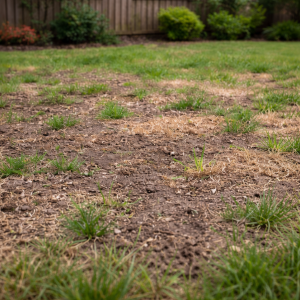
You water on schedule. You mow at the right height. You have done everything the way you are supposed to. And yet, right in the middle of summer, irregular patches of your lawn start fading from green to straw yellow to crispy brown. You soak them, you wait, and nothing greens back up. If that sounds familiar, there is a good chance the culprit is not your watering or your soil at all. It may be a tiny insect most Treasure Valley homeowners have never heard of. The chinch bug.
Chinch bugs are one of the most misdiagnosed lawn problems in Idaho, precisely because their damage looks so much like ordinary drought stress. Here is how to recognize them, how to tell them apart from the other things that brown out a lawn, and how to take your yard back.
What Are Chinch Bugs
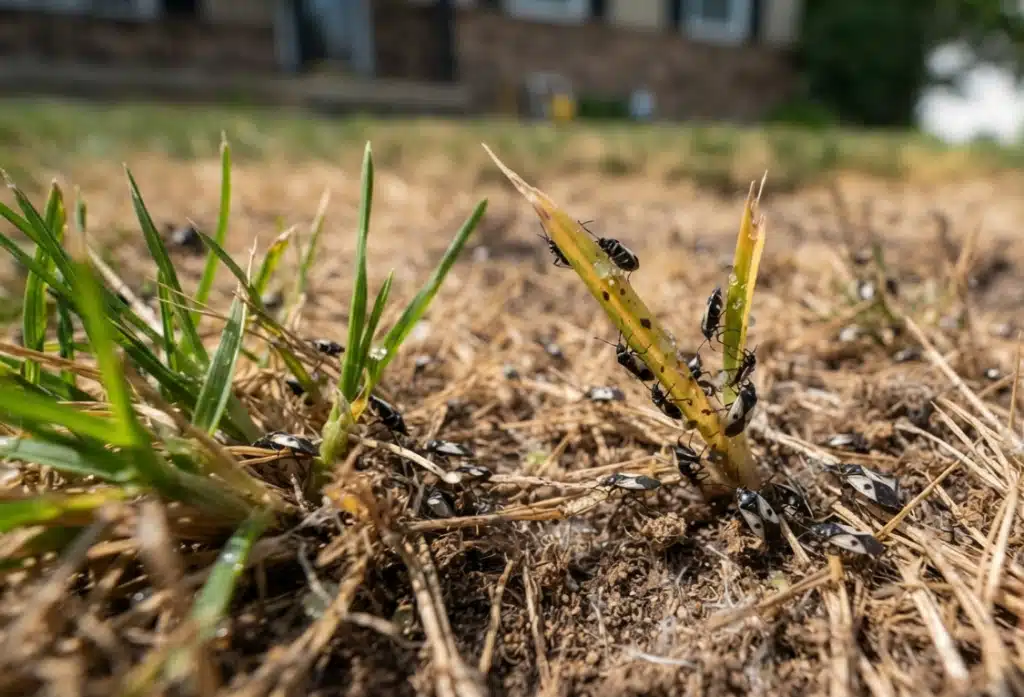
Chinch bugs are small, sap feeding insects that attack sunny, cool season lawns during the hottest, driest part of the year. The adults are only about a fifth of an inch long, black with white wings folded over their backs, and easy to overlook. The young nymphs are even smaller and start out reddish orange with a pale band across the middle before darkening as they grow.
What makes them so destructive is how they feed. A chinch bug pierces the base of a grass blade, drains the plant’s fluids, and injects a toxin as it feeds. That toxin blocks the grass from moving water and nutrients, so the plant wilts and dies even when there is plenty of moisture in the soil. A large population can chew through a lawn shockingly fast, and because dozens of them cluster together, the damage spreads outward in growing patches rather than scattered spots.
Why Their Damage Fools Almost Everyone
This is the heart of the problem. Chinch bug damage looks exactly like a lawn that needs water. The grass yellows, then browns, then flattens, usually starting in the sunniest, hottest zones of the yard. Most homeowners respond by watering more, which does nothing, because the grass is not thirsty. It is being poisoned.
There are a few clues that point to chinch bugs rather than simple dryness:
- The brown patches show up in the sunniest, driest areas first, often along sidewalks, driveways, and south facing slopes where reflected heat builds up.
- The damage keeps spreading outward even after you increase watering.
- The affected grass does not bounce back after a good soak, while true drought stress usually recovers within a day or two of deep watering.
- The trouble peaks in the heat of mid to late summer, then seems to pause when the weather cools.
Because the signs overlap with so many other issues, it is worth ruling out the usual suspects first. Our guide to the common lawn problems across the Treasure Valley walks through the full list of reasons a lawn turns brown, from dog spots to fungus to simple dormancy, so you can narrow things down before you start treating.
How to Check for Chinch Bugs
Confirming chinch bugs is simple and takes just a few minutes. Kneel at the edge of a damaged patch, right where the brown meets the still green grass, since that border is where the active feeding happens. Part the grass down to the soil with your fingers and watch closely for thirty seconds. If chinch bugs are present, you will see small, fast moving black and reddish insects scurrying around the crowns and thatch.
For a more thorough check, the old float test still works well. Take a metal can with both ends removed, push one end an inch or two into the soil at the edge of a damaged area, and fill it with water. If chinch bugs are in that spot, they will float up to the surface within a few minutes.
Finding a handful is normal in any lawn. Finding a dozen or more in a small area, right at the edge of spreading damage, points squarely at a chinch bug infestation.
Why Some Lawns Get Hit and Others Do Not
Chinch bugs do not attack every yard equally. They thrive where the conditions are stacked in their favor, which is useful to know, because it means a healthier lawn is genuinely more resistant.
A thick layer of thatch, that spongy mat of dead stems between the grass and the soil, gives chinch bugs the perfect place to hide and breed. Lawns that are stressed by shallow, frequent watering are far more vulnerable than lawns watered deeply and less often, because deep watering builds stronger roots and the moist soil interface is less inviting to the bugs. Hot, compacted, sun baked areas are prime targets, while shaded and well maintained turf is rarely bothered.
Two habits go a long way toward prevention. The first is watering the right way, which our watering and care instructions lay out for our specific climate. The second is keeping the lawn thick, healthy, and free of excess thatch through consistent, balanced care rather than quick fixes.
How to Get Rid of Chinch Bugs the Organic Way
Once chinch bugs are confirmed, the goal is to knock down the active population and then fix the conditions that let them take hold. Chemical rescue treatments can drop the numbers quickly, but on their own they do nothing to stop the problem from returning next summer, and they can wipe out the beneficial insects, like big eyed bugs, that naturally prey on chinch bugs.
A better approach combines targeted treatment with lawn health. That means treating the infested zones at the right time, reducing thatch so the bugs lose their hiding spots, watering deeply to build resilient roots, and feeding the soil so the grass can outgrow minor feeding damage. Overseeding thin and damaged areas helps the lawn fill back in and crowd the pests out over time.
This is exactly the kind of whole lawn thinking behind our organic lawn care program. Rather than spraying and walking away, we treat the insect problem while building a lawn that is far less likely to be a target in the first place, using products that are safe for your family, your pets, and the local environment.
When to Call in the Pros
If you have confirmed chinch bugs, if the brown patches keep spreading no matter how much you water, or if this is the second or third summer in a row that your lawn has struggled in the same spots, it is time for a professional assessment. Catching an infestation early, before it hollows out large sections of turf, saves you the cost and hassle of reseeding or resodding later. We help homeowners across Nampa and the wider Treasure Valley diagnose exactly what is browning their lawns and put a lasting, organic fix in place.
Stop the Spread Before It Takes Your Whole Lawn
A chinch bug problem only gets worse the longer it goes untreated, and by late summer a small patch can become half a yard. Do not keep pouring water on a problem that water cannot solve. Call Idaho Organic Solutions today at 208-884-8986 for a free lawn assessment, and let our licensed, local team pinpoint the cause and treat it the organic way. Want to learn more about how we work first? Our frequently asked questions cover our treatments, scheduling, and what to expect.
Frequently Asked Questions
How can I tell chinch bug damage from normal drought stress?
The biggest tell is that chinch bug damage does not recover after watering. True drought stress greens back up within a day or two of a deep soak, while chinch bug patches keep browning and spreading. Part the grass at the edge of a damaged area and look for small black and reddish insects to confirm.
When are chinch bugs most active in Idaho?
They do their worst damage during the hottest, driest stretch of summer, roughly from mid summer into early fall. Activity ramps up as temperatures climb and tends to pause once the weather cools, which is why the damage often appears suddenly in July and August.
Will chinch bugs come back every year?
They can, especially in lawns with heavy thatch, compacted soil, and hot, sunny exposures. The best long term defense is a healthy, well watered, low thatch lawn combined with early monitoring, which makes your yard a far less attractive target season after season.
Are chinch bug treatments safe for my kids and pets?
Our approach uses organic, eco friendly products applied by licensed technicians, and we pair treatment with lawn health practices rather than relying on harsh chemicals. The goal is to control the pest while keeping your family, pets, and the surrounding environment safe.
Can I just reseed the brown patches instead of treating?
Reseeding without addressing the chinch bugs usually fails, because the new grass simply becomes the next meal. The pests need to be controlled and the underlying conditions corrected first. Once the infestation is handled, overseeding is a great way to help the lawn fill back in.