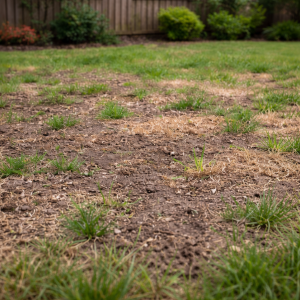
If your lawn turns to soup every spring, holds a puddle for days after irrigation, or squishes underfoot in the same low spot no matter what you do, you already know the problem. What you probably don’t know is the number of what it actually costs to make the water go away and stay away.
Here’s the honest version, with real Treasure Valley context and current 2026 pricing, so you can budget before you ever pick up the phone.
Why Treasure Valley Yards Stay Wet
Drainage problems here aren’t random. They come from a handful of conditions almost every Nampa, Meridian, and Caldwell homeowner shares.
Our soil is the first culprit. Much of the valley sits on heavy, alkaline clay that drains slowly and holds water at the surface instead of letting it soak in. Add flat residential lots that were graded for building rather than for runoff, and water has nowhere to go.
Then there’s how we water. Flood irrigation and pressurized irrigation are everywhere in the valley, and a yard that already drains poorly can’t keep up with a heavy set. Spring snowmelt and runoff off the Boise Front pile on top of that. The result is a lawn that’s saturated for weeks at exactly the time of year you want to be outside.
None of this fixes itself. Standing water kills grass, breeds mosquitoes, and the expensive part works its way toward your foundation. The longer you wait, the bigger the eventual bill.
The Honest Price Range
Most homeowners who hire a pro to fix a wet yard spend somewhere between $2,100 and $7,200, with the typical project landing around $4,600. But that range is wide for a reason: a single soggy corner is a very different job than a whole backyard that won’t drain.
| Type of fix | Typical installed cost |
| Regrading a low spot / extending downspouts | $300 – $1,500 |
| Catch basin or channel drain | $1,000 – $3,000 |
| French drain (yard/trench style) | $20 – $50 per linear foot |
| 50-foot French drain run | $500 – $5,000 |
| Dry well or combined multi-system fix | $3,000 – $12,000+ |
A small, targeted fix can run a few hundred dollars. A comprehensive system that combines several methods to move water off a large, flat, clay-heavy lot can climb into five figures. The right answer depends entirely on your property which is why a real assessment matters more than any online calculator.
What Drives Your Price Up (or Down)
Five factors do most of the work in setting your number.
Square footage and run length. The more water you’re moving and the farther you have to carry it to a safe outlet, the more pipe, gravel, and labor the job takes. Drainage is priced largely by the linear foot, so length is the single biggest lever.
Soil and digging conditions. This is where the Treasure Valley earns its reputation. Rocky, compacted, or stubborn clay soil is slow to excavate, and slow excavation means higher labor. A yard full of cobble costs more to trench than soft loam.
The system itself. A surface catch basin is cheap compared to a deep French drain, and a dry well needed when there’s nowhere to redirect water sits at the higher end. Most lasting solutions actually combine two or three approaches rather than relying on one.
Access. If a machine can reach the work area, costs drop. If everything has to be dug and hauled by hand through a narrow side gate, labor climbs.
Permits and outlet. Some redirected-water situations require a permit, and where your water ultimately goes a drywell, the street, a swale affects the design and the price.
The Fixes, Cheapest to Most Expensive
The least expensive thing a contractor can do is often the most overlooked: regrading and downspout work. If water simply isn’t being directed away from the house, fixing the slope and extending downspouts can solve a surprising number of problems for a few hundred dollars.
Next up are catch basins and channel drains surface collectors that grab water off a patio, driveway, or low lawn area before it pools, then send it underground. These are mid-range and ideal for a specific problem spot.
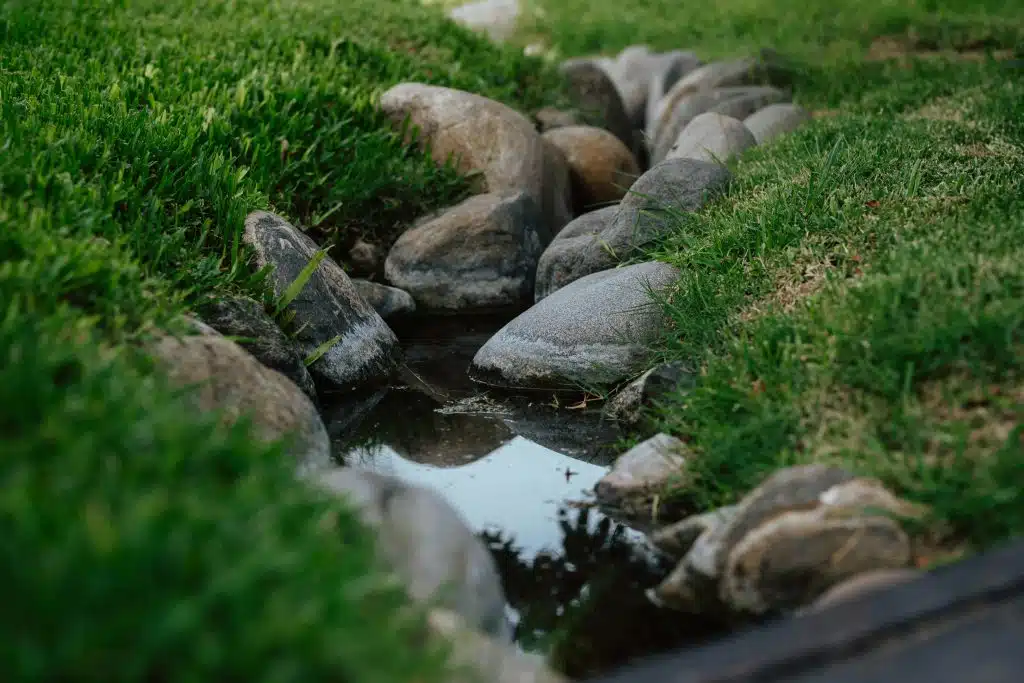
The workhorse is the French drain: a gravel-filled trench with a perforated pipe that quietly collects water across a saturated area and carries it away. It’s the go-to for wet lawns and is usually where the bulk of a drainage budget goes.
At the top sit dry wells and combined systems the answer for properties with no good place to send water or with several problems at once. There are four main drainage methods, and most real solutions blend them, which is exactly why a one-size-fits-all quote rarely holds up.
DIY vs. Hiring a Pro
You can dig a French drain yourself. The materials for a 50-foot run aren’t outrageous, and plenty of homeowners try it. The catch is that drainage is unforgiving: get the slope wrong by a fraction, send water toward the foundation instead of away, or skip the filter fabric, and you’ve paid in sweat for a system that fails in a season. Hard valley soil, hidden irrigation lines, and tree roots turn a “weekend project” into a multi-weekend ordeal fast.
A pro charges more up front but designs for your grade and soil, locates utilities, and tests the system before leaving. On a problem that threatens your foundation, that’s cheap insurance.
The Hidden Costs People Forget
Three line items routinely surprise homeowners.
First, lawn repair. Trenching tears up turf, and new sod runs roughly $0.87 to $1.76 per square foot to put back. A good contractor accounts for this; a cheap quote often doesn’t.
Second, your irrigation. Sometimes the “drainage” problem is really a cracked or misaimed sprinkler line dumping water in one spot. Fixing that can be far cheaper than a full drainage system but only if someone checks before they dig.
Third, compaction. Heavily saturated, walked-on soil seals up and stops absorbing water at all. In milder cases, core aeration typically $75 to $225 opens the soil back up and is part of the fix rather than a separate expense.
Why the Right Diagnosis Saves You the Most
The single biggest way to overpay is to install the wrong system. A homeowner who drops several thousand dollars on a French drain when the real issue was grading and a leaky valve has wasted most of that money.
That’s why the work starts with figuring out where water pools, how the yard is graded, and how the soil actually drains then matching the fix to the cause. Done right, drainage isn’t just damage control. Once the water’s under control, it’s far easier to get your lawn green and healthy again, because grass finally has a fighting chance.
We’ve spent more than 20 years solving exactly these problems for homeowners from Nampa to Boise, using methods that are safe for kids and pets and built for valley soil and weather.
Frequently Asked Questions
How Much Does It Cost to Fix a Soggy Yard in the Treasure Valley?
Most projects fall between $2,100 and $7,200, averaging around $4,600. Small fixes like regrading or installing a catch basin can cost a few hundred to a few thousand dollars, while a full multi-system solution for a large, flat, clay lot can exceed $10,000.
Is a French Drain the Only Option?
No. French drains are common, but catch basins, channel drains, and dry wells each solve different drainage problems. The best results often come from combining multiple methods, and in some cases, regrading or repairing an irrigation leak is the most effective solution.
Why Does My Yard Flood Even Though It Didn’t Used To?
Soil compacts over time, grading settles, downspouts shift, and irrigation lines can develop leaks. Heavy clay soils and spring snowmelt make these issues worse. A proper assessment can identify the specific cause of standing water on your property.
Can I Just Regrade My Lawn Instead of Installing Drains?
Sometimes. If the main issue is poor water flow away from the home, regrading and extending downspouts may be enough. However, low-lying properties that stay saturated often require a dedicated drainage system to solve the problem effectively.
How Long Does a Drainage System Last?
A properly designed and installed drainage system can last for many years with minimal maintenance. Keeping basins and outlets free of debris is usually all that’s required. Professional installation using the correct gravel base and filter fabric plays a major role in long-term performance and durability.
Stop Fighting the Water, Get a Real Number Today
You don’t have to guess what your soggy yard will cost to fix. Idaho Organic Solutions will assess your property, find the actual cause, and give you clear, no-surprise pricing for the right solution.
Call (208) 884-8986 or request your free estimate today and get your yard back before the next big set or spring melt.