You can fertilize perfectly, mow at the right height, and treat weeds flawlessly – but if your watering is wrong, it all falls apart. Improper lawn watering is the most common problem we see across the Treasure Valley. And most homeowners make the same mistake: overwatering.
Overwatering causes shallow roots, fungal disease, moss, thatch, and washes out fertilizer before your grass can use it (USU Extension). The fix, in our experience, lies in understanding the science and dialing in a schedule for your specific property. In this guide from Organic Solutions, our experts will cover everything you need to know, from spotting watering problems, evapotranspiration, to building a sprinkler schedule that actually works for your Idahoian lawn.
Overwatering vs. Underwatering
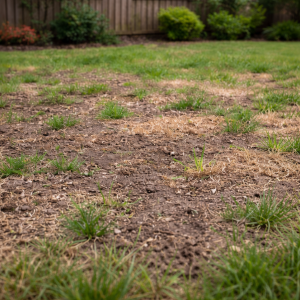
Overwatering
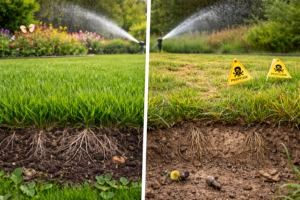
Shallowly rooted plants are easily stressed. When the roots of the turf plant die due to lack of oxygen, the plant is put under stress, which makes it more susceptible to disease and insect damage. Minor disease and insect problems can become major lawn disasters when a lawn is shallowly rooted.
Overwatering your lawn can cause many harms, including:
- Shallow root depth
- Thatch
- Several types of fungus that can kill your lawn – mushrooms, fairy rings, dollar spot, rust, necrotic ring spot, grey leaf spot, brown patch, Pythium blight
- Several types of mold that can kill your lawn – snow mold, sooty mold
- An abundance of insects and added insect pressure
- Moss
- Root rot
- Exaggerated grass thinning, especially in shaded areas
- Slug proliferation
- Dead soil – nutrients get washed out from excess water, and excess water degrades fertilizer when applied, washing it straight through the soil
- Mowing problems – divots, grass ripped out by the root, “turning spots,” long spots from grass layover, and clumped grass. Mowing wet grass also puts extra strain on your mower, reducing its life. Grass needs to be cut dry.
- Rapid grass growth – when mowing, you should never remove more than 1/3 of the plant at any one time, or it can shock the grass and cause browning for up to 2 weeks while it recovers
- Severely reduced effectiveness of weed control measures
Underwatering
The issues associated with underwatering grass are much simpler but can still cause real long-term problems. When grass doesn’t get enough water, it goes into a dormancy phase – similar to what happens during winter. But unlike winter, if the grass doesn’t start receiving water, it will begin to die. Just because your grass starts browning in summer heat doesn’t mean it’s dead, but it does mean you need to act quickly to prevent permanent damage. Once the grass starts receiving adequate water, it will generally fully recover in 1.5-2 weeks. Common issues with underwatering include:
- Your grass won’t be green
- Your grass will die off
- Your fertilizer won’t be effective – fertilizer needs to be watered into the soil so it can be taken up by the roots (this also affects pre-emergent)
- Weeds – most weed varieties in Idaho thrive in dry areas, and dry conditions prevent healthy root structure in grass, making it easier for weeds to crowd out your lawn
- Most grass varieties lack the advanced root structure or leaf storage capacity to store water like trees and shrubs can – they only access water currently available in the soil, so they need regular watering
- Underwatered grass has diminished root structure, leaving it more susceptible to disease and bugs
Why Proper Watering Matters
Properly watering your lawn will prevent disease, bug problems, and weeds, while helping you get the most value out of the services we provide. It will help create a beautiful, lush lawn and build proper root structure and healthy soil.
You can fertilize and treat weeds correctly, but if the lawn isn’t watered correctly all the time, the money and effort put into your lawn will be wasted. Proper watering is one of four key ingredients for a healthy lawn – the others being fertilizing, weed/bug control, and proper mowing. Get all of these right except one, and they all fall apart.
Understanding Evapotranspiration
There’s actually a science dedicated to properly watering plants, called Evapotranspiration – the process by which water transfers from the land to the atmosphere through evaporation from the soil and other surfaces, and through transpiration from plants. Every plant needs a certain amount of water to survive and be healthy, but outside factors restrict how much water the plant actually receives.
Evaporation is the key factor, and the two biggest drivers of evaporation are air temperature and wind. Your lawn needs more water during high-heat months because of increased evaporation – so the amount you water in spring and fall won’t match what you need in the heat of summer. Your lawn’s actual water needs change almost monthly, which means your sprinkler schedule needs monthly adjustment too.
Soil Type Matters
Soil type is another factor. The most common soil types in this valley are loam, clay, and sand, and each retains water differently – meaning you’ll water differently in clay versus loam or sand.
Grass Type and Rooting Depth
The last major factor is grass type. The most common grass in the valley is Bluegrass, with an average rooting depth of 2–6 inches. Since most grass varieties can’t store water, Bluegrass only has access to water in the first 2–6 inches of soil – which is why “deep watering” generally doesn’t work for Bluegrass. Knowing your grass type and watering accordingly is critical.
How to Set Up a Watering Schedule
There are plenty of “how to” guides online for sprinkler schedules, but everyone’s soil conditions, sun exposure, grass type, wind exposure, and sprinkler coverage are different. You’ll need to spend a little time on your property dialing in your system.
Step 1: Run a Baseline Schedule for One Week
Set up a generic baseline schedule and let it run for one week. Do not make constant changes every couple of days – if you make continual changes throughout the week, you won’t know which changes were positive and which were negative. Let the program run for a full week before assessing.
Generic Initial Setup:
| Sprinkler Type | Spring | Summer | Fall |
| Pop-up | 15 minutes, 2–3x/week | 20–25 minutes, up to 6x/week | 15 minutes, 2–3x/week |
| Rotor/Impact | 30 minutes, 2–3x/week | 45–50 minutes, up to 6x/week | 30 minutes, 2–3x/week |
*If you live in the foothills and have sandy soil, your schedule will need adjustment.
**Call 208-361-2560 and we can go over a few options.
Step 2: Assess and Make Targeted Adjustments
After running the generic schedule for a week, walk around your yard:
- If your grass is green overall and the lawn isn’t wet or muddy, you’re probably close to where you need to be.
- If the entire lawn is still dry, add another day of watering.
- If most of the lawn looks good but one section is muddy or overwatered, locate that sprinkler zone and turn down the run time for that zone only.
- If the whole lawn looks good except for one dry area, locate that zone and turn up the run time for that zone only.
Don’t make changes to the entire system if you’re only having problems in one area. Make small adjustments – try adding or subtracting 5 minutes at a time. For instance, if you’re watering 15 minutes 2–3 days a week and the grass is still a little dry, try 20 minutes 2–3 days per week. Wait a week after making changes to see the effect before adjusting again.
Step 3: Fine-Tune Problem Areas
Once you’ve made adjustments from the week before, walk your lawn again and note any problem areas. By this point you should be very close to dialed in. Repeat the fine-tuning process for individual zones as needed.
Step 4: Adjust Seasonally
After your system is dialed in, seasonal changes become easy – just add or subtract watering days as the season warms or cools. Early spring you might water once a week; by July at 100°F you might be up to 6 days a week. As the season cools (usually starting the second week of August), gradually remove watering days.
For your first season, take notes on every change you make – it’ll make the following season much easier. As you become more familiar with your lawn and sprinkler system, you’ll start to notice patterns: shaded areas need substantially less water than full-sun areas, and you’ll begin to recognize how wind and air temperature affect your grass’s water needs.
Special tips
- Never water the same day as mowing. If you can resist watering the day of or the day before mowing, it will vastly improve mowing quality.
- Don’t be scared to water multiple days in a row. During the heat of summer, our team commonly waters 6 days in a row, leaving one day a week for mowing.
- Don’t water the same day as any weed treatment. Grass shouldn’t be watered for 24 hours following weed treatment.
- Fertilizer and pre-emergent need to be watered in as soon as possible.
- If fertilizer and weed control are applied at the same time, wait 24 hours before watering.
- Sandy soil requires a different approach – give us a call and we’ll go over a few different schedules. 208-361-2560.
- Some sprinkler issues need professional help – adjustments, repairs, or component replacement. If you’re having a persistent problem, give us a call and schedule our sprinkler tech. 208-361-2560.
FAQ
What’s the most common watering mistake homeowners make?
Overwatering. It causes shallow root systems, fungal diseases, moss, excessive thatch, and washes out nutrients and fertilizer before your grass can use them.
How do I know if I’m overwatering?
Signs include a wet or muddy lawn, moss or mushrooms appearing, dead patches despite fertilizing, and difficulty mowing without tearing grass. Your lawn should be green but never squishy underfoot.
What’s the ideal rooting depth for Bluegrass?
Bluegrass roots typically reach 2–6 inches deep, which is why “deep watering” doesn’t work for this grass type. Focus on frequent, moderate watering instead – water needs to reach the top 2–6 inches consistently.
Should I adjust my watering schedule seasonally?
Absolutely. Your sprinkler schedule should change almost monthly to account for temperature and evaporation differences. In spring you might water once a week; by July you could be at 6 days a week.
What is evapotranspiration and why does it matter?
Evapotranspiration is the process of water leaving the soil through evaporation and plant transpiration. Higher air temperatures and wind in summer increase evapotranspiration, meaning you need to water more frequently – not just longer – to deliver the same amount of water your grass needs.
Can I use the same watering schedule in clay soil as in sandy soil?
No – soil type dramatically affects how water is retained and how often you need to water. Clay holds water longer (fewer waterings), while sand drains quickly (more frequent watering). Call us at 208-361-2560 if you have sandy soil and need a customized schedule.
Struggling with your current watering schedule?
The difference between a thin, disease-prone lawn and a thick, healthy one often comes down to proper irrigation. Let our team help you optimize your sprinkler system for your specific property.
Get a Free Lawn Watering Assessment – Call 208-884-8986