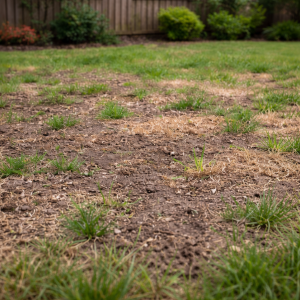
Watering is the one thing that makes or breaks a lawn in the Treasure Valley — and the one homeowners get wrong most often. With Idaho’s dry summers, shifting seasons, and varying soil types, there’s no single sprinkler schedule that works for every property.
This guide from your local experts at Organic Solutions covers everything: watering new seed and sod, caring for new trees and shrubs, the science behind evapotranspiration, and how to build a watering schedule dialed in to your yard — plus the most common overwatering and underwatering problems we see across Meridian, Boise, and Nampa, and how to fix them.
How to Water New Grass Seeds
Proper watering for new seed can be a little tricky. The most important thing to remember is the seed needs to stay damp 24 hours a day, 7 days a week. But you don’t want puddles developing in your yard either, as it will float the grass seed and create patchy areas.
Step 1: Determine Your Zone Run Times
Turn on each sprinkler zone individually one by one and write down the minutes each zone needs to run until the soil becomes dark chocolate brown and water begins to lightly remain on the surface of the ground (not puddling but on the verge). Program each zone to run for the amount of time you wrote down.
You will likely notice shaded areas require less run time and areas with better sprinkler coverage require less run time. For pop-up sprinklers, expect 4–8 minutes per zone; for rotor or impact sprinklers, 8–15 minutes per zone.
Step 2: Set Your Daily Watering Frequency
Set your sprinkler timer to run through the zones more than once per day, as water will soak into the ground and evaporate throughout the day. The ground needs to remain that chocolatey brown color 24/7. How many times you run the sprinklers daily depends on the season, wind, and air temperature – higher temperatures and more wind equal more evaporation.
In spring this may be 2–3 times per day (every 8 hours); in mid-summer you may need 5–6 times per day. Your grass will not germinate unless the seed stays damp, so adjust as needed.
Step 3: Monitor Growth and Adjust
Your grass should sprout between the 7–14 day mark. Do not walk on newly seeded areas until the grass starts to thicken up – new sprouts are very fragile and easily damaged. Keep traffic to a minimum until grass is 2–3″ high in all areas.
Once grass reaches 2–3″ high in all areas, reduce watering to normal levels. Once it reaches 3″ in all areas, you may begin mowing.
Step 4: Overseed and Fertilize
You may overseed any thin areas at this time, though most grass types are naturally spreading and will fill in throughout the season.
Apply a high-grade fertilizer around the 30-day mark (or have us do it). Do not apply any weed control at this time – the grass is still too fragile.
Around the 75-day mark, you may apply fertilizer and weed control (or have us do it). When seeding a lawn it is very normal to have weeds break through.
From here, follow the proper watering instructions for an established lawn below.
How to Water New Trees and Shrubs
Getting going on sod is much simpler than seed. Grass seed may take up to two months or more to establish, where sod usually takes only 2–3 weeks.
Initial Setup
The setup is similar to seed: water multiple times a day for the first couple weeks and keep traffic to a bare minimum. You want the new sod well saturated – right on the verge of being muddy without being muddy. The sod needs to maintain this moisture level 24/7 for the first two weeks. Follow the watering frequency guidelines from the new seed section above.
Do not walk on newly sodded areas until the grass starts to thicken up. Keep traffic to a minimum until the sod is well established.
Root Check
After the first 2 weeks, do a “root check” on your new sod. Walk out and grab a piece in your hands. Firmly pull up on it – don’t try to rip it out of the ground, but pull up firmly. If the roots haven’t yet attached to the ground, the sod will pull up with no resistance. If it’s begun rooting, it will hold pretty firmly to the ground.
If the sod has not begun rooting, continue the same watering schedule for an additional week and recheck. Once it has rooted over the entire lawn, move on to the “Properly Watering Your Lawn” section below and begin a normal watering schedule.
How to Water New Trees and Shrubs
New trees and shrubs may take up to two seasons for the roots to start growing outside of the root ball from the nursery. Proper watering and fertilizing are extremely important during this time, especially if the plants and trees are watered by drip irrigation.
The Soil Moisture Test
For new trees and shrubs, the soil must remain damp (not muddy) at the base for the first two seasons. The easiest way to check this is to take a handful of dirt from the base of the plant and squeeze it. You want the dirt to easily compact and hold its shape once you relieve pressure, but you don’t want water dripping out when you apply pressure (muddy). The dirt should be a nice chocolaty brown color.
Too much water can rot the roots. Too little, and they won’t survive. Monitor this carefully during the first two seasons.
Setting Up Drip Irrigation
If your plants are run on drip irrigation, start a watering cycle of 20–30 minutes per day as an initial test. Run the drip in the morning, then go out in the late afternoon and check your plants.
It’s okay for the top ¼” of soil to not be damp, since it’s been exposed to the air all day. Once you get below that layer, if the soil is not still damp from the morning cycle, add an afternoon drip cycle to the schedule. Check again the following day. If the ground is now muddy, run shorter morning and afternoon cycles instead. It may take a few days of tinkering to find the right balance.
Adjusting for Seasons
In spring and fall your plants and trees require less water than in mid-summer. Your plants don’t actually consume more water in summer, but you lose more water to evaporation due to the heat. In summer you’ll have to run your drip irrigation or sprinklers substantially longer than in spring or fall to deliver the same amount of water.
Monitor your plants’ water needs throughout the season to account for changing weather.
How to Water New Sod
Getting going on sod is much simpler than seed. Grass seed may take up to two months or more to establish, where sod usually takes only 2-3 weeks. Here’s how you get going:
The initial setup is very similar to seed. You’ll want to water multiple times a day for the first couple weeks and keep traffic to a bare minimum. You want the new sod to be well saturated – right on the verge of being muddy without being muddy. The sod needs to maintain this moisture level 24/7 for the first two weeks. Please review the “New Grass Seed” section above for initial setup.
After the first 2 weeks, do a “root check” on your new sod. Walk out on your new sod and grab a piece in your hands. Firmly pull up on it – don’t try to rip it out of the ground, but pull up firmly. If the roots haven’t yet attached to the ground, the sod will pull up with no resistance. If it’s begun rooting, it will hold pretty firmly to the ground. If the sod has not begun rooting, continue the same watering schedule for an additional week and recheck.
Frequently Asked Questions (FAQs)
How often should I water new grass seed?
New seed needs to stay damp 24/7, which typically means watering 2–3 times a day in spring and up to 5–6 times a day in summer, until grass reaches 2–3″ tall.
How long does sod take to root compared to seed?
Sod typically roots within 2–3 weeks, compared to up to two months or more for grass seed. Do a “root check” by gently pulling on the sod after 2 weeks – if it holds firmly, it’s rooted.
Do new trees and shrubs need different watering than new grass?
Yes – trees and shrubs need the soil to remain consistently damp (not muddy) at the base for the first 2 seasons. This is best done with drip irrigation starting at 20–30 minutes per day, then adjusted based on soil moisture checks.
Can I water new sod and new seed the same way?
Mostly yes – both need multiple waterings per day for the first couple weeks to stay consistently damp. The main difference is sod roots in 2–3 weeks, while seed takes 2 months or more.
What does “chocolatey brown” soil actually mean?
It means the soil is visibly dark and moist to the touch, with water barely glistening on the surface – not puddling, but clearly hydrated. This is the target moisture level for new seed and sod.
Ready to get your new lawn or landscape established the right way?
Our team at Organic Solutions has helped hundreds of Treasure Valley homeowners dial in their watering routines. Whether you need help setting up your sprinkler system, adjusting your drip irrigation, or just want professional eyes on your property, we’re here to help.
Schedule a Free Sprinkler Assessment – Call 208-884-8986