Your water bill climbs every July, the sprinklers run faithfully every morning, and yet the lawn still looks stressed with brown patches creeping in. It feels like the answer must be more water. Usually it is the opposite. Most Treasure Valley lawns are not watered too little in summer, they are watered wrong, and fixing how you water saves money and gives you a greener lawn at the same time.
Here is how to water an Idaho lawn through the heat the right way, so every dollar of water actually ends up in the roots instead of running down the gutter.
The one rule that changes everything
Water deeply and infrequently, not a little every day. This is the single most important idea in lawn watering, and most people get it backwards.
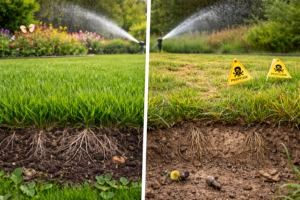
Grass roots grow toward water. When you water lightly every day, the moisture never goes deep, so the roots stay shallow near the surface where they dry out fast and burn in the heat. When you water deeply a few times a week, the water soaks down and the roots chase it, growing deep and strong. A deep-rooted lawn survives Idaho summers on less water and shrugs off heat that flattens a shallow-rooted one. Fewer, heavier waterings beat frequent sprinkles every time.
How much water your lawn actually needs
A cool-season Treasure Valley lawn, the Kentucky bluegrass, ryegrass and fescue blends that grow here, wants roughly one to one and a half inches of water a week in summer, including any rain. In the worst of the July and August heat, that can climb toward two inches.
The easy way to measure it is the tuna can test. Set a few empty cans around the lawn while the sprinklers run, and time how long it takes to collect about an inch. That tells you exactly how long your system needs to run to deliver the right amount, which is far more reliable than guessing at minutes.
How often, and the clay soil trick
Deliver that inch or so across two to three waterings a week, not seven. Two or three deep soaks build deep roots. Daily sprinkles do the opposite.
There is a Treasure Valley wrinkle, though. Our soil is heavy and alkaline, and heavy clay soil cannot absorb water quickly, so a long single run just puddles and runs off down the driveway, wasting money. The fix is cycle and soak. Instead of one thirty minute run, split it into two or three shorter cycles with a gap between them, letting each soak in before the next. You deliver the same water, but it actually goes into the ground instead of the gutter. Relieving compaction with aeration helps even more, opening the soil so water penetrates instead of pooling.
The best time of day, and it is not close
Water early in the morning, ideally between about 4 and 9 am, before the heat and wind pick up. This one change saves more water than almost anything else.
Water at midday and a big share evaporates before it ever reaches the roots, so you pay for water the sun steals. Water in the evening and the lawn sits damp all night, which is an open invitation to fungus and lawn disease in our climate. Early morning gives the grass a deep drink, lets the blades dry as the sun comes up, and wastes almost nothing. If your system is on a timer, setting it to run before dawn is a free upgrade to both your lawn and your bill.
How to tell you are watering wrong
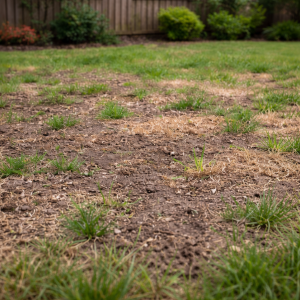
Your lawn will tell you, if you know the signs. Footprints that stay pressed into the grass instead of springing back mean it is thirsty. Mushrooms, a spongy feel underfoot, or water running down the sidewalk mean you are overwatering or watering too fast for the soil to absorb. And brown patches in a lawn you are watering plenty usually point to shallow roots or uneven sprinkler coverage rather than a lack of water. That last one is worth checking, because a single broken or misaimed sprinkler head watering the fence instead of the grass creates dry spots no amount of extra runtime will fix.
Tune the system, save the money
The biggest water waster in most yards is a sprinkler system nobody has looked at in years. Heads that spray the driveway, zones with uneven coverage, a controller still running a spring schedule in August, all of it quietly drains money. A quick audit and tune-up of your sprinkler system, fixing coverage, replacing broken heads and programming a sensible cycle-and-soak schedule, pays for itself fast in lower bills and a healthier lawn. If you are genuinely tired of the whole summer watering battle, some homeowners in our driest, hardest-to-grow spots switch to artificial turf and skip the water bill entirely.
Adjust as the season turns
Watering is not set and forget. Grass needs far less in the milder spring and fall than in peak summer, so dial the system back at both ends of the season rather than running a July schedule in May. Turn the sprinklers off for a few days after a good rain. And keep an eye on any local watering guidance or pressurized irrigation schedules in your neighborhood. Matching your watering to the actual weather, instead of a fixed timer you set once, is where a lot of the savings live.
A few spots that break the rule
Deep and infrequent is the rule for an established lawn, but a few situations call for something different, and knowing them saves headaches. Brand new seed or fresh sod is the big exception, because it has no deep roots yet and needs light, frequent watering to stay moist while it establishes, only shifting to the deep-and-infrequent routine once it has rooted in. Shady areas under trees or on the north side of the house dry out far slower, so they usually need noticeably less water than the sunny middle of the lawn. Slopes shed water fast, so they benefit most from the cycle-and-soak approach. And hot, south-facing strips along driveways and walls bake harder than the rest of the yard and may need a little extra. If your system waters the whole lawn the same, these spots are where the odd brown patch or soggy corner tends to show up.
Frequently Asked Questions
How often should I water my lawn in Idaho?
Water deeply two to three times a week in summer rather than a little every day. This trains deep roots that handle heat far better and use less water overall than daily shallow watering.
How long should I run my sprinklers?
Long enough to deliver about one to one and a half inches of water a week, split across your waterings. Use the tuna can test to time how long your system takes to put down an inch, since every system is different.
What is the best time of day to water a lawn?
Early morning, roughly 4 to 9 am. Midday watering wastes a lot of water to evaporation, and evening watering leaves the lawn damp overnight, which encourages fungus and disease.
How much water does an Idaho lawn need in summer?
Around one to one and a half inches a week including rain, climbing toward two inches in the hottest stretches of July and August. Cool-season grasses here are built for deep, infrequent watering.
Why is my lawn brown even though I water it?
Usually shallow roots from frequent light watering, uneven sprinkler coverage, or water running off our heavy clay soil before it soaks in. Deep watering, cycle and soak, and fixing sprinkler coverage solve most brown spots.
Should I water my lawn every day in the heat?
No. Daily watering keeps roots shallow and weak. Even in extreme heat, deep watering a few times a week with the cycle-and-soak method builds a more heat-resistant lawn on less water.
Water smarter, spend less, stay greener
A greener summer lawn and a smaller water bill are not opposites. They come from the same thing, watering deeply, early, and only as often as your lawn truly needs, on soil and a system that let the water actually soak in.
Organic Solutions has helped Treasure Valley homeowners get more lawn from less water for over twenty years, from Nampa and Meridian to Boise, Eagle, Kuna and beyond. If your bill is high and your lawn still looks stressed, request a free estimate or call us on 208 884 8986, and we will sort your watering, your soil and your season-long lawn care so your yard thrives without the waste.