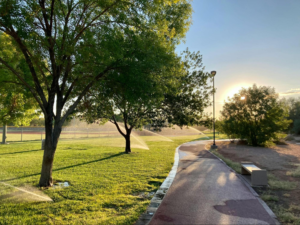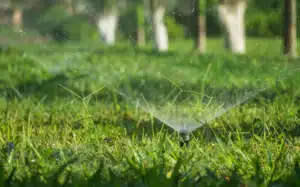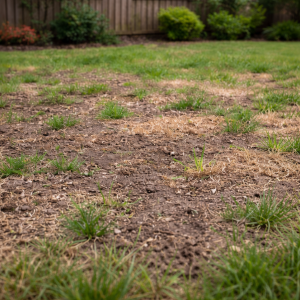
Open your water bill in July and August and you will see exactly where your money goes. In the Treasure Valley, outdoor watering can account for well over half of a household’s summer water use. Most of that water lands on turf grass, and a surprising amount of it never even reaches the roots. It evaporates in the afternoon heat, runs off compacted soil, or sprays onto the sidewalk.
Here is the good news. You do not have to choose between a beautiful yard and a reasonable water bill. A low water yard in Idaho can look lush, feel inviting, and hold up to our hot, dry summers far better than a traditional thirsty lawn. With the right plan, you can cut your outdoor water use dramatically while actually improving your curb appeal.
At Idaho Organic Solutions, we have spent more than twenty years helping homeowners in Nampa, Meridian, Boise, and the surrounding communities build landscapes that work with our climate instead of fighting it. This guide walks you through what a low water yard really looks like, how to get there step by step, and where professional help makes the biggest difference.
Why Idaho Yards Drink So Much Water
The Treasure Valley sits in a high desert. We average around 11 to 12 inches of precipitation per year, and almost none of it falls during the months when lawns need it most. Kentucky bluegrass, the most common turf in our area, wants 1.5 to 2 inches of water every week during peak summer. That gap between what nature provides and what a traditional lawn demands gets filled entirely by your sprinklers and your wallet.
Several local factors make things worse:
- Alkaline, compacted soil. Much of our valley soil is heavy and tight. Water struggles to soak in, so it runs off before roots can use it.
- Hot, windy summers. Afternoon winds and 95 degree days pull moisture out of soil and leaves at a rapid pace.
- Outdated irrigation. Older sprinkler systems with poor head placement, broken nozzles, or no smart controller can waste thousands of gallons a season without you noticing.
A low water yard attacks all three problems at once. You reduce the total area that needs irrigation, improve the soil so every drop counts, and upgrade the delivery system so water goes exactly where it should.
What a Low Water Idaho Yard Actually Looks Like
Forget the stereotype of a gravel lot with a lonely cactus. A well designed low water landscape in Idaho is layered, colorful, and full of life. Here are the core building blocks.
1. Right Sized Turf Zones
You do not need to eliminate grass entirely. You need to be intentional about it. Keep a practical patch of lawn where your kids and pets actually play, and convert the rest. Narrow side yards, steep slopes, and strips along driveways are terrible places for turf because sprinklers overspray them constantly. Those are the first areas to convert.
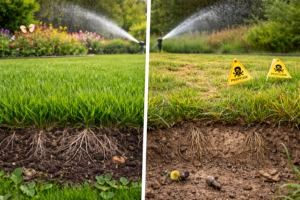
For the lawn you keep, a healthy maintenance routine matters. Deep, infrequent watering trains roots to grow down instead of sitting at the surface. Annual lawn aeration and dethatching opens up compacted soil so water infiltrates instead of running off. A properly fed lawn also uses water more efficiently, which is where an organic fertilizing program pays for itself.
2. Drought Tough Plants That Thrive Here
Native and adapted plants are the heart of any low water yard. Once established, these species can live mostly on natural rainfall with only occasional supplemental watering:
- Shrubs: rabbitbrush, fernbush, big sagebrush, dwarf blue arctic willow, potentilla
- Perennials: penstemon, blanket flower, yarrow, Russian sage, blue flax, coneflower
- Ornamental grasses: blue fescue, little bluestem, feather reed grass
- Trees: hackberry, bur oak, honeylocust, and other species suited to alkaline soil
Grouping plants by water need, a practice called hydrozoning, lets you water each zone appropriately instead of drowning drought lovers to keep thirstier plants alive.
3. Artificial Turf for High Demand Spots
Some areas simply need to stay green no matter what. Dog runs, play areas, and shaded spots where real grass refuses to grow are perfect candidates for artificial turf. Modern turf products look remarkably natural, drain well, and stand up to Idaho’s temperature swings. Best of all, they use zero irrigation water, ever. For many of our clients, converting even a few hundred square feet of struggling grass to quality turf produces an immediate and permanent drop in water use.
4. Hardscaping That Replaces Thirsty Turf
Patios, paver walkways, dry creek beds, and gravel seating areas add function and beauty while requiring no water at all. Thoughtful hardscaping also solves practical problems. A permeable paver patio gives you outdoor living space. A dry creek bed can double as a drainage feature that directs stormwater to your planting beds instead of the street.
5. Mulch, and Plenty of It
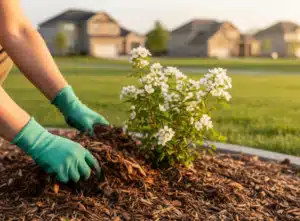
A 2 to 3 inch layer of bark or wood chip mulch over your planting beds cuts evaporation dramatically, keeps roots cooler, and suppresses the weeds that would otherwise steal moisture from your plants. Mulch is one of the cheapest water saving upgrades available, and it makes beds look finished and tidy.
6. Smart, Efficient Irrigation
Even the best plant palette wastes water if your sprinkler system is inefficient. Converting planting beds from spray heads to drip irrigation can cut water use in those zones by half or more, because drip delivers water slowly at the root zone with almost no evaporation. Add a smart controller that adjusts run times based on weather, and fix leaks or misaligned heads, and the savings stack up quickly. Our team handles complete sprinkler installation and repair throughout the valley, including drip conversions and smart controller upgrades.
How Much Can You Actually Save?
Every property is different, but the math is encouraging. The EPA estimates that replacing traditional turf and spray irrigation with water wise landscaping and drip systems can reduce outdoor water use by 50 percent or more. For a typical Treasure Valley home spending heavily on summer irrigation, that can mean hundreds of dollars back in your pocket every year, along with less mowing, less edging, and fewer weekends spent fighting a lawn that does not want to grow here in the first place.
There is a long term benefit too. Deep rooted, drought adapted landscapes handle heat waves and watering restrictions with ease. When neighbors’ lawns turn crispy in August, a well designed low water yard keeps its color.
A Realistic Conversion Plan
You do not have to redo your entire property in one season. Here is the phased approach we recommend to most homeowners:
Phase 1: Audit and quick wins. Have your irrigation system inspected and repaired. Add mulch to existing beds. Adjust your watering schedule to deep, infrequent cycles.
Phase 2: Convert the worst turf. Remove grass from narrow strips, slopes, and struggling areas. Replace with drought tough plantings on drip, artificial turf, or hardscape depending on how you use the space.
Phase 3: Refine and expand. Shrink remaining lawn areas to the size you actually use. Add trees for shade, which lowers water demand across the whole yard as they mature.
A professional landscaping plan ties all three phases together so each project builds toward a cohesive final design instead of a patchwork.
Frequently Asked Questions
Will a low water yard look bare or desert like?
Not if it is designed well. Layered plantings of shrubs, perennials, and ornamental grasses provide color from spring through fall. Many of our low water designs look fuller and more interesting than the flat green lawns they replaced.
How long until new drought tolerant plants can survive on little water?
Most native and adapted plants need regular watering for their first one to two growing seasons while roots establish. After that, they can typically thrive on deep watering every one to three weeks in summer, and many need even less.
Is artificial turf safe for kids and pets?
Yes. Quality modern turf is lead free, drains quickly, and holds up to heavy pet use. It also eliminates the mud, brown patches, and lawn chemicals that come with natural grass in high traffic areas.
Can I convert to drip irrigation without replacing my whole sprinkler system?
In most cases, yes. Existing zones can often be retrofitted to drip using conversion kits at the valve. We evaluate your current system first and only recommend replacing components that are actually failing.
What does a low water conversion cost?
It depends on the size of the area, plant selections, and whether hardscaping or turf is involved. Because we phase projects, you can start with high impact changes that fit your budget now and expand later. Every project starts with a free estimate, so you will know your numbers before any work begins.
Ready to Shrink Your Water Bill?
Your yard should work for you, not the other way around. Idaho Organic Solutions designs and builds low water landscapes across Nampa, Meridian, Boise, Caldwell, Kuna, Eagle, Star, and Middleton, and we handle everything from irrigation upgrades to full yard transformations.
Stop paying to water grass you never use. Contact us today for a free estimate or call 208 884 8986 and let’s design a beautiful Idaho yard that thrives on less. Your summer water bill will thank you.