Every Treasure Valley summer has a villain, and this one has spines. Goatheads flatten bike tires, stab bare feet on the driveway, and lodge in dog paws so deep your pup limps to the door. They are such a local institution that Boise throws a festival around collecting them. But a festival will not save your yard. Winning against goatheads takes the right moves at the right time, and the single most important one happens before you ever see a burr.
Here is what goatheads actually are, why they keep coming back year after year, and the organic, kid and pet safe way to finally get ahead of them.
What goatheads actually are
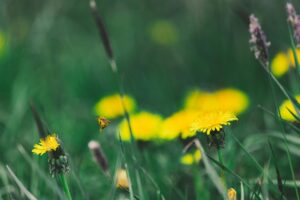
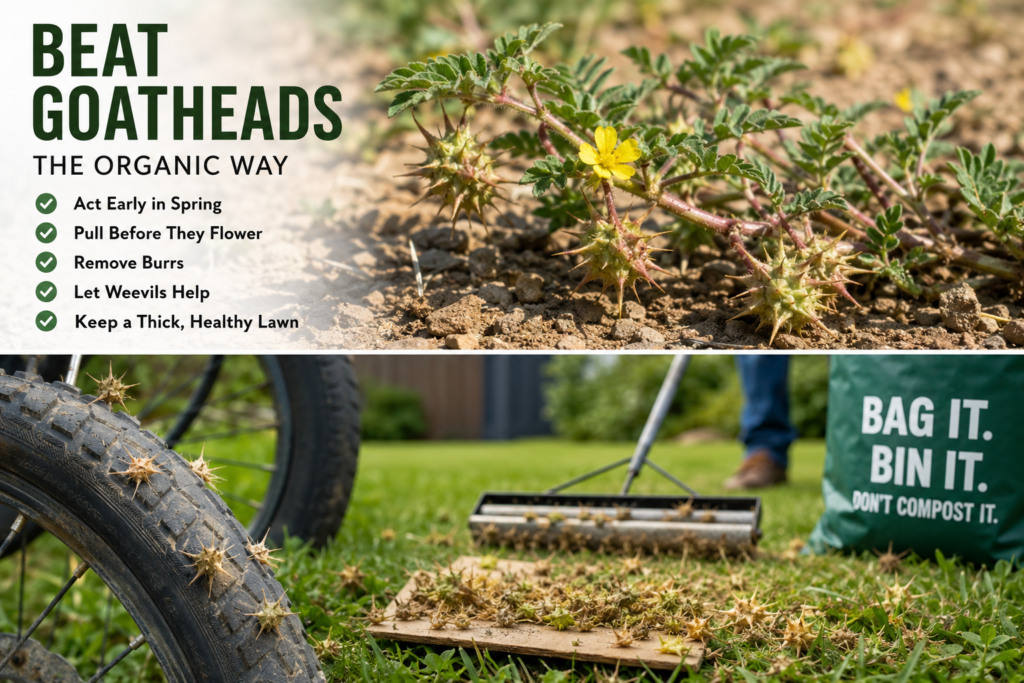
Goathead is the local name for puncturevine, a low, sprawling summer weed that hugs the ground in a mat of small leaves with tiny yellow flowers. Those innocent flowers are the problem, because each one becomes a hard, spiny burr, the goathead, armed with spines sharp enough to puncture a bicycle tire. It loves exactly the conditions the valley serves up in summer, hot, dry, compacted, poor soil, and it thrives along driveways, sidewalks, gravel, and any bare or neglected patch of ground.
It is officially a noxious weed in Idaho for good reason. Left alone, a single plant can carpet a surprising amount of ground and arm it with hundreds of burrs.
Why they come back every single year
Here is the frustrating truth that explains why goatheads feel unbeatable. It is the seed bank. One plant produces hundreds of burrs, each burr holds several seeds, and those seeds can survive in the soil for years, waiting for their moment. So even a perfect clean up this summer leaves a reservoir of seed underground ready to sprout next year.
That single fact shapes the entire strategy. You cannot win goatheads in one weekend. You win by stopping seed production year after year until the seed bank runs down. Every burr you prevent from forming is a handful of future plants you just erased.
The organic battle plan
Most guides jump straight to spraying strong chemical herbicides. In a yard where kids play and pets roam, there is a better way, and it works because it targets the plant’s weak points rather than just burning the leaves.
Timing is everything, so start in spring. Goatheads sprout as the soil warms through late spring and summer. Getting ahead of that germination, rather than reacting once burrs appear, is the whole game. An organic pre emergent approach applied at the right time stops seeds before they ever become plants.
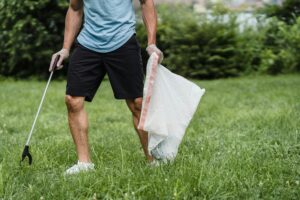
Pull young plants before they flower. The goal is simple, never let a plant set seed. Young puncturevine pulls easily, especially from moist soil after watering. Wear gloves, get the taproot, and above all bag the plants and put them in the trash. Do not compost them and do not mow over them, because that just scatters burrs and seed across the yard.
Clean up the burrs already on the ground. Existing burrs will re seed and hitch rides on shoes, tires and paws. Dragging an old piece of carpet, cardboard or a burr roller across problem areas lifts them off the ground so you can bag and bin them. It is oddly satisfying, and it directly shrinks next year’s crop.
Let the weevils help. Idaho has established puncturevine weevils, tiny insects that feed on the plant’s stems and seeds. They are a natural ally already working in the background, and a chemical heavy approach can wipe them out, so an organic program actually keeps your free helpers alive.
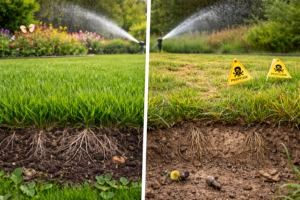
Deny it the bare ground it loves. This is the long game and the most powerful move of all. Goatheads colonize bare, compacted, poor soil. They struggle to establish in a thick, healthy lawn or a well mulched bed. Filling bare spots, overseeding thin areas, and keeping your turf dense takes away the open ground goatheads depend on. A vigorous lawn is one of the best goathead defenses you have, which is why our weed control works hand in hand with building a thicker lawn rather than just spraying and walking away.
The habits that spread goatheads without you realizing
Half the goathead battle is simply not helping them travel. The burrs are built to hitch rides, and a few everyday habits scatter them further than any wind could. Mowing or tilling over mature plants flings burrs and seed across the whole yard. Driving over a patch presses burrs into tires that then drop them down the driveway and out into the street. Moving gravel or soil from a contaminated corner starts a brand new patch wherever it lands. Even walking the dog through an infested lot carries burrs home in fur and paws. Checking shoes, tires and pets after being in known goathead spots, and never mowing a plant that is already carrying burrs, keeps this year’s problem from quietly becoming next year’s everywhere.
This is a multi year fight, and that is normal
Because of that stubborn seed bank, expect two to three years of steady effort before goatheads become a minor nuisance rather than a summer plague. The encouraging part is that it gets easier every year. Stop the seeds this year and there are fewer plants next year, fewer still the year after, until you are pulling the occasional straggler instead of battling a carpet. Consistency beats intensity here, and a season long lawn care program keeps the pressure on at the right moments so you are not relying on remembering to act.
The Treasure Valley reality
Goatheads are woven into life here, from the North End sidewalks to gravel lots across Nampa and the wider valley. The national advice to douse them in strong herbicide ignores the fact that most of us are dealing with them in yards full of kids, dogs and vegetable gardens. The organic route, right timing, diligent removal, natural weevils and a thick lawn, gets you there without turning your yard into a chemical zone.
Frequently asked questions
What are goatheads?
Goatheads are the spiny burrs of puncturevine, a low growing summer weed common across the Treasure Valley. The plant produces hard, sharp seed pods that puncture bike tires and injure bare feet and pet paws.
How do I get rid of goatheads for good?
Stop them from setting seed, year after year, until the soil’s seed bank runs down. Use a well timed spring pre emergent, pull young plants before they flower and bag them, clean up existing burrs, and keep a thick lawn that denies them bare ground. It takes a few years, but it works.
When should I pull or treat goatheads?
Get ahead of them in spring before the seeds germinate, then pull young plants through summer before they flower and form burrs. Acting early beats reacting once the burrs are already on the ground.
Are goatheads dangerous to dogs?
The burrs are the main hazard. Their sharp spines lodge in paws, causing pain and sometimes infection, and can injure the mouth if chewed. Keeping your yard clear of burrs protects your pets.
Why do goatheads keep coming back?
Their seeds survive in the soil for years, so a single clean up cannot end them. Each burr you prevent from forming reduces next year’s crop, which is why the fight is about stopping seed production over several seasons.
Can I compost goathead plants?
No. Bag pulled plants and put them in the trash. Home compost rarely gets hot enough to kill the seeds, so composting them, like mowing over them, just spreads the burrs and seed around your property.
Take your yard back from the stickers
Goatheads are beatable, but only with the right timing and a plan that runs across the whole season, not a one time spray. Done the organic way, you get your safe, sticker free yard back without blanketing it in chemicals your kids and pets have to avoid.
Organic Solutions has fought Treasure Valley weeds for over twenty years, from Nampa and Meridian to Boise, Eagle, Kuna and beyond, with organic methods that are tough on goatheads and safe for your family. Request a free estimate or call us on 208 884 8986, and we will build a plan to get ahead of the goatheads and keep them down for good.