You spot the first patch near the edge of the lawn, those little three-leaf clusters and white puffball flowers, and by midsummer it feels like clover is everywhere. Most people head straight for the weed killer. But before you spray, it is worth knowing that clover is not really the problem. It is a messenger, and once you understand what it is telling you, getting rid of it becomes a lot easier and a lot more permanent.
Here is what clover in your Treasure Valley lawn actually means, whether you even want it gone, and how to crowd it out for good the organic way.
What clover is telling you about your lawn
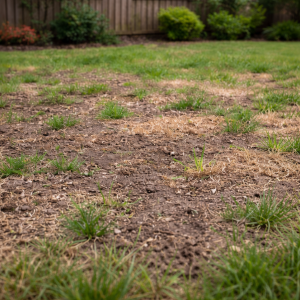
White clover is a legume, which means it pulls its own nitrogen out of the air and feeds itself. That is the whole secret to why it shows up. Clover thrives exactly where your grass is struggling, in soil that is low on nitrogen, thin, compacted or underfed. Grass needs nitrogen from the soil to grow thick and green. Clover does not. So when your lawn is hungry, the grass thins out, and clover happily moves into the gaps because it has an advantage your grass does not.
In other words, a lawn full of clover is usually a lawn that is underfed or thin, often sitting on the kind of compacted, alkaline soil that is common across Nampa and the wider valley. The clover is not attacking your grass. It is filling a vacancy the grass left open.
Do you even want to get rid of it?
Here is the honest question most articles skip. Clover is not all bad, and some people choose to keep it.
On the plus side, clover stays green through summer with less water than grass, it feeds itself and even the grass around it with nitrogen, it holds up to drought, and it feeds bees and pollinators. Micro clover is actually added to lawns on purpose for these reasons.
On the other side, those flowers attract bees, which matters if you have young kids running barefoot or pets in the yard, it can look patchy against a grass lawn, and left alone it spreads. Neither choice is wrong. If you like a low water, pollinator friendly lawn, a bit of clover is a feature. If you want a clean, uniform grass lawn, read on.
How to crowd clover out the organic way
The reason spraying alone rarely works is simple. Kill the clover without fixing the hungry, thin lawn that invited it, and more clover just moves back into the same gaps. The organic approach fixes the cause, so the grass wins the territory back and holds it.
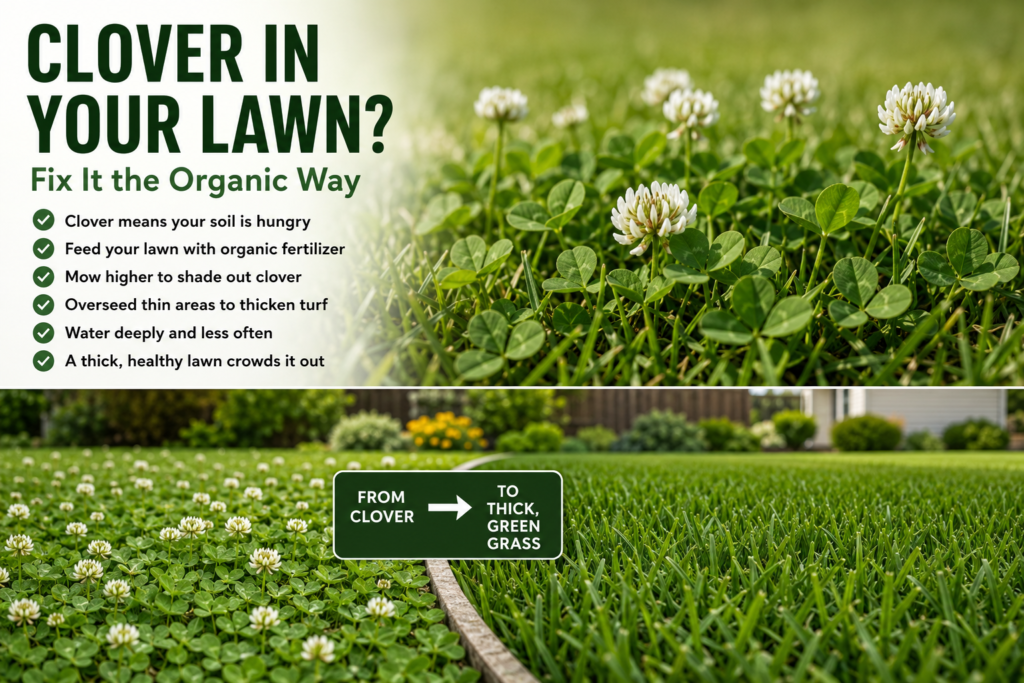
Feed the lawn. This is the big one. Because clover only has the advantage in low nitrogen soil, feeding your grass removes that advantage. A well fertilized lawn grows thick enough to out compete clover, and over a season the balance tips back toward grass. Chasing clover with herbicide while starving the lawn is fighting the symptom, not the cause.
Mow higher. Clover is low growing, so keeping your grass a little taller, around three to three and a half inches, shades the soil and the clover beneath it. Scalping the lawn short does the opposite and hands clover the sunlight it wants.
Thicken the turf. Bare and thin spots are open invitations. Overseeding those areas so the grass grows dense leaves clover nowhere to establish. A thick lawn is the best clover control there is.
Water deeply and less often. Frequent shallow watering favors shallow rooted opportunists. Deep, infrequent watering builds deeper grass roots that compete better.
Pull small patches. For a little clover, pulling it by hand, roots and all, from moist soil is quick and effective, especially paired with reseeding the spot.
Do all of that and clover fades not because you poisoned it, but because your grass finally out grew it. That is the difference between an organic fix and a temporary one, and it is the whole idea behind our weed control approach.
Why the Treasure Valley grows so much clover
Our conditions practically roll out the welcome mat. Alkaline soils here often tie up nutrients so grass goes hungry, our summers are hot and dry enough to thin cool season grass, and years of foot traffic leave soil compacted. Every one of those weakens the grass and favors the clover. Addressing the soil and the feeding, not just the clover on top, is what actually turns it around, which is exactly what a season long lawn care program is built to do.
The soil underneath matters too
Clover’s advantage often starts below the surface. Compacted soil, which is common in older Treasure Valley yards and anywhere with regular foot traffic, keeps grass roots shallow and weak while clover shrugs it off. Relieving that compaction with aeration lets air, water and nutrients reach the grass roots, so the lawn can actually use the feeding you give it instead of watching it run off hard ground. Our alkaline soils add a second hurdle, because they can lock up nutrients even when those nutrients are present, which is part of why a hungry looking lawn stays hungry no matter how much you throw at it. Addressing the soil, not just the surface, is what lets grass reclaim the ground for good rather than trading clover for bare dirt.
The mistakes that keep clover coming back
A few habits keep people stuck in a yearly clover fight. Spraying the clover but never feeding or thickening the lawn, so it returns into the same gaps. Mowing too short, which exposes soil and favors low growing clover. Watering little and often, which keeps grass roots shallow. And ignoring compaction, which keeps the grass weak no matter what you do on the surface. Fix those and the clover loses its foothold.
Frequently asked questions
Why is clover taking over my lawn?
Clover thrives where soil nitrogen is low and grass is thin, because it makes its own nitrogen and does not need the soil to be rich. A lawn full of clover is usually underfed, thin or compacted, and the clover is simply filling the gaps.
Is clover good or bad for a lawn?
It depends on what you want. Clover stays green with less water, feeds nitrogen back into the soil and supports pollinators, but it attracts bees and looks patchy in a grass lawn. Some people keep it on purpose, others prefer a uniform lawn.
How do I get rid of clover naturally?
Feed the lawn so the grass out competes it, mow a little higher to shade it, overseed thin spots to thicken the turf, water deeply and less often, and hand pull small patches. Fixing the hungry, thin lawn is what makes it last.
Will fertilizing get rid of clover?
Often, yes. Because clover only has the advantage in low nitrogen soil, feeding the grass removes that advantage and lets a thick lawn crowd the clover out over a season.
Does spraying clover work?
Spraying alone rarely lasts, because it does not fix the thin, underfed lawn that invited the clover in the first place. Without feeding and thickening the turf, clover simply returns to the same gaps.
Can I just leave the clover in my lawn?
Absolutely, and plenty of people do. Clover stays green with less water, feeds the soil and supports pollinators. The trade offs are the bees it draws and its patchy look next to grass, so whether to keep it comes down to how you use your yard.
Let us get your grass winning again
Clover is beatable, and you do not need harsh chemicals to do it. The trick is feeding and thickening your lawn so the grass takes its territory back, which also happens to be the safest approach for a yard where your kids and pets play.
Organic Solutions has cared for Treasure Valley lawns for over twenty years, from Nampa and Meridian to Boise, Eagle, Kuna and beyond, using organic methods that fix the cause instead of masking it. If clover has taken over, request a free estimate or call us on 208 884 8986, and we will get your grass thick enough to crowd the clover out for good.