A maple with pale yellow leaves and dark green veins is one of the most common tree problems in the Treasure Valley. The usual response is to spread more fertilizer, and it rarely helps. In most cases the soil has plenty of iron. The tree just can’t absorb it.
The condition is called iron chlorosis. At Idaho Organic Solutions, alkaline soil is part of nearly every tree and lawn job we do in the valley, and chlorosis is where it shows up most visibly. Here’s how to recognize it, what makes it worse, which treatments work, and when a tree is better replaced than treated.
What Is Iron Chlorosis?
Iron chlorosis is a yellowing of leaves caused by a shortage of usable iron in the plant. Trees need iron to make chlorophyll, the green pigment in leaves. Without enough, leaves turn light green, then yellow, while the veins stay green.
The underlying cause is soil pH. Utah State University Extension explains that iron chlorosis usually occurs in soils with a pH above 7.0, where iron converts into forms that roots can’t take up. University of Idaho Extension’s Canyon County Master Gardeners describe Treasure Valley soil as having a high pH and note that some soils need amendments to prevent chlorosis on trees and shrubs.
How to Recognize It
Iron chlorosis follows a predictable progression:
- Early: Leaves turn pale green or yellow-green, with a network of darker green veins.
- Moderate: The tissue between the veins turns bright yellow.
- Severe: Leaves turn nearly white, edges scorch brown, and leaves may be smaller than normal.
- Advanced: Branch tips die back. Over several years, the tree can decline and die.
Symptoms may show on a few leaves, one branch, half the crown, or the whole tree. Because the youngest growth is the most tender, USU notes that damage is often worst at the branch tips.
Rule out other causes first
Yellow leaves don’t always mean iron chlorosis. USU Extension lists insects, disease, herbicide misuse, and a history of overwatering as other causes to rule out. High soil pH can also cause manganese deficiency, which looks almost identical. Nebraska Extension says leaf tissue and soil testing is the only way to know for certain which nutrient is short, which is why some arborist chlorosis products contain both iron and manganese.
Which Trees Are Most Affected?
Some species handle alkaline soil well. Others struggle no matter how well they’re cared for.
| Tree | Chlorosis risk in alkaline soil | Notes |
|---|---|---|
| Silver maple and its hybrids | Very high | USU calls silver maple and its hybrids the worst affected |
| ‘Autumn Blaze’ maple | Very high | A red and silver maple hybrid; USU rates it highly susceptible |
| Red maple | High | USU places red maples close behind silver maples |
| Quaking aspen | High | Native to cooler, wetter, lower-pH mountain sites |
| Pin oak and river birch | High | Commonly listed as chlorosis-prone in high-pH soil |
| Norway maple | Moderate | Tolerates moderately high pH but can yellow on poor sites |
‘Autumn Blaze’ deserves special mention because it’s a popular landscape maple. USU’s guide to maples identifies it as highly susceptible because of its silver maple parentage.
What Makes Chlorosis Worse in Home Landscapes
Soil pH sets the stage, but yard conditions often push a borderline tree into visible yellowing.
- Wet soil: USU Extension recommends avoiding saturated soil around susceptible trees. Waterlogged roots lose oxygen and absorb nutrients poorly. Trees planted in lawns can sit in soil that’s kept wet for turf.
- Compaction: Nebraska Extension lists wet, compacted soil with poor oxygen as a contributing factor. New-construction lots are frequently compacted from grading.
- Excess phosphorus or nitrogen: USU notes that high soil phosphorus can make iron chlorosis worse, and Nebraska Extension says high nitrogen or phosphorus levels can tie up available iron. Repeated high-phosphorus fertilizer over a tree’s root zone can work against you.
- Carbonate buildup: USU observes that chlorosis on susceptible trees tends to worsen over the years as carbonates build up in the soil from irrigation.
That’s why adding general fertilizer seldom fixes a yellow maple. Addressing water, compaction, and iron availability does more.
Treatment Options Compared
USU Extension describes four main approaches. None is permanent, and each has tradeoffs.
| Treatment | How it works | Speed | How long it lasts | Tradeoffs |
|---|---|---|---|---|
| Soil-applied iron chelate (FeEDDHA) | Chelate keeps iron available in high-pH soil | Moderate | Often one season | Must be repeated yearly; can get costly on large trees |
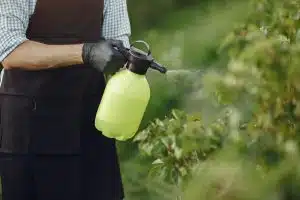
| Foliar iron spray | Iron applied directly to leaves | Fast | Short; new leaves need repeat sprays | Rapid but incomplete response |
| Trunk injection (ferric ammonium citrate or iron sulfate) | Iron placed directly into the tree’s vascular system | Moderate | Longer than soil treatment | Wounds the trunk each time; should be done by trained professionals |
| Soil sulfur with iron sulfate | Acidifies small zones of soil around roots | Slow | Varies | USU reports iron sulfate alone is not effective in most high-pH soils |
USU recommends applying soil chelates in spring as leaves begin to emerge, with a possible follow-up in fall if symptoms persist. The same guide cites Kansas State University research showing trunk injections are more effective when made in the root flares near the soil surface.
Our tree and shrub fertilization service starts with a soil test that checks pH and micronutrients, including iron, so treatment is based on what your tree lacks. For larger trees, we’ll also discuss whether systemic tree injections make sense after an assessment.
Should the Tree Be Replaced?
Sometimes, yes. USU Extension says there’s little you can do about iron chlorosis other than choosing trees adapted to high soil pH. Treatment manages symptoms year after year; it doesn’t change the soil.
Consider replacing a tree when:
- It needs treatment every year just to hold its leaf color.
- Branch dieback is spreading despite treatment.
- It’s a young silver maple hybrid that hasn’t yet become a major landscape feature.
- Chlorosis has weakened it enough to invite insects or disease.
A large, established tree that responds well to annual treatment is usually worth keeping. A struggling young tree often isn’t. Our tree care services can help you weigh the two, and our guides to tree and shrub care for Idaho homeowners and trees and shrubs for privacy in Idaho cover what grows well here. For the soil side, see why soil health matters for Idaho lawns.
Frequently Asked Questions
Why are my maple leaves yellow with green veins?
That pattern, called interveinal chlorosis, usually means iron deficiency caused by high soil pH. The iron is in the soil, but alkaline conditions keep the roots from absorbing it.
Will fertilizer fix a yellow maple tree?
Usually not. General fertilizer doesn’t make iron available in alkaline soil, and high phosphorus or nitrogen can make chlorosis worse. Iron chelates, foliar iron, or trunk injections target the problem directly.
What is the best time to treat iron chlorosis?
Utah State University Extension recommends soil-applied chelates in spring as leaves begin to emerge. Fall is a good time to test the soil and plan treatment.
Are ‘Autumn Blaze’ maples a good choice for the Treasure Valley?
They grow quickly, but their silver maple parentage makes them highly susceptible to iron chlorosis in alkaline soil. Many will need ongoing treatment to stay green.
Can iron chlorosis kill a tree?
Yes, over time. Severe, untreated chlorosis leads to leaf scorch, branch dieback, and gradual decline that can kill a tree over several years.
Getting a Yellow Maple Back on Track
Yellow leaves on a Treasure Valley maple are a soil chemistry problem, and the fix starts with confirming the diagnosis and correcting what you can: water, compaction, and iron availability. If your tree is yellowing, Idaho Organic Solutions can test your soil, assess the tree, and give you an honest recommendation on treatment or replacement.
Request a free assessment to get started.