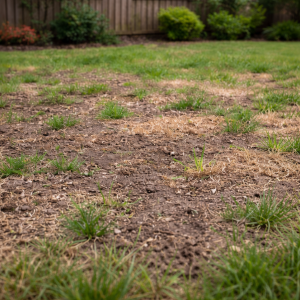
A healthy Idaho lawn can go from lush and green to spotted, ringed, and patchy in a matter of days, and lawn fungus is often the reason. Unlike a slow decline you can watch coming, fungal disease tends to appear suddenly and spread fast, especially when the weather turns. By the time most homeowners realize what they are looking at, the disease has already moved across a good part of the yard.
The key to keeping a small problem from becoming a big one is learning to recognize the early signs. Here is how to spot lawn fungus before it spreads, what conditions invite it in, and how to treat and prevent it the organic way.
What Lawn Fungus Actually Is
Fungal diseases live in almost every lawn, all the time, as dormant spores in the soil and thatch. They stay harmless until conditions tip in their favor. Give them the right mix of moisture, temperature, and a stressed or poorly maintained lawn, and those spores flare into an active infection that damages the grass. This is why lawn fungus so often seems to strike out of nowhere. The disease was already present. The weather simply flipped the switch.
Because fungus feeds on and spreads through your grass, catching it early is not just about appearances. Left alone, many fungal diseases will kill the turf in the affected zones and keep expanding into the healthy grass around them.
The Early Warning Signs to Watch For
Fungal problems usually announce themselves with patterns, which is what sets them apart from ordinary drought or wear. Walk your lawn in the early morning, when dew makes the symptoms easiest to see, and look for the following:
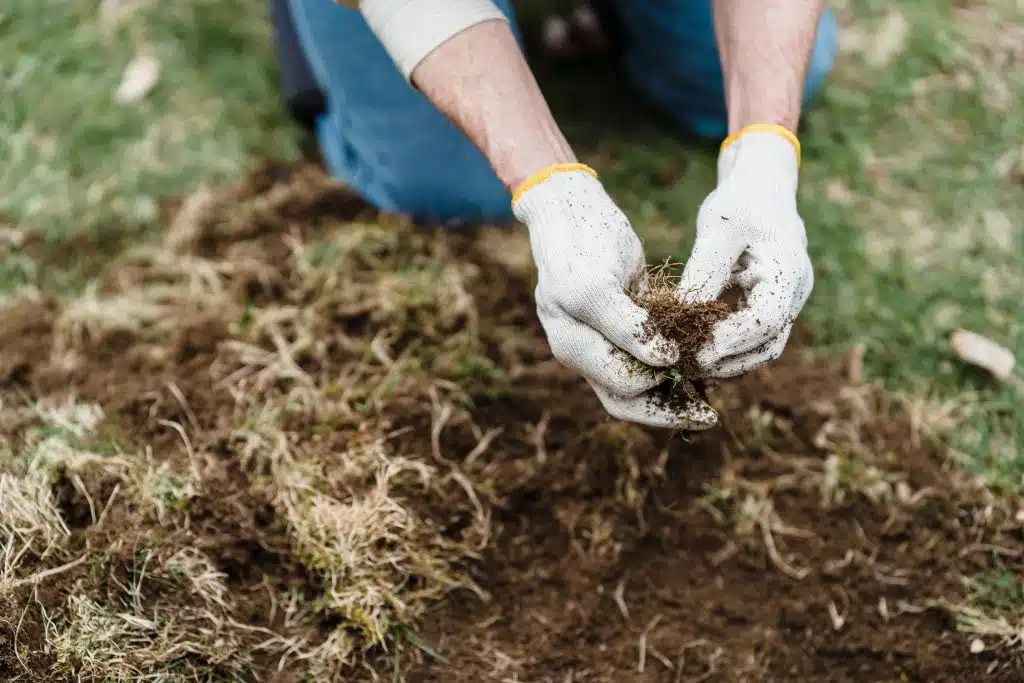
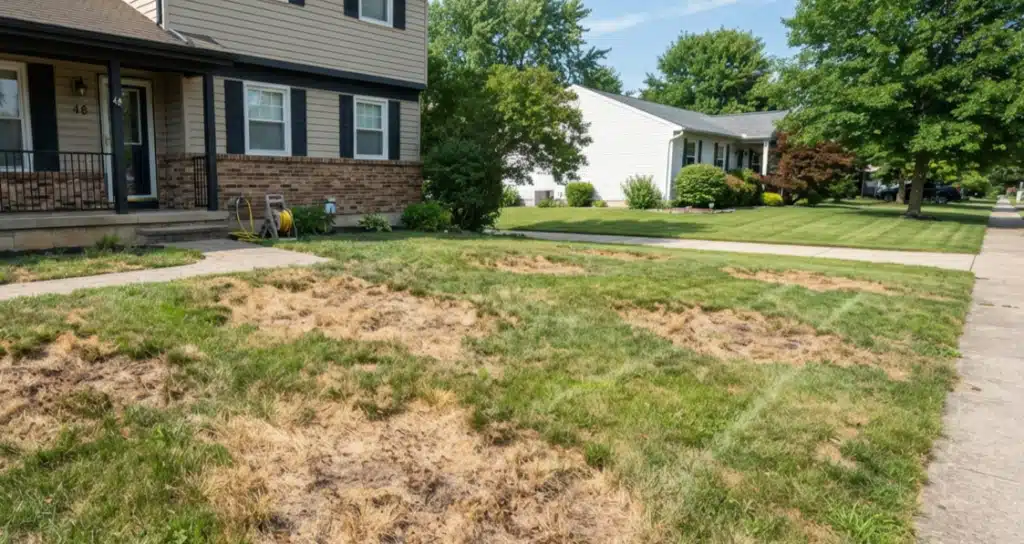
- Circular or ring shaped patches of dead or discolored grass, sometimes with a greener center that gives a target or frog eye appearance.
- Small, silver dollar sized bleached spots scattered across the lawn.
- Irregular brown or straw colored patches that grow larger over days.
- A fine, cobweb like or cottony growth on the grass in the early morning, which is the fungus itself.
- An orange or rust colored powder that rubs off onto your shoes and mower.
- Slimy, greasy looking, matted grass during hot, humid stretches.
Any distinct shape, ring, or spot pattern is a strong clue you are dealing with fungus rather than simple dryness. Of course, brown patches have many possible causes, from grubs to dog spots to heat stress, so it helps to rule out the alternatives. Our guide to the common lawn problems across the Treasure Valley lays out how each one looks so you can narrow it down.
What Invites Fungus Into a Lawn
Fungus does not strike at random. It takes hold where the conditions favor it, which is good news, because most of those conditions are within your control.
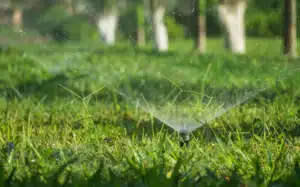
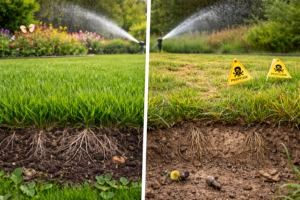
Watering at the wrong time. This is the single biggest driver. Watering in the evening leaves the grass wet all night, and that long stretch of overnight moisture is exactly what fungal spores need to activate and spread. How and when you water matters more than almost anything else, which is why our watering and care instructions put so much emphasis on watering deeply and early in the day.
Overwatering and poor drainage. Constantly soggy soil keeps the lawn in the damp state fungus loves.
Thatch and compaction. A thick thatch layer and hard, compacted soil trap moisture and hold spores close to the grass crowns.
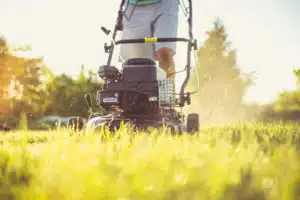
Mowing mistakes. Cutting too short stresses the grass, and a dull mower blade shreds the tips, leaving open wounds that disease enters through.
Unbalanced feeding. Too much quick release nitrogen pushes soft, disease prone growth, while a starved lawn is too weak to fight infection off. Balance is what builds resistance.
Why Fast Action Matters So Much
Fungal diseases spread. A patch you ignore today can double in size within a week under the right conditions, and the spores travel on mower wheels, shoes, and water runoff to start new infections elsewhere in the yard. The sooner you correct the conditions and treat the active disease, the less turf you lose and the less you eventually have to reseed or repair.
There is also a diagnosis angle. Different fungal diseases call for different responses, and some lawn problems that look like fungus are actually insects or cultural issues. Guessing wrong wastes time while the real problem grows. That is where a professional set of eyes pays off.
How to Treat and Prevent Lawn Fungus the Organic Way
The most effective approach treats the active disease while fixing the conditions that let it start, because a fungicide alone rarely solves anything if the underlying habits stay the same.
Start with the cultural fixes. Water deeply and early in the morning rather than in the evening, so the grass dries during the day. Improve airflow and reduce thatch through aeration. Mow at the proper height with a sharp blade. Feed the lawn on a balanced schedule that builds steady, resilient growth instead of soft flushes. Overseeding thin or damaged areas with hardy grass helps the lawn crowd disease out over time.
Pulling all of that together is exactly what our organic lawn care program is designed to do. Rather than reacting to disease after it appears, we build soil and turf health so your lawn is far more resistant in the first place, and we treat active problems with products that are safe for your family, your pets, and the environment.
When to Call in the Pros
If you are seeing rings, spots, or patches that keep spreading, if the same trouble comes back in the same spots year after year, or if you simply cannot tell whether you are looking at disease, insects, or drought, it is worth getting a professional diagnosis before the problem takes over. We help homeowners across Nampa and the wider Treasure Valley identify exactly what is affecting their lawns and put a lasting, organic fix in place.
Catch It Early and Save Your Lawn
Lawn fungus only gets harder and more expensive to beat the longer it spreads. The moment you see rings, spots, or patches taking shape, it is time to act. Call Idaho Organic Solutions today at 208-884-8986 for a free lawn assessment, and let our licensed, local team pinpoint the disease and treat it the organic way before it claims more of your yard. Want to know more about how we work first? Our frequently asked questions cover our treatments and what to expect.
Frequently Asked Questions
How do I know if it is lawn fungus and not just dry grass?
Fungus usually shows a pattern, such as rings, distinct spots, or patches that grow over days, and you may see cobweb like or cottony growth in the early morning dew. Drought stress tends to be more uniform and greens back up after a deep watering, while fungal patches keep spreading and do not recover from water alone.
What causes lawn fungus in the first place?
Fungal spores are always present in the lawn and turn active when conditions favor them, especially prolonged moisture. Watering in the evening, overwatering, poor drainage, heavy thatch, compacted soil, mowing too short or with a dull blade, and unbalanced feeding all invite disease. Fixing those habits is the foundation of prevention.
Will lawn fungus go away on its own?
Sometimes the visible symptoms fade when the weather changes, but the disease and its spores remain, ready to flare up again the next time conditions are right. Many fungal diseases will keep killing and spreading if the underlying conditions are not corrected, so it is risky to simply wait it out.
Can I fix lawn fungus just by watering less?
Correcting how and when you water is a huge part of the solution, but it is rarely the whole answer once a disease is active. Reducing thatch, improving airflow, mowing correctly, feeding in balance, and sometimes a targeted treatment all work together to stop an active infection and keep it from returning.
When is lawn fungus most common in Idaho?
It shows up whenever moisture and temperature line up in the fungus’s favor, which often means spring as snow melts, and warm stretches through summer, particularly in lawns that are watered in the evening or kept too wet. Watching for early signs during these periods gives you the best chance to catch it fast.