You walk past your arborvitae hedge or a favorite blue spruce and something looks off. The needles seem dusty, dull, or faded, as if the color has been drained out of them. Look closer and you notice a fine, delicate webbing stretched between the branches, almost as if the tree has been lightly dusted with cobwebs. Tap a branch over a sheet of white paper and tiny specks drop and start to crawl. What you are seeing is not dust, and it is not an ordinary cobweb. It is a spider mite infestation, and on evergreens in our dry Idaho climate it can turn deadly fast.
The hard truth about spider mites is that most people notice them only after the damage is done. By understanding what to look for now, you can catch these pests while your trees and shrubs are still easy to save.
What Spider Mites Actually Are
Despite the name, spider mites are not spiders and they are not insects. They are tiny arachnids, most of them smaller than the head of a pin, which is why most people never see the mites themselves. Instead, they notice the damage they leave behind.
Spider mites feed by piercing individual plant cells and draining the contents. On evergreens like arborvitae, juniper, spruce, and pine, that feeding shows up as a stippled, speckled look, as if someone flicked pale paint across the needles. Over time the foliage turns dull green, then bronze, then brown. The fine webbing that gives them their name appears as populations grow, coating the tips of branches, catching dust, and giving the plant a grimy, neglected appearance. A single female can produce a new generation in under two weeks during warm weather, which is how a handful of mites becomes a plant covering infestation so quickly.
The Two Kinds Attacking Idaho Evergreens
It helps to know that two different spider mites cause most of the trouble on Treasure Valley evergreens, and they run on opposite schedules.
The spruce spider mite is a cool season pest. It does its worst damage in spring and again in fall, when temperatures are mild, and it targets spruce, juniper, arborvitae, and pine. Many homeowners water heavily in summer, see the mites seem to vanish in the heat, and assume the problem is solved, when in reality the mites are simply waiting for cooler weather to surge again.
The two spotted spider mite is a warm season pest. It thrives in the hottest, driest stretch of summer and attacks a wide range of plants, including stressed evergreens and nearby shrubs. Between the two, an untreated evergreen can face pressure from early spring all the way through fall. This is exactly why a single spray at the wrong time so often fails.
Why Evergreens in Idaho Are Such Easy Targets
Spider mites love hot, dry, dusty conditions, and that describes a Treasure Valley summer almost perfectly. Several local factors make our evergreens especially vulnerable:
- Low rainfall and long dry spells put plants under drought stress, which mites are quick to exploit.
- Dust from gravel driveways, dry beds, and unpaved edges settles on foliage and creates ideal mite habitat.
- Plants growing in reflected heat near walls, fences, and pavement warm up and dry out faster than the rest of the yard.
- Rows of the same shrub, like a long arborvitae privacy hedge, let mites spread easily from one plant to the next.
Because our conditions favor them so strongly, spider mites can go from a few unnoticed specks to a serious, plant threatening infestation in just a few weeks of summer heat.
How to Tell Spider Mites From Normal Cobwebs
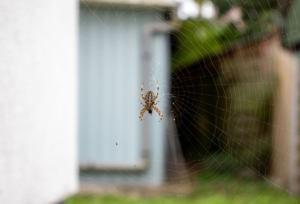
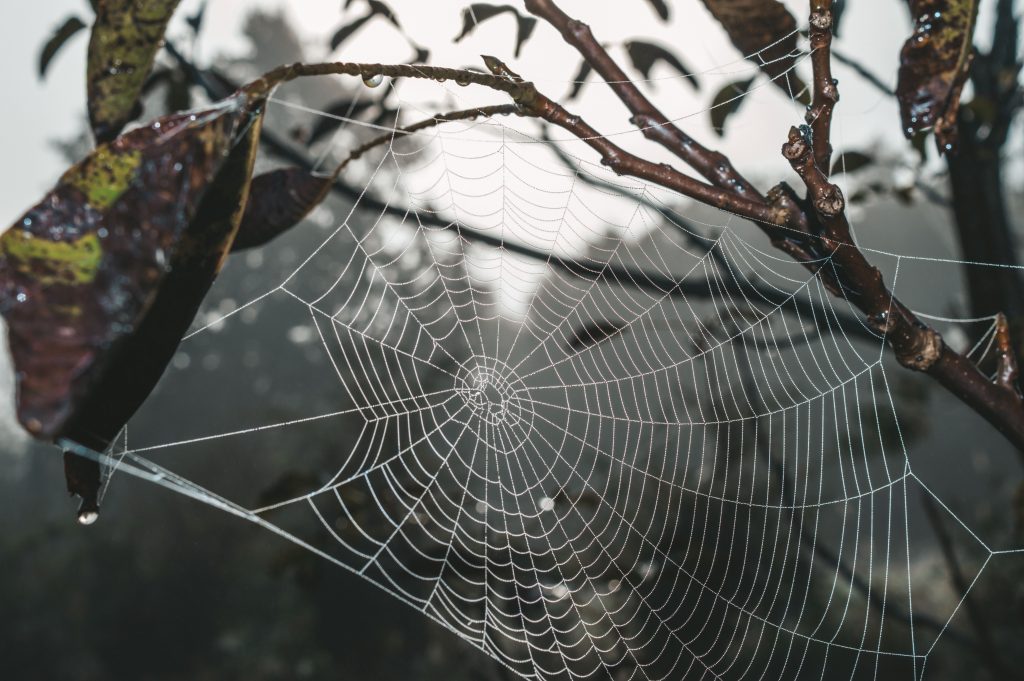
Real cobwebs are the work of actual spiders, and they tend to be larger, stringier, and tucked into corners, eaves, and gaps rather than woven through living foliage. Spider mite webbing is much finer, sits tight against the needles and branch tips, and always comes paired with that telltale stippled, fading foliage.
The classic test is easy and worth doing the moment you are suspicious. Hold a sheet of white paper under a branch and tap the branch sharply a few times. If tiny specks fall onto the paper and begin to move, you have spider mites. Smear them across the paper, and faint streaks of green or rust confirm it.
A Simple Monthly Inspection Routine
Catching mites early is the whole game, and it takes only a few minutes. Once a month during the growing season, walk your evergreens and shrubs and do three quick checks. First, look at the overall color, watching for any patch that looks dull, gray, or bronzed compared to the healthy green around it. Second, flip up interior and lower branches, since mite damage almost always begins deep inside and low on the plant before it becomes visible from the street. Third, run the white paper tap test on any branch that looks even slightly off. Ten minutes of looking can save you a mature shrub that took decades to grow.
Why You Should Not Ignore It
On a leafy tree, spider mite damage is ugly but often survivable, because the plant can push out fresh leaves the following season. Evergreens are different, and this is the point that catches so many homeowners off guard. When an arborvitae or spruce loses needles to mite feeding, that brown foliage usually does not come back. The bare, brown patches simply stay bare.
Damage tends to start low and in the interior of the plant, then spread outward and upward as the population grows. Left unchecked, spider mites can thin, brown, and eventually kill a mature evergreen. For a screening hedge that gave you privacy for years, that can mean replacing an entire row of plants at significant cost. That is why early action matters so much with these pests, and why the browning you can see from the sidewalk is often a sign the problem is already advanced.
The Mistake That Makes Spider Mites Worse
Here is something most people do not know. Reaching for a broad, general purpose insecticide can actually make a spider mite problem worse. Those products wipe out the beneficial predators, including predatory mites and certain tiny beetles, that naturally keep spider mite numbers in check. With their natural enemies gone and their own numbers rebounding fast, the mites come back stronger than before. Spider mites are not insects, so many insect sprays do little to them directly while doing plenty of harm to the good bugs. The smarter path is proper watering, dust control, and treatments chosen and timed specifically for mites.
How to Treat and Prevent Spider Mites
For a light, early infestation, start simple:
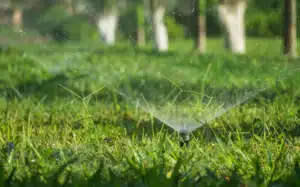
- Rinse the plant. A strong spray of water, aimed up under the foliage and repeated every few days, knocks mites loose, washes away the dust they love, and disrupts their rapid breeding.
- Keep plants healthy and hydrated. Drought stressed evergreens are mite magnets, so consistent, deep watering is one of your best defenses. Our watering and care instructions walk through how to water correctly for our climate.
When an infestation is already established, stronger and better timed treatments are needed:
- Targeted tree spraying delivers an organic treatment across the foliage to knock down active mites, and it works well on smaller and medium sized evergreens.
- For large, mature trees where a spray simply cannot reach the entire canopy, systemic tree injections move treatment through the tree’s own vascular system so there is nowhere for the pest to hide.
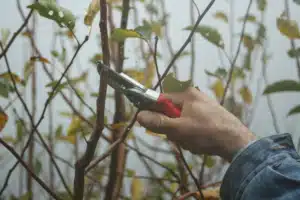
- Where certain branches are heavily infested and already browning, professional tree trimming removes the worst of the damage, improves airflow, and helps the plant put its energy into healthy new growth.
Timing is everything with mites, because they breed so quickly and their different life stages resist different treatments. Our full guide to protecting your trees and shrubs from insects explains how we match the method and the timing to the specific pest, and our tree and shrub insect control service puts that plan into action with organic products that are tough on mites and gentle on the rest of your landscape.
A Season by Season Plan for Idaho
Because two different mites are in play, the best defense runs across the whole year. In spring, watch spruce, juniper, and arborvitae closely for early spruce spider mite activity and treat at the first sign. Through the heat of summer, keep plants well watered, rinse foliage during dry spells, and stay alert for two spotted spider mites on stressed plants. In fall, inspect once more as cooler weather brings the cool season mites back for a second push. A plan like this is far more effective than a single reaction after the browning appears.
Protect Your Evergreens Before It Is Too Late
By the time an evergreen turns brown, the mites have usually been feeding for weeks, and that foliage may be gone for good. Do not wait for the damage to spread down the hedge. Call Idaho Organic Solutions today at 208-884-8986 for a free assessment. Our licensed, local team will identify exactly what is attacking your trees, treat it at the right time with an eco friendly approach, and help you keep your evergreens green, full, and healthy for years to come.
Frequently Asked Questions
How do I know if it is spider mites and not just dust or cobwebs?
Tap an affected branch over a sheet of white paper. If tiny specks fall and crawl, and smearing them leaves faint green or rust streaks, you have spider mites. Their webbing is also much finer than a spider’s and sits tight against the needles, paired with a stippled, fading look to the foliage.
Can spider mites really kill my arborvitae or spruce?
Yes. Unlike leafy trees, evergreens usually cannot regrow needles lost to mite feeding, so the brown patches tend to stay. Damage often starts low and inside the plant, then spreads. If an infestation is left untreated through a hot summer, it can brown out large sections and eventually kill the tree.
Why do spider mites keep coming back every summer?
Our hot, dry, dusty Idaho summers are ideal for them, and they reproduce extremely fast in that weather. Plants that are dusty or drought stressed are especially attractive. On top of that, two different mite species can hit your evergreens at different times of year, so consistent watering, occasional rinsing, and a well timed treatment plan are the keys to breaking the cycle.
Are the treatments safe for my kids, pets, and pollinators?
Yes. We use organic, eco friendly treatments and time them carefully to protect pollinators and beneficial insects while still controlling the mites. The whole approach is built to keep your family, pets, and the local environment safe.
When should I treat my trees for spider mites in Idaho?
Watch for the first signs in spring and again in late summer and fall, and act quickly once you spot stippling or webbing. Early treatment, before a population peaks, is far more effective and far easier than trying to rescue a badly browned evergreen after the fact.