Every spring, Treasure Valley homeowners notice the same unsettling thing. Tiny red or rust colored specks start appearing along windowsills, on siding, around door frames, and across sunny patios. Brush one and it leaves a small red smear. Within a few warm days there seem to be hundreds of them, then thousands. If you have found yourself wiping the same sill clean every morning only to see the specks return by lunch, you are not imagining it, and you are far from alone.
These little invaders are clover mites. The good news is that they are harmless to people and pets. The frustrating news is that they can show up in overwhelming numbers, and they have a knack for turning up right where you least want them. Here is exactly what they are, why they love Idaho yards in spring, and how to keep them out of your home for good.
What Are Clover Mites
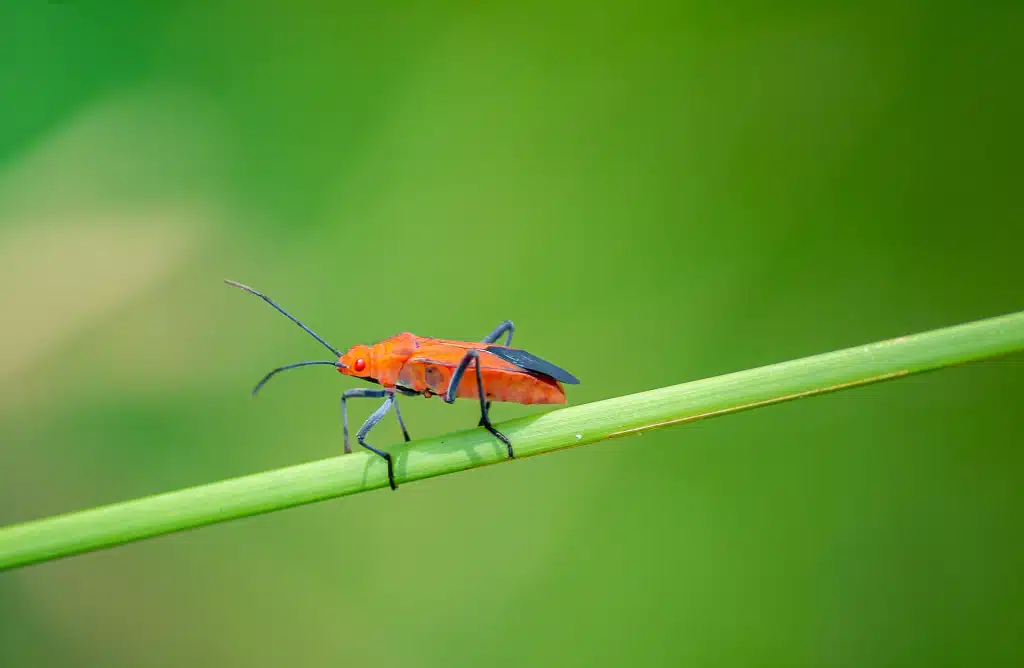
Clover mites are tiny arachnids, closely related to ticks and spiders but far smaller. A full grown clover mite is about the size of a pinhead, roughly the size of the period at the end of this sentence. They range from bright red to reddish brown, and they have a distinctive pair of long front legs that reach forward past the head. Many people mistake those front legs for antennae, which is one reason clover mites are so often misidentified.
They feed on grasses, clover, and other low plants, not on you, your food, your pets, or your furniture. A single female can lay dozens of eggs without ever mating, which is a big part of why their numbers climb so quickly. Those eggs are tucked into tiny cracks in foundations, under siding, in the bark of trees, and in the gaps around window frames. The eggs wait out the heat of summer and the cold of winter, then hatch when conditions turn mild. That hidden supply of eggs is why the mites can seem to reappear out of nowhere every spring.
The Red Stain Problem
That red smear you see when a clover mite gets squished is not blood. It is plant pigment from inside the mite’s body. This matters more than it sounds, because it is the single most common reason clover mites become a household headache. Crush a few dozen against a white windowsill, a painted wall, a light curtain, or a pale carpet, and you can be left with rust colored stains that are stubborn to remove. Once a stain sets into fabric or a porous surface, it may not come out at all.
The takeaway is simple. However tempting it is to wipe them away with a paper towel, resist the urge. There is a much better method, and we will get to it below.
Are They the Same as Other Tiny Red Bugs
Not every small red creature in the yard is a clover mite, and telling them apart helps you respond correctly. Chiggers are also tiny and reddish, but they bite and cause intense itching, which clover mites never do. Red velvet mites are larger, rounder, and covered in what looks like plush red fabric, and they are harmless soil dwellers you rarely see indoors. Spider mites are pale to reddish and attack the leaves and needles of plants rather than gathering on the sunny walls of your home.
If the specks are appearing in large numbers on the outside walls, windowsills, and patios of your house in spring or fall, do not bite, and leave a red streak when pressed, you are almost certainly dealing with clover mites.
Why They Take Over in Spring
Clover mites are a cool season pest. They are most active in spring, and again in fall, when daytime temperatures sit between about 45 and 75 degrees. Our Treasure Valley springs deliver exactly the mild, sunny conditions they thrive in, which is why the problem is so predictable here year after year.
A few things make a home especially attractive to them:

- Lush, well fertilized lawns growing right up against the foundation. Thick, green, heavily fed grass is a clover mite buffet, and the closer that grass grows to the wall, the shorter the trip inside.
- South and west facing walls that warm up fast in the spring sun. Mites gather on these warm surfaces in the afternoon and then wander toward gaps around windows and doors.
- Newer subdivisions with young, dense sod planted right to the edge of the house. Freshly established lawns and recently fertilized turf create the exact overgrown conditions that let populations explode.
This is one reason a balanced, healthy organic lawn care program matters more than most people realize. Feeding the soil correctly, watering deeply rather than constantly, and mowing at the right height keeps grass strong without pushing the soft, overgrown, over fertilized growth that clover mites love. A lawn managed for long term health is a far less welcoming host than one pushed hard with quick release nitrogen.
Signs You Have a Clover Mite Problem
- Clusters of tiny red or brown specks on windowsills, screens, and siding, especially on the sunny side of the house.
- Faint red streaks left behind when the specks are wiped or crushed.
- Activity that peaks on warm spring afternoons and fades on cold or rainy days.
- Mites concentrated where the lawn or garden beds meet the foundation.
How to Get Them Out and Keep Them Out
The first rule is simple. Do not crush them. Wiping a cloth across a windowsill full of clover mites will leave the red streaks we mentioned earlier. Instead, use a vacuum with a hose attachment to gently lift them off surfaces, then empty the canister outside so any survivors do not simply crawl back.
From there, the goal is to make your home and the ground around it far less inviting:
- Seal the gaps. Caulk around windows, doors, cable and pipe entries, and foundation cracks. Clover mites squeeze through openings you can barely see, so thorough sealing pays off twice, once against mites and again on your energy bill.
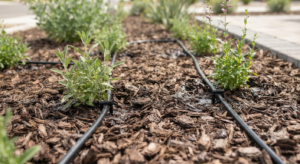
- Create a plant free border. Leaving a band of gravel, mulch, or bare soil about 18 to 24 inches wide around the foundation removes the grass and plants the mites feed on. Fewer plants against the house means fewer mites at the wall, and this single step is one of the most effective long term fixes.
- Keep the grass trimmed near the foundation and avoid over fertilizing the strip closest to the house.
- Check for other hitchhikers. Many of the same gaps that let mites in also welcome the other pests we see across local yards. If you are battling more than one problem at once, our overview of common yard problems across the Treasure Valley is a helpful place to start.
Why Store Bought Sprays Often Disappoint
Plenty of homeowners reach for a can of general purpose bug spray, hit the visible mites, and feel good for about a day. The trouble is that a surface spray does nothing about the hidden eggs waiting in cracks and under siding, and it does nothing to change the conditions drawing mites to the wall in the first place. Within a day or two, a fresh wave hatches and the specks are back. Timing, coverage, and treating the right zones around the structure are what actually break the cycle, and that is difficult to get right with a hardware store can and a ladder.
What Professional Treatment Looks Like
For a lasting fix, a properly timed exterior barrier is the most effective option by a wide margin. Our organic pest control program includes a protective barrier applied around the foundation, windows, doors, and eaves, the exact places clover mites use to slip inside. A trained applicator treats these zones before the population peaks, targets the harborage areas where eggs are hiding, and returns on a schedule so the barrier stays effective as the season goes on. Because the products are eco friendly, the treatment protects your home without putting harsh chemicals near your family, pets, or garden.
When to Call in the Pros
A handful of clover mites is easy to handle on your own with a vacuum and a little caulk. But if you are cleaning the same windowsills day after day, if the specks are showing up inside the house, or if the invasion returns every single spring no matter what you try, it is time for professional help. We help homeowners across Nampa and the surrounding Treasure Valley put an end to spring clover mite invasions with a safe, organic approach that actually lasts.
Ready to Take Back Your Windowsills
You should not have to vacuum the same red specks off your sills every single morning. Call Idaho Organic Solutions today at 208-884-8986 for a free estimate, and let our licensed, local team stop clover mites at the door with an organic barrier built for Idaho springs. Prefer to read a little more first? Our frequently asked questions cover how our organic treatments work and what to expect from the first visit.
Frequently Asked Questions
Are clover mites harmful to people or pets?
No. Clover mites do not bite, sting, or spread disease, and they will not harm your pets. Their only real downsides are the red stain they leave behind when crushed and the sheer nuisance of large numbers around windows and doors.
Why are there so many clover mites on just one side of my house?
Clover mites gather on warm, sunny surfaces, so south and west facing walls usually see the heaviest activity in spring. Those walls heat up first in the afternoon sun, which draws mites out of the lawn and up toward your windows and siding.
Will clover mites infest my house like fleas or bed bugs?
No. Clover mites cannot survive long indoors because there is nothing for them to eat inside. They feed only on plants. Any mites that wander in will die on their own within a day or two, though that is little comfort when hundreds appear at once.
Do I have to kill my lawn to get rid of clover mites?
Not at all. The better approach is a plant free border around the foundation, sealed entry points, and a proper lawn care routine that avoids the overgrown, over fertilized turf that mite populations love. A healthy, well managed lawn is far less of a magnet than a neglected one.
When is the best time to treat for clover mites in Idaho?
Early spring is ideal, before populations peak during those first stretches of mild weather. A preventive exterior treatment applied at the right moment stops the invasion before it starts, which is far easier and far less frustrating than reacting after the mites are already covering your windows.