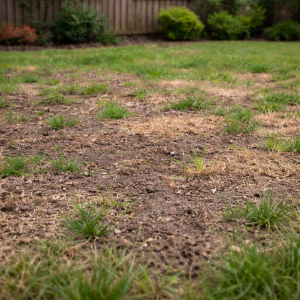
You are watering, you are feeding, and yet strange patches keep appearing in the lawn, circular dead spots, faint rings, or a grey cast across the grass after the snow melts. When a lawn declines in odd shapes rather than an even fade, the culprit is usually fungus. Lawn disease is common in the Treasure Valley, and the good news is that most of it comes down to conditions you can change, so spotting it early and fixing the cause is the key to a healthy lawn.
Lawn fungus usually shows up as circular brown patches, rings, or spotted, discoloured blades, rather than the even browning of drought. It thrives on excess moisture, so overwatering, watering at night, heavy thatch, compaction and poor airflow are the main triggers. The fix is to water deeply in the morning rather than lightly at night, relieve thatch and compaction with aeration, avoid overfeeding, mow correctly, and keep the lawn healthy so it resists disease, with treatment for severe cases.
Here is how to recognise lawn fungus, what causes it, and how to stop it.
How to tell fungus from other problems
The first step is recognising that you are dealing with disease rather than something else, and the pattern is the giveaway. Drought and heat brown a lawn fairly evenly, and grub damage leaves turf that lifts up with no roots. Fungus, by contrast, tends to appear in distinct shapes: circular patches, rings of discoloured or dead grass, or individual blades marked with spots or lesions. You might also see a slimy, greasy or cottony look in the early morning when it is damp, or a grey, matted appearance after snow. When the damage has a defined shape and the roots are still attached, fungus is the likely cause.
Common Treasure Valley lawn diseases
Several fungal diseases turn up regularly in our lawns, each with its own look and timing.
| Disease | What it looks like | When |
| Necrotic ring spot | Rings and patches of dead grass, often with green centres | Spring and fall, common in local bluegrass |
| Brown patch | Large circular brown patches | Warm, humid weather |
| Dollar spot | Small, silver-dollar-sized bleached spots | Warm days, cool nights |
| Summer patch | Patches and rings that appear in the heat | Hot summer stretches |
| Snow mould | Grey or pink matted patches after snow melts | Late winter and early spring |
| Powdery mildew | White, dusty coating on the blades | Shady, damp areas |
Knowing which you have helps target the fix, since the underlying causes overlap but the timing and treatment differ.
What causes lawn fungus
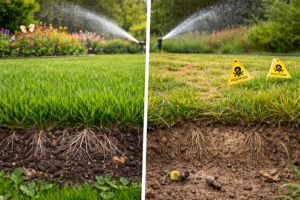
Almost every lawn disease has the same root enabler: moisture sitting where it should not. Overwatering keeps the lawn damp enough for fungus to take hold, and watering in the evening or at night, so the grass stays wet for hours, is one of the biggest triggers of all. A thick thatch layer holds moisture against the crowns and harbours disease, and compacted soil keeps the lawn wet and stressed. Poor air circulation in shady, crowded spots slows drying, and overfeeding with fast-release nitrogen pushes soft, disease-prone growth. In short, the conditions that stress a lawn and keep it damp are the conditions fungus loves, which is also why the fixes are mostly about drying the lawn out and keeping it healthy.
How to stop and prevent it
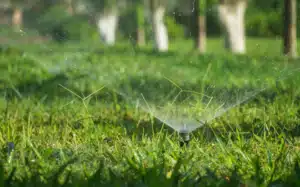
The most effective response to lawn fungus is to change the conditions that let it thrive, and these steps do most of the work. Water deeply and less often, and always in the early morning so the grass dries through the day rather than staying wet overnight, which is the single biggest lever. Relieve thatch and compaction with aeration and dethatching so the lawn dries and breathes. Avoid overfeeding, and use a balanced, steady approach to fertilizing rather than forcing lush, soft growth. Mow at the right height with a sharp blade, since a clean cut resists disease better than a ragged, torn one. Improve airflow where you can by trimming back crowding plants. And keep the lawn thick and healthy overall, because a strong lawn resists and recovers from disease far better than a weak one, which is the whole philosophy behind a steady organic lawn care program. For severe or persistent disease, a targeted treatment may be needed alongside these cultural fixes.
Repairing the damage
Once the disease is under control, the bare or thinned patches it left behind may need help to fill back in, especially the larger ones. Raking out the dead grass and overseeding the affected areas brings healthy grass back and thickens the lawn so it is more resistant next time. Fall, with its cool air and warm soil, is an ideal window to repair disease damage and strengthen the lawn going into winter.

Frequently Asked Questions
How do I know if my lawn has a fungus?
Look at the pattern. Fungus tends to appear as circular brown patches, rings, or blades marked with spots, rather than the even browning of drought. You may also see a slimy or cottony look in damp mornings, or grey matted grass after snow. Defined shapes with roots still attached point to disease.
What causes lawn fungus?
Excess moisture is the main enabler. Overwatering, watering at night so the grass stays wet, heavy thatch, compacted soil, poor airflow and overfeeding with fast-release nitrogen all create the damp, stressed conditions fungal disease needs to take hold.
How do I get rid of lawn fungus naturally?
Change the conditions it depends on: water deeply in the morning rather than lightly at night, relieve thatch and compaction with aeration, avoid overfeeding, mow correctly with a sharp blade, and keep the lawn healthy so it resists disease. A strong lawn recovers far better than a weak one.
Should I water my lawn if it has fungus?
Yes, but change how. Water deeply and infrequently in the early morning so the lawn dries through the day, rather than lightly or in the evening, which keeps the grass wet and feeds the fungus. Correct watering is one of the most important fixes.
What is the grey matted grass after the snow melts?
That is likely snow mould, a fungal disease that develops under snow cover and shows as grey or pink matted patches in late winter and early spring. Gently raking the area to help it dry, and keeping the lawn healthy, usually helps it recover as the weather warms.
Can lawn fungus be prevented?
Largely, yes. Most lawn disease comes from conditions you can change, so morning deep watering, managing thatch and compaction, sensible feeding, correct mowing and a thick, healthy lawn prevent the great majority of fungal problems before they start.
Stop lawn disease at its source
Lawn fungus can be frustrating, but it is rarely a mystery once you know what to look for. Because it feeds on damp, stressed conditions, the cure and the prevention are the same: dry the lawn out, relieve what stresses it, and keep it healthy, and most disease simply loses its foothold.
Organic Solutions has diagnosed and treated Treasure Valley lawn disease for over twenty years, from Nampa and Meridian to Boise, Eagle, Kuna and beyond, using organic methods that build the healthy lawn that resists it. If mysterious patches are spreading, request a free estimate or call us on 208 884 8986, and we will identify what it is and put your lawn back on track.