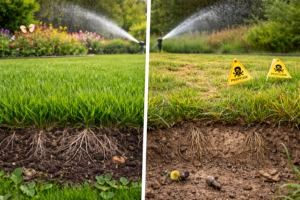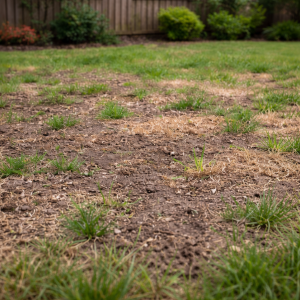
If your lawn looks tired despite regular watering and feeding, the problem may not be on the surface at all. It may be underground, in soil so compacted that water runs off and roots cannot breathe. Aeration is the fix, and it is one of the most valuable and most overlooked things you can do for a lawn in our heavy Treasure Valley clay. Fall is the ideal time to do it, and here is why.
Aerate your Treasure Valley lawn in the fall, when cool-season grasses are actively rooting. Core aeration pulls small plugs of soil from the lawn to relieve compaction, so water, air and nutrients can finally reach the roots. Our heavy clay soil compacts easily, so most local lawns benefit from aerating once a year, and pairing it with overseeding and feeding while the holes are open gives the best results.
Here is what aeration does, why our soil needs it, and exactly when to do it.
What aeration actually does
Core aeration is the process of pulling thousands of small plugs of soil out of your lawn, leaving evenly spaced holes across the surface. It sounds destructive, but it is the opposite. Those holes break up compacted soil and open channels for the things grass roots depend on, water, air and nutrients, to move down to where they are needed instead of pooling or running off the top.
Over a season, foot traffic, mowing and the natural settling of soil press the ground tighter and tighter, squeezing out the tiny air spaces roots need. Aeration reverses that, and the effect on a struggling lawn can be dramatic, because you are treating the cause rather than the symptom.
Why Treasure Valley soil needs it
This matters more here than in many places, because our soil works against you. Treasure Valley ground is heavy and clay-rich, and clay compacts easily and drains slowly. That combination means water tends to sit on the surface or run off before it soaks in, roots stay shallow, and the lawn struggles in the heat. Add the compaction from a summer of use, and by fall a lot of local lawns are effectively sealed off from the water and nutrients you are giving them.
Aeration is the single most effective way to counter heavy clay. By opening the soil, it lets your irrigation actually reach the roots, improves drainage, encourages deeper rooting, and helps break down thatch. For most Treasure Valley lawns, that makes it an annual essential rather than an occasional extra.
Why fall is the ideal time
Timing makes a big difference, and fall is the sweet spot for aerating a cool-season lawn. As the nights cool, the Kentucky bluegrass, ryegrass and fescue that grow here shift their energy into root growth, so aerating now feeds directly into the season when the grass is building the strong root system that carries it through winter and into a green spring. The soil is still warm enough for quick recovery, and the lawn fills the holes back in fast.
Fall aeration also sets up the two jobs that pair perfectly with it. Seed dropped onto a freshly aerated lawn falls into the holes and makes excellent contact with the soil, and nutrients applied now reach the roots through the open channels. That is why aeration and overseeding are so often done together in the fall.
The benefits, at a glance
| Aeration benefit | Why it matters in the Treasure Valley |
| Relieves compaction | Loosens our heavy clay so roots can spread |
| Improves water penetration | Water soaks in instead of running off, cutting waste |
| Gets air and nutrients to roots | Feeding and watering finally reach where they count |
| Encourages deeper roots | A deeper-rooted lawn handles our hot, dry summers better |
| Helps break down thatch | Reduces the layer that harbours pests and blocks water |
| Boosts overseeding results | Seed makes better soil contact in the open holes |
How often should you aerate?
For most Treasure Valley lawns, once a year is the right rhythm, given how readily our clay compacts. Lawns that get heavy foot traffic, or that feel hard and shed water, may benefit from it more than once, while a light-use lawn on better soil might stretch it. The simple test is to push a screwdriver into the lawn: if it goes in easily, your soil is in good shape, and if it resists, you are due to aerate. Making it a regular part of a season-long lawn care program takes the guesswork out of it.
Getting the most from it
To turn aeration into a genuinely transformed lawn, pair it with the right follow-up. Overseed straight after so new grass roots into the open holes and thickens the lawn. Feed the lawn while the channels are open, so the nutrients reach the roots directly, which is why a fall fertilizing pairs so well with aeration. Keep the lawn watered as it recovers. And leave the small soil plugs on the surface to break down naturally, since they return nutrients and beneficial microbes to the lawn. Done as a package, fall aeration is one of the highest-return things you can do for a Treasure Valley yard.
Core aeration versus spike aeration
Not all aeration is equal, and the difference matters on our soil. Core aeration, the kind that actually helps, pulls small plugs of soil out of the ground, physically relieving compaction and leaving room for the soil to loosen. Spike aeration, by contrast, just punches holes by pushing a solid tine into the ground, which can actually make heavy clay worse by compressing the soil around each hole rather than removing any. For Treasure Valley clay, core aeration is the method that delivers real benefit, which is what our core aeration service uses. If you are hiring the job out or renting a machine, make sure it is a core aerator that pulls plugs, not a spike roller, or you will get little for the effort.
Frequently Asked Questions
When should I aerate my lawn in Idaho?
Aerate in the fall, when cool-season grasses are actively growing roots. The soil is still warm enough for quick recovery, spring weeds are not competing, and the timing lets the grass build strong roots before winter. Early fall is ideal, and it pairs perfectly with overseeding.
Why does my Treasure Valley lawn need aeration?
Because our soil is heavy clay that compacts easily and drains slowly, so water runs off and roots stay shallow. Aeration opens the soil so water, air and nutrients reach the roots, which is essential for a healthy lawn in our conditions.
How often should I aerate my lawn?
For most Treasure Valley lawns, once a year, given how readily clay compacts. High-traffic or hard, water-shedding lawns may need it more often. If a screwdriver pushes into your lawn easily, the soil is fine; if it resists, it is time to aerate.
Should I aerate and overseed at the same time?
Yes, they work beautifully together. Seed dropped onto a freshly aerated lawn falls into the holes and makes excellent soil contact, which improves germination. Feeding at the same time lets nutrients reach the roots through the open channels.
What is core aeration?
Core aeration pulls small plugs of soil out of the lawn, leaving holes that relieve compaction and let water, air and nutrients reach the roots. It is more effective than spike aeration, which just pokes holes and can compact the soil further.
Should I remove the soil plugs after aerating?
No, leave them on the surface. The plugs break down naturally over a couple of weeks, returning soil, nutrients and beneficial microbes to the lawn. Raking them up removes that benefit.
Give your lawn room to breathe
If your lawn is working hard and still struggling, the answer may be as simple as opening up the soil beneath it. Fall aeration relieves the compaction that holds back so many Treasure Valley lawns, and paired with overseeding and feeding, it sets up the thick, green spring you are after.
Organic Solutions has aerated and revived Treasure Valley lawns for over twenty years, from Nampa and Meridian to Boise, Eagle, Kuna and beyond. To get your lawn aerated at the right time this fall, request a free estimate or call us on 208 884 8986, and we will open up your soil and set your lawn up for spring.