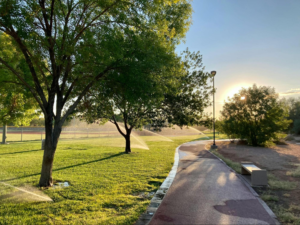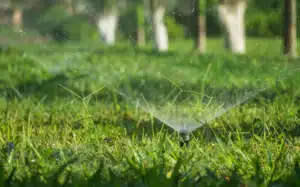
Every Treasure Valley summer follows the same script. The heat sets in, the sprinklers run harder, the lawn still looks thirsty, and the water bill climbs. It feels like the price of living in a beautiful high-desert valley. It does not have to be. With some smart choices, you can build a yard that stays green and colourful through the driest July while using a fraction of the water, and it will not look like a gravel pit either.
A water-wise Treasure Valley yard cuts water use by right-sizing the lawn, choosing drought-tolerant and native plants, grouping plants by their water needs, watering efficiently with drip and a smart controller, and mulching to hold moisture in the soil. Because outdoor watering can account for 60 percent or more of a household’s water in a hot, dry climate, these changes can cut your outdoor water use by roughly 20 to 50 percent while keeping the yard lush.
Here is how to build a yard that shrugs off our dry summers and your water bill along with them.
How much water does a Treasure Valley yard actually use?
More than most people realise. Nationally, the EPA’s WaterSense program estimates that outdoor use accounts for about 30 percent of a household’s water, but in hot, dry climates like ours that figure climbs to as much as 60 to 70 percent, and more than half of all that outdoor water goes onto lawns and gardens. In a high-desert valley that sees only around a foot of precipitation a year, your landscape is doing a lot of drinking.
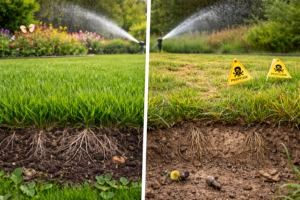
Worse, a great deal of it is wasted. The EPA estimates that as much as 50 percent of the water used for irrigation is lost to evaporation, wind and runoff from inefficient systems. That is the real opportunity: not just watering less, but watering smarter and planting so you need less in the first place.
What a water-wise yard really is
Let us clear up the biggest myth. A water-wise or xeriscaped yard is not a lifeless expanse of rock and cactus. Done well, it is a lush, colourful, varied landscape that simply happens to be built around plants and systems suited to our climate. The principles are straightforward: right-size the lawn, choose plants adapted to the Treasure Valley, group them by how much water they need, water efficiently, build healthy soil, and mulch. Follow those and you get beauty and low water use together, not one at the expense of the other.
The moves that save the most water
Not every change saves equally. Here is where the water actually goes, and the biggest levers to pull.
| Water-wise move | Why it saves |
| Right-size the lawn | Turf is the thirstiest thing in the yard, so shrinking it to the area you actually use cuts the most water |
| Drought-tolerant and native plants | Once established, adapted plants need little beyond rainfall |
| Group plants by water needs | Stops you overwatering low-water plants to satisfy thirsty ones |
| Efficient irrigation and a smart controller | A weather-based controller can cut irrigation use by up to 30 percent |
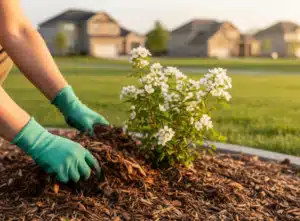
| Mulch beds well | A few inches of mulch slows evaporation and keeps roots cool |
| Improve the soil | Healthy soil holds water longer, so you water less often |
The single biggest win is usually rethinking the lawn. Turf drinks more than anything else in the yard, so keeping a right-sized patch of lawn where you actually use it, and converting the rest to water-wise beds, mulch or hardscaping, delivers the largest savings of all. Pair that with an efficient, well-tuned irrigation system on a smart controller, and you have addressed both how much you plant and how you water it.
Drought-tolerant plants that thrive in the Treasure Valley
The good news is that plenty of tough, beautiful plants love our conditions. Once established, these need far less water than a traditional bed while giving you colour and texture through the season: yarrow, Russian sage, penstemon, lavender, sedum and other stonecrops, rabbitbrush, ornamental grasses, coneflower, catmint, and many native and adapted perennials. The key phrase is “once established,” because even drought-tolerant plants need regular water through their first season to root in. After that, they largely fend for themselves.
Do you have to give up your lawn?
Not at all. A water-wise yard is about a right-sized lawn, not no lawn. Keep the green space your family actually uses for play and gathering, and be honest about the strips and corners that exist only to be mowed and watered. Those are the areas to convert. For high-traffic or hard-to-water spots where nothing grows well anyway, artificial turf stays green with zero water, and it can be a smart piece of the puzzle for the right area. The goal is a landscape that looks great and fits our climate, designed around how you actually live in your yard.
The organic advantage
Water-wise and organic go hand in hand. Healthy, living soil, built with organic matter and topped with mulch, holds moisture far better than tired, compacted ground, so a well-cared-for soil is itself a water-saving tool. And a landscape built around adapted plants and good soil simply needs fewer inputs of every kind, which keeps your yard both low-water and safe for the kids and pets who play in it. A thoughtfully designed water-wise landscape is one of the best long-term investments you can make in a Treasure Valley home.
Where to start if you are not ready for a full redesign
You do not have to rip up the whole yard at once to start saving. The highest-value first steps are cheap and quick. Add a few inches of mulch to your existing beds to slow evaporation. Get your sprinkler system audited and tuned so it is not spraying the driveway or overwatering, and fit a smart, weather-based controller. Pick one unused strip of lawn, the one that exists only to be mowed, and convert it to a low-water bed or hardscape. Each of these trims your water use on its own, and together they build toward a genuinely water-wise yard over a season or two rather than a single expensive weekend.
Frequently Asked Questions
How much water can water-wise landscaping actually save?
A well-designed water-wise landscape can cut outdoor water use by roughly 20 to 50 percent, and often more when it replaces large areas of thirsty turf. Since outdoor watering can be 60 percent or more of a household’s water use in a dry climate, that is a substantial saving on your bill.
Does a drought-tolerant yard have to look like rocks and cactus?
No. That is a common myth. A water-wise yard can be lush and colourful, built around adapted plants, healthy soil, mulch and a right-sized lawn. The gravel-and-cactus look is a choice, not a requirement.
What are the best low-water plants for the Treasure Valley?
Tough, adapted choices include yarrow, Russian sage, penstemon, lavender, sedum, rabbitbrush, ornamental grasses, coneflower and catmint. Once established through their first season, these need little water beyond our natural rainfall.
Do I have to get rid of my lawn to save water?
No. The aim is a right-sized lawn, keeping the green space you actually use and converting unused strips and corners to water-wise beds, mulch, hardscape or artificial turf. Turf is the thirstiest part of a yard, so shrinking it where it is not needed saves the most.
What is the fastest way to cut my summer water bill?
Fix and tune your irrigation, since as much as half of irrigation water is wasted to runoff and evaporation. A smart, weather-based controller alone can cut irrigation use by up to 30 percent, and pairing that with mulch and adapted plants compounds the savings.
When is the best time to install a water-wise landscape in Idaho?
Spring and fall are ideal for planting, since milder temperatures help new plants establish before the extremes of summer or winter. Fall in particular gives roots time to settle in before the next hot season.
Design a yard built for our climate
A Treasure Valley yard does not have to be a choice between beautiful and thirsty. Build it around our climate instead of against it, and you get a landscape that looks great, holds up to the driest summers, and quietly shrinks your water bill year after year.
Organic Solutions has designed and cared for Treasure Valley landscapes for over twenty years, from Nampa and Meridian to Boise, Eagle, Kuna and beyond, using organic methods that build healthy, water-holding soil. To plan a water-wise yard that fits your home, request a free estimate or call us on 208 884 8986, and we will design a landscape that stays green without pouring money down the drain.