Most people treat fall as the season to stop thinking about the lawn. Rake a few leaves, put the mower away, done. That is exactly backwards. For the cool-season grasses that grow across the Treasure Valley, fall is the single most important season of the year, more important than spring, and what you do in the next few weeks quietly decides whether your lawn comes up thick and green next April or thin and patchy. The best spring lawns are made in the fall.
The fall moves that make the biggest difference to an Idaho lawn are aerating to relieve summer compaction, overseeding thin areas while the soil is still warm, applying a fall fertilizer, the most important feeding of the year, so the roots store energy for winter and spring green-up, controlling perennial weeds while they are drawing nutrients down to their roots, and mowing and watering until growth stops before winterizing the sprinklers. Do these from September through November and your lawn wakes up green.
Here are the fall moves that matter, and when to make them.
Why fall is the most important season for an Idaho lawn
Cool-season grasses like the Kentucky bluegrass, ryegrass and fescue blends that dominate the Treasure Valley have a rhythm. They struggle through the heat of summer, then come alive again as the nights cool in fall. In that autumn window they put their energy into growing roots and storing food, not just top growth, which is the foundation the entire next year is built on. Feed and strengthen the lawn now, while it is actively rooting, and you are banking a thick, healthy spring. Neglect it now, and no amount of spring effort fully makes up the difference. That is why fall work pays off more than the same work done at any other time.
Aerate to undo a summer of compaction
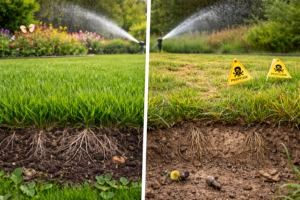
A summer of foot traffic, mowing and heat leaves Treasure Valley soil compacted and often crusted, especially in our heavier clay ground. Compacted soil chokes the roots, sheds water, and locks out the air and nutrients grass needs. Fall aeration pulls small plugs from the lawn to open the soil back up, letting water, air and nutrients reach the roots just as the grass is trying to grow them. It is one of the highest-value things you can do, and fall is the ideal time to do it.
Overseed while the timing is perfect
Fall is the best time of year to overseed a thin or tired lawn, and the reasons are all about timing. The soil is still warm from summer, which speeds germination, while the air is cool and the weeds that compete with new grass in spring are fading. Seed sown into freshly aerated soil in early fall has weeks to establish before winter. Overseeding now thickens the lawn so it crowds out weeds next year, and a thick lawn is the best weed control and drought defence there is.
Feed the lawn now, the most important meal of the year
If you fertilize your lawn only once a year, do it in fall. As the grass roots through autumn, a fall feeding gives it the nutrients to build strong roots and store energy through winter, which is what fuels a fast, deep-green start in spring. This is genuinely the most important fertilizing of the whole year, and skipping it is the most common reason a lawn comes up slow and pale in April. An organic fall feeding also feeds the soil itself, building the living, healthy ground that carries the lawn through the seasons.
Hit the weeds while they are vulnerable
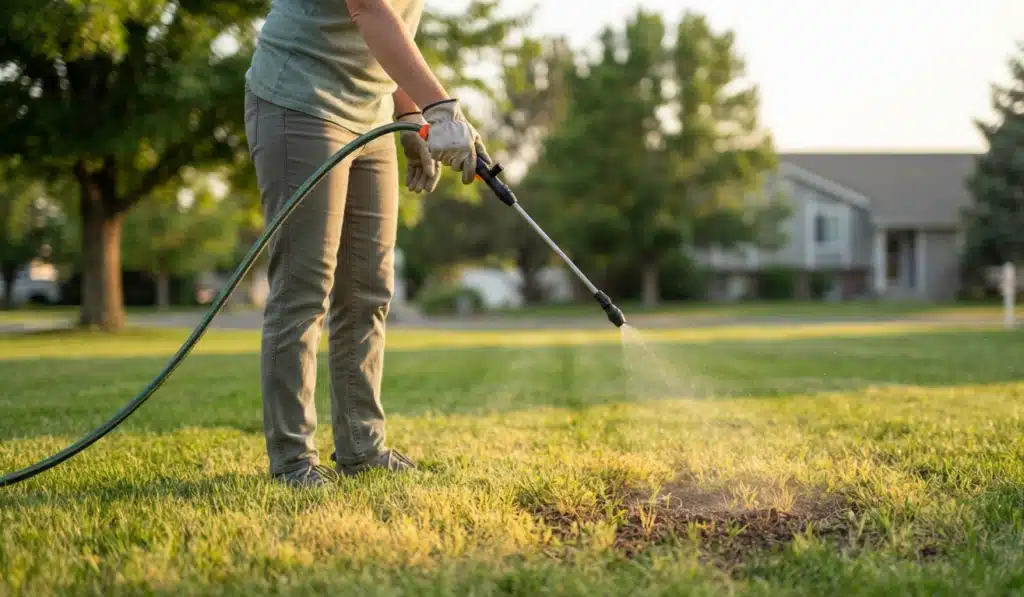
Fall is also the best time to deal with stubborn perennial broadleaf weeds like dandelion and clover. As the season cools, these weeds pull energy and nutrients down into their roots to survive winter, which means any treatment travels down with it, striking the whole plant rather than just burning the top. Tackle them now and you clear the way for the grass, rather than fighting the same weeds all over again next spring.
Keep mowing and watering, yes, still
Do not put the mower and hose away too early. Keep mowing as long as the grass is growing, which in the Treasure Valley often runs well into fall, and keep watering until growth stops and the ground begins to freeze, since the roots are still working and still thirsty. Do not let fallen leaves pile up and mat down over the grass either, because a smothering leaf layer invites disease and dead patches. Mulch them with the mower or clear them off.
Winterize the sprinklers before the first hard freeze
The last essential fall job protects the system that keeps your lawn alive all summer. Before the first hard freeze, your irrigation needs a proper sprinkler blowout and winterization to clear the water from the lines, because water left in the pipes freezes, expands and cracks them, turning a simple fall task into an expensive spring repair. In our climate this is not optional, and the timing matters, so it is worth getting done before the cold snaps arrive.
The fall mistakes that cost you a green spring
A few common habits quietly undo all the good fall work. The biggest is skipping the fall feeding, which is the single most impactful thing you can do and the most common reason for a slow spring. Scalping the lawn super short for winter is another, since very short grass is more exposed to cold and disease, so lower the final mow only slightly. Letting leaves pile up and mat over the grass smothers it and breeds dead patches. Cutting off the water too early leaves the roots stressed going into winter. And forgetting to winterize the sprinklers risks cracked pipes and an expensive spring repair. Avoid those five and your fall effort actually pays off.
Your fall lawn timeline
| When | What to do |
| Early fall (September) | Aerate, overseed thin areas, apply fall fertilizer, keep mowing and watering |
| Mid fall (October) | Control perennial weeds, keep up with fallen leaves, continue watering |
| Late fall (November) | Final mow, winterize and blow out the sprinklers before the freeze |
Frequently Asked Questions
Why is fall the most important time for lawn care in Idaho?
Because cool-season grasses do their most important root growth and energy storage in fall, not spring. Aerating, overseeding and feeding while the lawn is actively rooting builds the foundation for a thick, green spring, which is why fall work pays off more than the same effort at any other time.
When should I fertilize my lawn in the fall?
Early fall is ideal, as the grass roots and stores energy for winter. If you fertilize only once a year, make it the fall feeding, since it is the most important of the year and the main reason a lawn greens up fast in spring.
Should I aerate and overseed in fall or spring?
Fall is generally better in the Treasure Valley. The soil is still warm for fast germination, the air is cool, and spring weeds are not competing yet, so new grass establishes well before winter and comes back strong in spring.
Do I need to keep watering my lawn in the fall?
Yes, until growth stops and the ground begins to freeze. The roots are still active and thirsty in fall, and cutting water off too early stresses the lawn going into winter. Then winterize your sprinklers before the first hard freeze.
When should I winterize my sprinklers in Idaho?
Before the first hard freeze, typically in late fall. Water left in irrigation lines freezes and expands, which cracks pipes and fittings, so a proper blowout to clear the lines protects the system from costly winter damage.
Why does my lawn come up thin and pale in spring?
Most often because it missed its fall care, especially the fall feeding and aeration. A lawn that was not fed and strengthened while it was rooting in autumn simply has less stored energy to green up with in spring.
Set up next year’s lawn this fall
The lawn you will be proud of next spring is decided by what happens over the next few weeks. Aerate, overseed, feed, handle the weeds, and winterize, and you go into winter with a lawn that is ready to explode into green the moment the weather turns.
Organic Solutions has built thick, healthy Treasure Valley lawns for over twenty years, from Nampa and Meridian to Boise, Eagle, Kuna and beyond, with organic fall care that sets up a strong spring. To get your fall lawn program sorted before the cold arrives, request a free estimate or call us on 208 884 8986, and we will make sure your lawn wakes up green next year.