You buy the fertilizer, you spread it, you water it in, and yet the lawn still looks pale, or it greens up fast and then fades by July. It is one of the most common frustrations we hear across the Treasure Valley, and most of the time the problem is not the product. It is the timing, and it is our soil.
Feeding a lawn is not about how much you put down. It is about putting the right amount down at the moments your grass can actually use it, and about understanding why Idaho soil hides so many nutrients in the first place. Get those two things right and a modest feeding schedule will outperform a garage full of fertilizer applied at the wrong time. Here is the month by month plan for a Treasure Valley lawn, and the one soil issue that quietly undoes so much good work.
Why timing matters more than quantity here
Almost every lawn in the Treasure Valley is a cool season grass: Kentucky bluegrass, perennial ryegrass, and the fescues, often in a blend. Cool season grasses have a very specific rhythm. They grow hard in the mild temperatures of spring and fall, and they slow right down through the heat of a Nampa or Boise summer as a survival strategy.
That rhythm is the whole key to fertilizing. Feed heavily right before summer and you force a burst of soft, thirsty top growth exactly when the grass is trying to conserve energy, which leaves it weak, disease prone, and hungry for water in the worst possible month. Feed at the wrong end of the year and you waste it. But feed in step with how the grass actually grows, with the emphasis in fall, and you build a lawn with deep roots that greens up earlier, holds color longer, and shrugs off summer far better.
The Idaho soil trap that turns lawns yellow
Before the calendar, you need to know about the thing behind more pale, disappointing lawns than any missed feeding: alkaline soil.
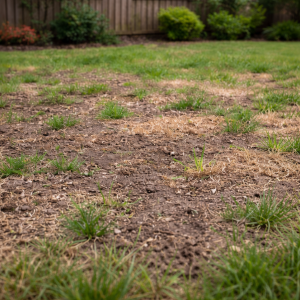
Much of the Treasure Valley sits on soil with a high pH, commonly in the range of 7.5 to 8.5. At that alkalinity, iron and several other micronutrients get chemically locked up in the soil where grass roots cannot absorb them, even when they are physically present. The result is iron chlorosis, a yellowing of the blades that looks exactly like a lawn begging to be fed. So the homeowner adds more nitrogen, the grass pushes out more growth it still cannot color properly, and the lawn looks worse, not better.
The fix is not more fertilizer. It is iron, applied in a form the grass can use, and over the longer term, gentle steps to bring that soil pH down so nutrients unlock naturally. If your lawn is pale despite regular feeding, this is very often the reason, and it is one of the first things we check.
A month by month fertilizing calendar for the Treasure Valley
Use soil temperature and how the grass is behaving as your real guide, and let the calendar below be your framework. Timing shifts a little year to year with our weather.
| Window | Roughly when | What to do and why |
| Early spring | Around April, once the lawn is greening up | A light feeding as growth begins. Just enough to support the green up, not a heavy push. Wait until the grass is actively growing, never feed frozen or dormant turf. |
| Late spring | May into early June | A measured feeding to build density and color before summer. This is about a steady, strong lawn, not a growth surge. |
| Summer | July and August | Go light. Skip heavy fast release nitrogen in the heat, which invites disease and stress. A touch of iron keeps color without forcing growth, and deep, infrequent watering matters more now than feeding. |
| Early fall | September | The most important recovery feed of the year. After summer stress the grass is growing again, and this feeding restores density. It pairs perfectly with aeration and overseeding. |
| Late fall | Late October into November, before the ground freezes while grass is still green | The single most valuable feeding for a cool season lawn. The grass sends energy to its roots rather than its blades, which means better winter survival, an earlier and stronger green up next spring, and more drought resilience next summer. |
If you take one thing from this table, let it be that fall is where a Treasure Valley lawn is truly built. Most homeowners pour their effort into spring and coast through fall. The healthiest lawns in the valley do the opposite.
So how many times a year should you fertilize
For most Treasure Valley lawns, three to four feedings a year, spaced as above, is the sweet spot, with the two fall feedings doing the heaviest lifting. More than that rarely helps and often hurts, especially if the extra feeding lands in summer. Fewer than that, and the lawn tends to thin out and lose the fight against weeds and heat.
Spring versus fall, if you can only do it well twice
We get this question a lot from busy homeowners. If you are going to do a great job in only two windows, choose a light early spring feeding and a strong late fall feeding. Spring gives you the green up you can see, but late fall gives you the roots you cannot, and those roots are what carry the lawn through the following year. Fall feeding is the most underrated move in Idaho lawn care.
Where organic fertilizer fits in
Everything above works beautifully with an organic approach, and in our soil it has real advantages. Organic and slow release fertilizers feed gradually as soil microbes become active with warmth and moisture, so they are far less likely to burn the lawn or force that weak summer surge. They also feed the soil itself, building the biology and structure that, over time, help with the very compaction and nutrient lockout that plague Treasure Valley yards. And they do all of it without leaving harsh residue on a lawn where your kids and pets spend their summer. It is a slower, steadier kind of feeding, and it suits a cool season lawn and our conditions well.
The mistakes that undo a good feeding
A few habits quietly waste even well timed fertilizer. Feeding grass that is still dormant or frozen in early spring, when the roots cannot take anything up. Pushing heavy nitrogen right before the summer heat, which is the classic cause of a lawn that looks great in June and struggles in July. Chasing a yellow, iron starved lawn with more nitrogen instead of correcting the iron and the soil pH. And applying fertilizer without watering it in, which leaves it sitting on the surface instead of reaching the roots. Avoid those four and you are already ahead of most lawns on your street.
Frequently asked questions
When should I fertilize my lawn in Idaho?
Feed cool season Treasure Valley lawns in step with their growth: a light feeding in early spring once the grass greens up, a measured feeding in late spring, a light touch through summer, and the two most important feedings in early and late fall. Fall is where the lawn is really built.
How many times a year should I fertilize?
Three to four times for most Treasure Valley lawns, with the fall feedings doing the most work. More than that, especially in summer, tends to hurt rather than help.
Is spring or fall more important for fertilizing?
Fall. Spring gives you visible green up, but late fall feeding sends energy to the roots, which means better winter survival, an earlier spring green up, and more summer drought resistance.
Why is my lawn still yellow even though I fertilize it?
Very often it is iron chlorosis from our high pH, alkaline soil, which locks up iron so the grass cannot absorb it. The fix is applying iron in a usable form and gradually lowering soil pH, not adding more nitrogen.
Can I fertilize in the middle of summer?
Keep summer feeding light and avoid heavy fast release nitrogen in the heat, which stresses cool season grass and invites disease. A little iron for color and deep, infrequent watering serve the lawn better in July and August.
Do I need to water after fertilizing?
Yes. Watering the fertilizer in moves it off the blades and into the soil where the roots can reach it. Skipping this step wastes much of the application.
Let us take the guesswork out of your feeding schedule
Timing fertilizer to the season, reading our alkaline soil correctly, and choosing the right product for each window is exactly the kind of thing that separates a good lawn from a great one, and it is exactly what we do every day across the valley.
Organic Solutions has cared for Treasure Valley lawns for over twenty years, from Nampa and Meridian to Boise, Eagle, Kuna and beyond, with kid and pet safe programs built around how our grass and our soil actually behave. Explore our organic fertilizing service or our full season long lawn care program, or reach out for a free estimate and we will build a feeding schedule around your lawn, not a bag label.