Few things ruin a summer evening faster than finding a tick crawling up your dog’s ear after a romp in the backyard. Ticks are more than a nuisance. They can transmit Rocky Mountain spotted fever, tick borne relapsing fever, tularemia, and other illnesses to both pets and people. And while many Idahoans assume ticks only live up in the mountains, the truth is that they show up in Treasure Valley yards every year, especially in properties that border fields, canals, greenbelts, or brushy open space.
The encouraging part is that ticks are predictable. They need specific conditions to survive, and when you remove those conditions from your yard, tick encounters drop dramatically. This guide covers the ticks we actually deal with in Idaho, how to make your yard hostile to them, and how to keep your dog protected all season long.
Meet Idaho’s Ticks
Idaho is home to several tick species, but two cause most of the trouble for homeowners and pets:
- Rocky Mountain wood tick. The most common tick in our region. It is most active from late March through July and prefers grassy, brushy areas, trail edges, and the transition zones between lawns and wild vegetation. It can transmit Rocky Mountain spotted fever and tularemia and can cause tick paralysis in dogs.
- American dog tick. Found in similar habitats and, as the name suggests, very fond of dogs. It is also a carrier of Rocky Mountain spotted fever.
Soft ticks, which live in rodent nests and rustic cabins, are the main carriers of tick borne relapsing fever in Idaho, but they are rarely a backyard problem. For the average homeowner in Nampa, Meridian, or Boise, the wood tick and dog tick are the ones to plan around.
Peak season here runs from early spring through midsummer. Ticks quest for hosts by climbing to the tips of grass blades and low shrubs, stretching out their front legs, and waiting for a warm body to brush past. That single behavior tells you almost everything about how to fight them.
Make Your Yard a Terrible Place to Be a Tick
Ticks dry out and die quickly in hot, sunny, low humidity conditions. They thrive in shade, moisture, leaf litter, and tall vegetation. Your goal is to maximize the first set of conditions and eliminate the second. Here is how.
1. Keep Grass Short and Edges Clean
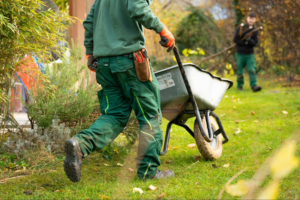
Tall grass is tick habitat, plain and simple. Mowing regularly during spring and summer removes the questing platforms ticks rely on and exposes them to lethal sun and dryness. Pay special attention to fence lines, the strips along sheds and outbuildings, and anywhere your mower tends to miss. If keeping up with it is a struggle, a consistent lawn mowing service takes the chore off your plate and keeps your yard cut to the right height on schedule.
2. Remove Leaf Litter, Brush, and Clutter
Ticks overwinter and hide in leaf piles, dead brush, wood stacks, and yard debris. Rake and remove leaf litter every fall and spring, clear brush piles, and store firewood neatly off the ground in a dry, sunny spot. Wood piles stacked against shady fences are also rodent hotels, and rodents carry ticks into your yard.
3. Create a Barrier Zone
If your property backs up to a field, canal bank, pasture, or natural area, install a 3 foot wide barrier of wood chips or gravel between the wild edge and your lawn. Ticks avoid crossing hot, dry barriers, and the visual line also reminds kids and pets where the safe zone ends. This one simple feature can significantly reduce tick migration into your yard.
4. Control Weeds and Overgrowth
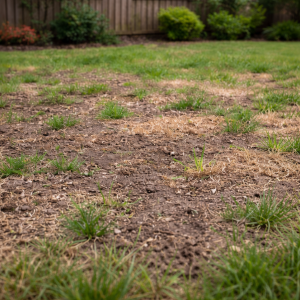
Weedy patches hold moisture near the soil and provide perfect tick shelter. Keeping beds and fence lines free of weeds removes both habitat and humidity. Professional weed control keeps these areas clean throughout the season, which is far more effective than an occasional weekend pulling session.
5. Prune Trees and Shrubs to Let Sunlight In
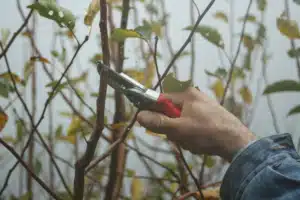
Dense, low hanging branches create the cool, damp shade ticks love. Thinning canopies and raising the skirts of shrubs lets sunlight and airflow reach the ground, drying out the microclimate underneath. Regular tree trimming improves tree health and curb appeal while quietly making your landscape less tick friendly. Managing insect pests in your ornamentals with tree and shrub insect control also supports the overall health of these plantings.
6. Discourage Wildlife and Rodents
Deer, rabbits, mice, and voles are tick taxis. Secure garbage cans, clean up fallen fruit and birdseed, seal gaps under decks and sheds, and avoid plantings that attract deer along your property line. Fewer wild hosts moving through your yard means fewer ticks dropping off in it.
7. Add a Professional Perimeter Treatment
Habitat modification does most of the heavy lifting, but properties with heavy tick pressure benefit from targeted barrier treatments along fence lines, shady borders, and transition zones. Our pest control program uses treatments that are safe for your family and pets when applied correctly, focused exactly where ticks live rather than blanketing your whole yard. Scheduled visits through spring and summer keep the barrier active during peak tick season.

Protecting Your Dog
Even a well managed yard cannot protect a dog that hikes the foothills or walks canal paths with you. Layer these habits on top of your yard work:
Use year round tick prevention. Talk to your veterinarian about oral or topical tick preventatives, or a tick collar suited to your dog’s lifestyle. Consistency matters more than the specific product. A dose skipped in April is how ticks end up in your house in May.
Do a tick check after every outing. Run your hands over your dog’s entire body, feeling for small bumps. Ticks favor the ears and the skin around them, the face and eyelids, under the collar, armpits, groin, belly, between the toes, and under the tail. Checking takes two minutes and catches ticks before they attach or before they finish feeding.
Remove attached ticks promptly and correctly. Use fine tipped tweezers or a tick removal tool. Grasp the tick as close to the skin as possible and pull straight up with steady, even pressure. Do not twist, squeeze the body, or use matches, petroleum jelly, or other folk methods. Clean the bite site with antiseptic, wash your hands, and drop the tick in rubbing alcohol. Note the date, and call your vet if your dog develops fever, lethargy, lameness, or loss of appetite in the following weeks.
Keep your dog out of tick zones. Train dogs to stay on trails during walks and keep them out of the brushy margins of your own yard. That barrier strip of wood chips does double duty here as a clear boundary.
Groom regularly. Short, well brushed coats make ticks easier to spot and remove. Long haired breeds benefit from a summer trim during peak season.
Consistency Beats Intensity
The most common tick control mistake is treating it as a one time project. A single spray in May or one big yard cleanup in April helps, but ticks reproduce quickly and reinvade from neighboring properties all season. The yards that stay tick free are the ones that stay mowed, trimmed, weeded, and treated on a steady schedule from March through summer. That is exactly why many of our clients bundle these services into a comprehensive lawn care program so nothing slips through the cracks during the busy months.
Frequently Asked Questions
Are ticks really a problem in the Treasure Valley, or just in the mountains?
They are a valley problem too. Rocky Mountain wood ticks and American dog ticks are found in grassy and brushy habitat throughout southwestern Idaho, including yard edges, canal banks, greenbelts, and fields that border neighborhoods. Any dog that spends time outdoors here needs tick protection.
When is tick season in Idaho?
Adult wood ticks become active as early as late February in warm years, with peak activity from April through July. Activity drops in the hottest part of summer, but checks and preventatives should continue into fall.
Are tick treatments safe for my dog and my kids?
Yes, when the right products are applied by trained technicians in the right places. We focus treatments on tick habitat zones such as borders and shaded edges, follow all label reentry guidelines, and choose products with strong safety profiles. Our whole approach is built around family and pet safe methods.
How short should I mow to discourage ticks?
Keep your lawn around 3 inches. That is short enough to eliminate questing habitat and keep the turf canopy dry, while still tall enough to keep your grass healthy through Idaho summers. The bigger factor is consistency. Never let grass get tall and shaggy, especially along edges.
My neighbor’s property is overgrown. Can I still keep ticks out?
You cannot control their yard, but a wood chip barrier strip along the shared line, tight mowing on your side, and a professional perimeter treatment create a strong buffer. Most ticks entering from next door will die or be intercepted before they ever reach your patio or your pet.
Take Your Yard Back This Season
Your backyard should be a place where your kids play barefoot and your dog naps in the grass, not a place you inspect for parasites every evening. Idaho Organic Solutions provides tick focused pest control, mowing, weed control, and full property care throughout Nampa, Meridian, Boise, Caldwell, Kuna, Eagle, Star, and Middleton.
Do not wait for the first tick to show up on your dog. Request your free estimate today or call 208 884 8986 and let our team build a tick defense plan for your property. One call now means a safer, worry free yard all summer long.