If you have a shade tree towering over your Boise backyard, or a tidy row of them lining your street, there is a real chance it is an ash. Ash trees have been one of the most popular choices for yards, parks, and streets across the Treasure Valley for decades. They grow fast, shape up nicely, and handle our climate well. That popularity is now their greatest weakness, because a small green beetle called the emerald ash borer is spreading across the country and heading our way.
Here is the honest picture of where the threat stands, what it means for your trees, and why the smartest time to act is before the beetle ever arrives.
What Is the Emerald Ash Borer
The emerald ash borer, often shortened to EAB, is an invasive wood boring beetle native to Asia. The adult is small and slender, only about a third to half an inch long, with a striking metallic green shell. On its own, an adult beetle does little more than nibble a few leaves. The real damage is done underground, so to speak, beneath the bark.
Female beetles lay eggs in the crevices of ash bark. When the larvae hatch, they tunnel into the living layer just under the bark and feed there for months, carving winding S shaped galleries as they go. That living layer is the tree’s plumbing, the tissue that carries water and nutrients between the roots and the canopy. As more and more larvae feed, they cut off that flow, and the tree slowly starves. What makes EAB so devastating is that it attacks ash of any size, age, or health, and an untreated tree typically dies within just a few years of being infested.
Where the Threat Stands Right Now
Here is the good news, and the reason this article is worth reading now rather than later. As of 2026, the emerald ash borer has not been found in Idaho. State and university experts are monitoring for it carefully, but so far our ash trees remain free of it.
The sobering part is how close it has come. First detected in Michigan in 2002, EAB has since spread to dozens of states and killed hundreds of millions of ash trees across North America. It has now reached the West Coast, with established populations confirmed in Oregon and in British Columbia. Idaho forestry officials have been clear that stopping the beetle’s national spread is not realistic, and that significant ash losses are expected when, not if, it eventually reaches our state. Many Idaho communities have already stopped planting ash in anticipation.
In other words, your Boise ash trees are healthy today, but they sit directly in the path of a pest that has proven almost impossible to outrun. That gap between now and arrival is exactly where homeowners have the most power to protect what they have.
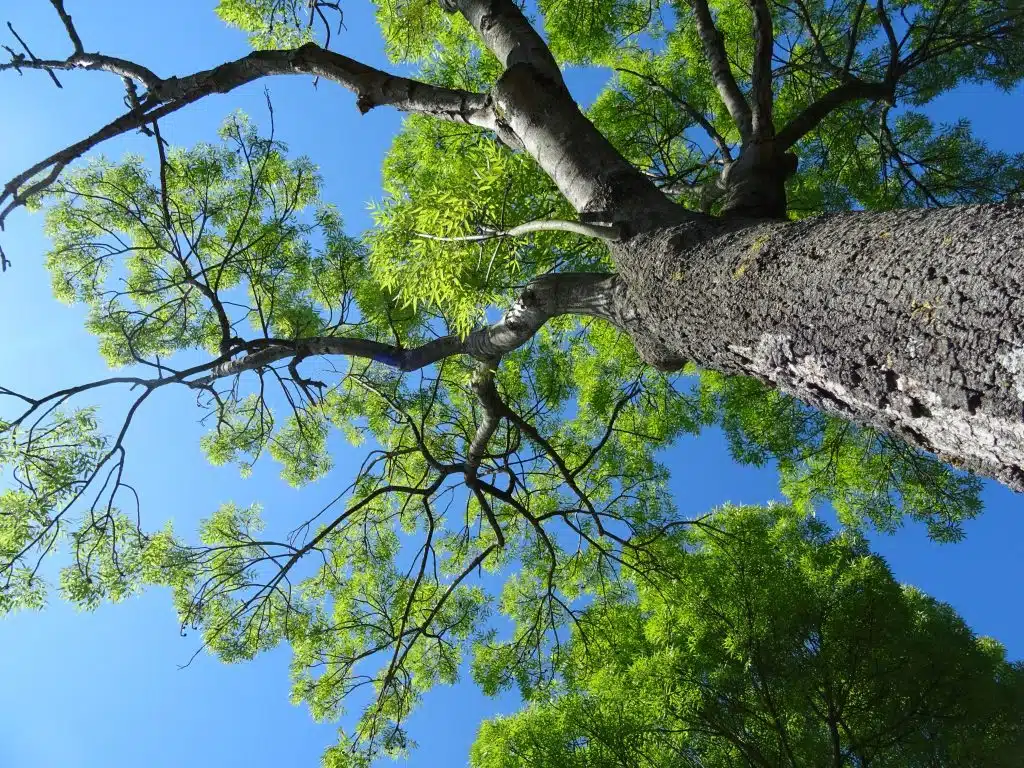
Why Boise Has So Much at Stake
Ash trees make up a large share of the mature shade canopy across Boise and the surrounding valley, in older neighborhoods, newer subdivisions, and along countless streets. When a pest can kill nearly every ash it reaches, a community with that many ash trees faces the loss of a huge portion of its shade, its curb appeal, and its property values all at once. The cost of removing and replacing dead trees is enormous, and it tends to land on cities, HOAs, and individual homeowners.
For you as a homeowner, a mature ash in the front yard is not just a tree. It is decades of growth, summer shade that lowers your cooling bills, and a major part of what makes your property feel established. Losing it is expensive and, once it is gone, it takes many years to replace.
The Warning Signs to Watch For
Because early infestations usually start high in the canopy, the beetle can be present for a year or more before most people notice. Learning the signs now means you can catch trouble at the stage when something can still be done. Keep an eye out for the following on any ash tree:
- Thinning or dieback that begins at the very top of the tree and works its way down.
- Small D shaped exit holes in the bark, each only about an eighth of an inch across, left by adults emerging from the wood.
- Winding S shaped tunnels just under the bark, visible where bark has cracked or fallen away.
- New sprouts, sometimes called suckers, pushing out from the trunk or base as the tree tries to survive.
- A noticeable jump in woodpecker activity, since woodpeckers feed heavily on the larvae and will strip bark chasing them.
If you spot these signs, it matters. You can report a suspected emerald ash borer to the Idaho Invasive Species Hotline at 1-877-336-8676, and you should have the tree assessed by a professional right away.
Protecting Your Ash Trees the Smart Way
The most important thing to understand is that emerald ash borer is highly treatable when you get ahead of it, and very difficult to beat once a tree is badly infested. That is why prevention is the whole game.
For a valuable, healthy ash that you want to keep, the professional gold standard is a systemic treatment that moves protection through the tree’s own vascular system. Our systemic tree injections deliver treatment directly into the tree, where it circulates to every branch and reaches the exact tissue the larvae feed on. Because the treatment travels inside the tree rather than sitting on the surface, there is nowhere for a boring insect to hide, which makes injection far more effective against EAB than a surface spray alone.
Protecting ash is not a one time event, so it works best as part of an ongoing plan. Our tree and shrub insect control service keeps your trees monitored and defended over time, and our full guide to tree and shrub insect control explains how we match treatment and timing to each specific pest. In some situations, targeted tree spraying can complement a protection plan by knocking down adult beetles during their active season. And where a tree already has dead or dying limbs from any cause, professional tree trimming removes the hazard and keeps the rest of the tree healthier.
One more simple step helps protect the whole region. Emerald ash borer spreads easily in firewood, so buying and burning local firewood rather than hauling wood in from other areas is an easy way to avoid giving the beetle a free ride.
Do Not Wait for the Beetle to Arrive
The homeowners who come through an emerald ash borer invasion with their trees intact are almost always the ones who planned ahead. Once the beetle is in your neighborhood and in your tree, your options shrink and your costs climb. Right now, while Idaho is still ahead of it, you have the advantage.
Call Idaho Organic Solutions today at 208-884-8986 for a free tree assessment. Our licensed, local team will identify your ash trees, evaluate their health, and build a protection plan that fits your property, all with the earth friendly approach we are known for. Curious how our tree treatments and scheduling work? Our frequently asked questions have you covered.
Frequently Asked Questions
Is the emerald ash borer in Idaho yet?
As of 2026, no. It has not been confirmed in Idaho. However, it has spread across much of the country and now reached the West Coast in Oregon and British Columbia, and experts expect it to eventually reach Idaho. That is why identifying and protecting your ash trees early is so valuable.
How do I know if my tree is an ash?
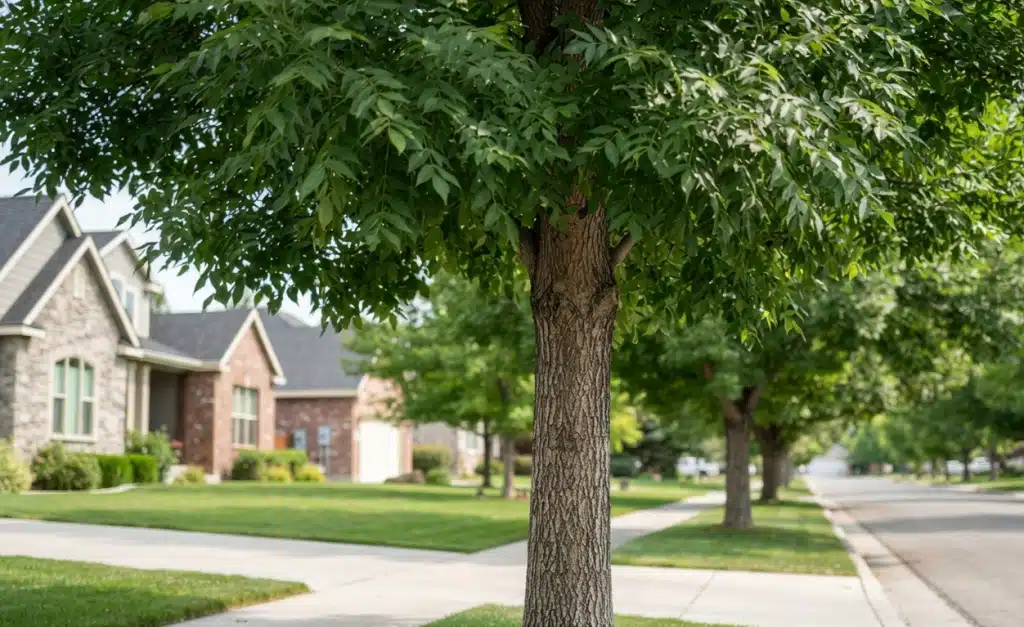
Ash trees have branches and buds that grow directly opposite each other, leaves made up of five to nine leaflets arranged along a central stem, and a diamond patterned bark on mature trunks. If you are not sure, we can identify your trees for you during a free assessment, which is the first step in deciding whether protection makes sense.
Can an ash tree be saved once it is infested?
It depends entirely on how early the infestation is caught. A tree treated preventively or in the very earliest stage of infestation has an excellent chance. A tree that has already lost a large share of its canopy is usually too far gone to save, which is exactly why acting before the beetle arrives is so important.
How does treatment for emerald ash borer work?
The most effective method for a valuable tree is a systemic injection that carries protection through the tree’s vascular system to the tissue the larvae feed on. Treatments are timed to the beetle’s life cycle and typically repeated on a schedule to keep the tree defended. We assess each tree and recommend the right plan for its size, health, and value.
Should I just remove my ash trees to be safe?
Not necessarily. A healthy, well placed ash is worth protecting, and preventive treatment is far cheaper than removing and replacing a mature shade tree. Removal makes more sense for trees that are already in poor health or poorly located. We can help you weigh protection against removal on a tree by tree basis.