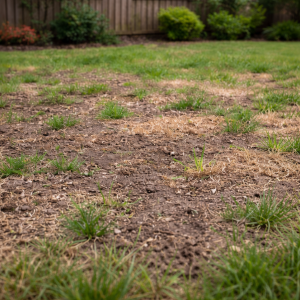
You walk outside one morning and your lawn looks like a maze. Raised ridges snake across the grass, there are narrow worn trails through the turf, and maybe a few small mounds of dirt near the fence line. Your first instinct is probably “moles,” but in a lot of Idaho yards, the real culprit is something smaller and very different: voles.
At Idaho Organic Solutions, we get calls about both of these critters every spring, especially after a winter with heavy snow cover. The good news is that telling them apart isn’t hard once you know what to look for, and the fix for each one is completely different. Here’s how to figure out what’s actually living under your lawn.
Moles vs. Voles: The Basic Difference
Simplest way to remember it: moles dig, voles eat.
Moles are small insect-eaters with cylindrical bodies, velvety fur, and large paddle-shaped front feet made for digging. They live almost entirely underground, going after earthworms, grubs, and soil insects, with burrows that can run 16 to 18 inches deep. They’re not interested in your grass — the damage is collateral, from the tunneling and the mounds and ridges they push up along the way.
Voles are nothing like moles. They’re stockier, mouse-like rodents with shorter tails, and they’re herbivores — grass, roots, bulbs, and the bark of young trees and shrubs are all on the menu. Voles work both above and below ground, and the surface “runways” they leave behind are the giveaway.
The Telltale Signs: What to Look For
If you’re standing in your yard trying to figure out what you’re dealing with, here’s a side-by-side breakdown.
| Sign | Likely Mole | Likely Vole |
| Raised ridges or tunnels just under the surface | Yes | Sometimes (voles may reuse mole tunnels) |
| Volcano-shaped dirt mounds | Yes | Rarely |
| Narrow, visible “runway” trails through grass | No | Yes |
| Small (about 1-inch) holes near bulbs or roots | No | Yes |
| Chewed grass blades, dead patches in spring | No | Yes |
| Gnaw marks on tree bark near the ground | No | Yes |
| Damage appears mainly after snow melts | Sometimes | Very common |
One important wrinkle: voles will sometimes use existing mole tunnels to get around, which causes moles to get blamed for eating roots and plants — something moles, as insect-eaters, generally don’t do, according to University of Minnesota Extension. So if you’re seeing both tunnel ridges and chewed-up grass or bulbs, you may actually have a vole problem riding along on old mole infrastructure.
Why Idaho’s Winters Make Vole Damage Worse
Vole damage tends to show up dramatically in early spring, right as snow melts — and that’s not a coincidence. Voles avoid open areas to stay safe from predators like hawks and owls, but snow cover gives them a protected highway across your lawn. As they travel and feed underneath the snowpack, they create tunnels and runways between the ground and the snow, leaving behind depressions filled with chewed grass clippings.
This is especially relevant in the Treasure Valley, where snow cover can sit on lawns for weeks at a time during a cold winter. If your yard backs up to open fields, irrigation canals, undeveloped lots, or anywhere with tall grass and weeds, you’ve got a built-in vole habitat right next door. Research from Washington State University Extension notes that backyards and gardens that share borders with open grasslands, fields, or forests tend to experience the highest vole population pressure — which describes a lot of properties around Nampa, Caldwell, Star, and Meridian.
The Good News About Vole Damage
If your lawn looks like it survived a tiny rodent invasion, take a breath — it’s usually not as bad as it looks. According to UMass Amherst’s Center for Agriculture, Food and the Environment, voles feed only on turfgrass shoots, and the vital crown tissue and root system are typically not disturbed, meaning grass plants often regrow on their own as the weather warms.
To help your lawn bounce back faster after vole damage:
- Rake out dead grass and accumulated debris from the runways once the ground dries out
- Apply a light, balanced fertilizer to encourage new growth
- Overseed any patches that don’t fill back in within a few weeks
- Mow as soon as it’s safe to do so — a few mowings often make the damage disappear
What Actually Helps Prevent Both
Whether you’re dealing with moles, voles, or some of both, the prevention strategy overlaps more than you’d think, and it comes down to habitat control.
For voles specifically, an important step in control is eliminating ground cover — mowing grass to about 3 inches or shorter before the first snow, clearing brush piles and leaf litter, and keeping vegetation trimmed along fence lines and property edges. Utah State University Extension recommends decreasing the height and density of ground cover and mowing your lawn very short on the final cut of the fall to make the area less attractive to voles heading into winter.
For moles, the underlying food source — grubs and soil insects — is the lever to pull. A healthy lawn with a properly managed insect population tends to see less mole activity than a lawn with a heavy grub infestation.
This is exactly where a consistent maintenance plan pays off. Our lawn mowing service keeps your grass at the right height heading into winter, while our pest control program addresses the grub populations that draw moles in to begin with. If damage has already taken hold, overseeding and lawn renovation can fill in the runways and tunnels once the ground dries out in spring.
Voles and Moles FAQ
How can I tell if I have moles or voles without seeing the animal?
Look at the type of damage. Raised ridges and volcano-shaped mounds point to moles, which dig deep tunnels searching for insects. Narrow surface runways, chewed grass, and small holes near bulbs or roots point to voles, which feed on plant material.
Do moles eat my grass roots?
Generally, no. Moles are insectivores that feed on earthworms, grubs, and soil insects. Damage to plant roots is usually incidental, caused by tunneling, or is actually the work of voles using old mole tunnels.
Why does vole damage seem to appear overnight in spring?
Vole activity often happens unseen under snow cover during winter. As snow melts, the runways and chewed grass that were hidden underneath suddenly become visible, making the damage look sudden even though it built up gradually.
Will vole-damaged grass grow back on its own?
In most cases, yes. Voles typically eat only the grass blades and leave the crown and root system intact, so with raking, light fertilization, and a few mowings, lawns usually recover within several weeks as the weather warms.
What’s the best way to prevent vole damage before winter?
Mow your lawn shorter than usual on your final fall cut, clear away leaf piles and brush near the lawn, and remove tall grass and weeds along fence lines and property borders. Reducing cover makes the area far less attractive to voles heading into the snowy months.
Let Us Take a Look
If your lawn has the telltale signs of moles, voles, or both, the team at Idaho Organic Solutions can take a look and tell you exactly what’s going on — and more importantly, what to do about it. Whether it’s a fall mowing schedule designed to reduce vole habitat or a grub treatment plan to make your lawn less attractive to moles, Idaho Organic Solutions has the local experience to get your yard back on track. Reach out for a free assessment and let’s figure out what’s really going on underground.