If you’ve ever stepped on one of these things barefoot, you don’t need an introduction. Goatheads — also called puncturevine — are the spiky little seed pods that hide in dry grass and gravel until your foot, your dog’s paw, or your bike tire finds them first. Around the Treasure Valley, late summer means goathead season, and by then the damage is already done. At Idaho Organic Solutions, we deal with these plants on lawns and properties all over Nampa, Meridian, Caldwell, and Boise, and we’ve learned that the only way to “finally” get rid of them is to attack the problem before the seeds even form.
This guide walks through what goatheads actually are, why they’re such a headache in our climate, and what an effective, organic-friendly removal plan looks like.
What Exactly Are Goatheads?
Puncturevine (Tribulus terrestris) is the plant behind goatheads — a low, sprawling weed that spreads into flat mats across bare dirt, gravel, and thin lawn areas. It thrives on sandy, dry, or gravelly ground and produces sharply pointed burs that puncture bare feet and bike tires.
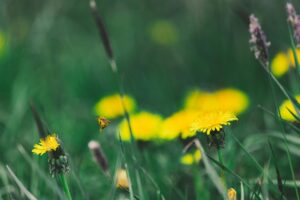
The plant itself stays fairly small — a prostrate annual that spreads into mats up to 4 feet across, with small hairy leaflets and bright yellow flowers blooming from midsummer through frost. Those flowers are the early warning sign. Each one turns into a hard, star-shaped seed pod with spines sharp enough to puncture skin, shoe soles, and even light truck tires, according to University of Arizona Extension research. The same research notes the seeds can stay dormant in soil for up to 20 years — meaning a single bad season can leave a seed bank that keeps producing new plants for decades if it’s left unmanaged.
Why Goatheads Love the Treasure Valley
Puncturevine isn’t picky, but it’s especially happy in places with hot, dry summers, compacted soil, and thin or struggling turf — which describes a lot of yards and parkways around Nampa, Caldwell, and Boise during July and August. Boise has struggled with goatheads for years, prompting a city-wide effort with Boise State University to map the worst hot spots and target removal.
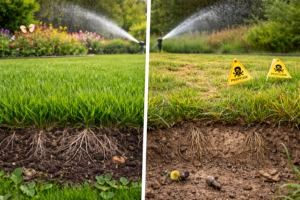
Interestingly, that research found something worth noting for any property owner. Boise State biology professor Trevor Caughlin found that the strongest predictor of where goatheads show up in the city was property value, with goatheads tending to cluster in areas with lower property values — which researchers tied back to thinner turf, more bare ground, and fewer resources for upkeep. In other words: a thick, healthy lawn is one of your best defenses. Bare dirt and patchy grass are basically an open invitation.
The Real Problem: Removal vs. Prevention
Here’s where a lot of DIY efforts go wrong. Pulling the visible plants feels productive, but if you wait until you see flowers or burs, you’re already managing next year’s infestation too.
According to weed management resources from the Friends of Bidwell Park, manual removal is the best control method for residential properties, but once a plant has set seed, killing the foliage with herbicide does not reduce the number of spiny burs already on the ground — those still need to be physically removed and bagged.
That means an effective goathead plan needs to cover three stages:
- Early season (spring): Apply pre-emergent treatment to bare and gravelly areas before seeds germinate, and overseed thin turf so grass — not weeds — fills the gaps.
- Mid-season (before flowering): Hand-pull or hoe young plants while they’re still small mats, before the yellow flowers appear.
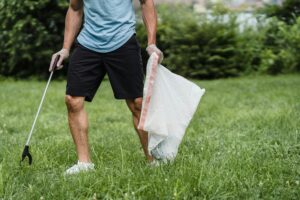
- Late season (if seed pods have already formed): Carefully remove and bag the entire plant, including the burs, rather than just spraying and leaving them in place.
Idaho’s statewide noxious weed program also points homeowners toward biological controls. Idaho runs a statewide puncturevine eradication campaign with videos showing how to identify and remove the plant, and there are two biocontrol weevils available as a management tool, though control levels from these weevils remain uncertain in Idaho compared to neighboring Oregon.
Herbicide Options (and Their Limits)
For larger infestations, especially along driveways, fence lines, and gravel areas, targeted herbicide can play a role. According to control recommendations referencing University of Idaho Extension Bulletin 865, several herbicides can be effective on puncturevine depending on application timing, including products that are broadleaf-selective and safe on established grass.
The catch is timing. Post-emergent treatments work best on small, young plants — once puncturevine has matted out and gone to seed, spraying it doesn’t make the burs disappear. This is one of the reasons our weed control approach focuses on catching weeds early and pairing treatment with the cultural practices that keep them from coming back in the first place.
Why a Thick Lawn Is Your Best Long-Term Weapon
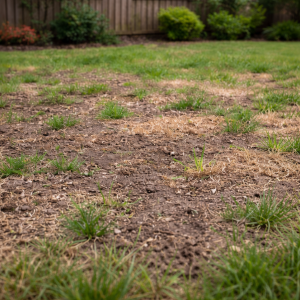
Goatheads thrive where grass doesn’t. Compacted soil, bare patches, thin turf along sidewalks and driveways — these are the gaps puncturevine seeds are waiting to fill.
If your lawn has thin spots, bare patches near hardscaping, or compacted soil that water just runs off of, that’s where you’ll want to start. A combination of aeration and dethatching to loosen compacted soil, overseeding and lawn renovation to fill bare areas, and a consistent fertilizing schedule all work together to crowd out the open ground that goatheads need.
A Quick Comparison: Goathead Control Methods
| Method | Best For | Limitations |
| Hand-pulling young plants | Small infestations, early season | Time-intensive, must remove entire root |
| Pre-emergent herbicide | Bare/gravel areas before germination | Doesn’t kill established plants |
| Post-emergent herbicide | Small to medium plants, pre-flower | Less effective once burs have formed |
| Bagging and disposal of mature plants | Areas where seed pods have already formed | Doesn’t prevent regrowth from soil seed bank |
| Overseeding and turf thickening | Long-term prevention | Takes a season or more to fill in |
| Biocontrol weevils | Large, ongoing infestations | Effectiveness in Idaho still uncertain |
Goathead FAQ
Why are they called goatheads?
The seed pods have hard, curved spines shaped like a goat’s horns. That’s the nickname — the actual plant is called puncturevine.
Can goatheads actually puncture a bike tire?
Yes. The spines on mature pods are sharp enough to go through standard bike tires, and sometimes light vehicle tires. It’s why the plant causes so much trouble on trails, driveways, and gravel paths.
How long do goathead seeds stay viable in the soil?
Up to 20 years. Skip managing it for even one season and you’re dealing with the consequences for a long time.
Will pulling the plants once get rid of them for good?
Not usually. Once a plant flowers and sets seed pods, pulling just the foliage leaves the burs in the soil. Those need to be picked up separately, and there are likely older seeds already in the ground from before.
What’s the single best way to prevent goatheads long-term?
Keep bare and thin spots filled with healthy turf. Goatheads take hold in compacted, bare, or sparse ground — so a thicker lawn from aeration, overseeding, and regular fertilizing removes the open space they need.
Get Ahead of Goathead Season
Goatheads don’t go away on their own, and by the time you’re picking spines out of your shoes, the seeds for next year are likely already in the ground. Idaho Organic Solutions has spent over 20 years working with lawns across the Treasure Valley, and we know which properties are at risk and what it takes to break the cycle organically.
If puncturevine has been a recurring problem on your property, reach out to Idaho Organic Solutions for a free lawn assessment. We’ll look at where the bare spots and weak turf are, build a plan to thicken things up, and help you stop fighting this fight every single summer.