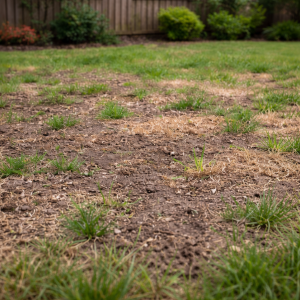
A healthy lawn in Idaho can quickly lose its color, strength, and resilience if grubs take hold beneath the surface. Many homeowners across Boise, Nampa, and the Treasure Valley notice patches of brown grass and assume it’s due to heat or watering issues. In reality, the damage is often happening underground. Grubs feed on grassroots, weakening the entire lawn system from below and causing visible decline above.
Understanding how to identify grubs early and deal with them effectively is essential if you want to protect your lawn without relying on harsh chemical treatments. With the right approach, it’s possible to eliminate grubs while improving soil health and long-term lawn resilience.
What Are Grubs and Why They Appear in Idaho Lawns
Grubs are the larval stage of beetles, most commonly June bugs and similar species found throughout Idaho. After adult beetles lay eggs in the soil during the warmer months, those eggs hatch into small white larvae that begin feeding on grassroots. These larvae remain in the soil for much of their life cycle, which is why they can cause significant damage before being noticed.
Idaho’s climate plays a key role in grub activity. Warm summers and irrigated lawns create ideal conditions for beetles to lay eggs and for larvae to thrive. Lawns that are heavily fertilised or consistently moist often attract more beetles, increasing the likelihood of an infestation. While some level of grub presence is normal, problems begin when populations grow large enough to damage the root system.
Early Signs of Grub Damage in Your Lawn
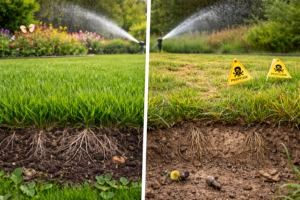
One of the most common signs of grubs is the appearance of brown or yellow patches that don’t improve with watering. These patches may initially look like drought stress, but the difference is that grub-damaged areas continue to decline even when moisture levels are adequate. This is because the roots have already been eaten, so the grass can no longer absorb water effectively.
Another clear indicator is the texture of the lawn. Healthy grass is firmly rooted in the soil, but when grubs are present, the turf can feel soft or spongy underfoot. In more advanced cases, sections of grass can be lifted easily, almost like a loose carpet. This happens because the root system has been destroyed.
You may also notice increased animal activity. Birds, raccoons, and other wildlife are naturally drawn to grubs as a food source. If your lawn suddenly shows signs of digging or small holes, it is often a sign that animals are feeding on larvae beneath the surface.
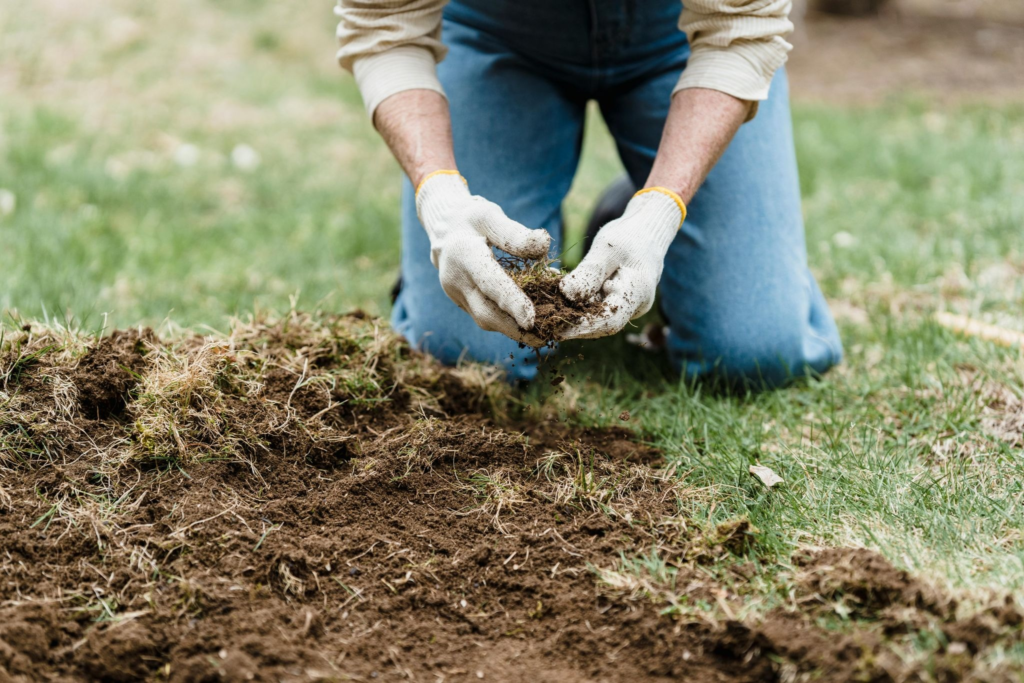
The most reliable way to confirm an infestation is to dig a small section of your lawn and inspect the soil. If you find multiple white, C-shaped larvae within a small area, it is a strong indication that treatment is needed.
The Impact of Grubs on Lawn Health
Grubs cause damage by feeding directly on grassroots, which are essential for water and nutrient absorption. Once the roots are compromised, the grass becomes weak and vulnerable to additional stress factors such as heat, drought, and foot traffic. This is why grub damage often appears suddenly and spreads quickly.
Beyond the visible damage, grubs disrupt the overall balance of the soil ecosystem. Healthy soil contains beneficial microorganisms that support plant growth and natural pest control. When grub populations increase, they interfere with this balance, making the lawn more susceptible to further issues.
If left untreated, severe infestations can lead to large sections of lawn dying off completely, requiring reseeding or full restoration.
Why Organic Grub Control Is More Effective Long Term
Traditional chemical treatments often focus on killing grubs quickly, but they do not address the underlying conditions that allowed the infestation to occur. In some cases, these treatments can also harm beneficial organisms in the soil, leading to weaker lawn health over time.
Organic grub control takes a different approach. Instead of relying on harsh chemicals, it focuses on improving soil health and introducing natural solutions that target grubs without disrupting the ecosystem. This method may not deliver instant results, but it creates a more stable and resilient lawn that can resist future infestations.
For homeowners looking to maintain a safer and more sustainable lawn, exploring options like organic lawn care services can provide a long-term solution that aligns with both environmental and practical goals.
Natural Methods to Get Rid of Grubs
One of the most effective organic solutions is the use of beneficial nematodes. These microscopic organisms actively seek out grubs in the soil and eliminate them by releasing bacteria inside their bodies. Once applied, nematodes continue working beneath the surface, reducing grub populations over time while remaining safe for pets, children, and beneficial insects.
Another natural method involves biological treatments such as milky spore. This bacteria targets grub larvae specifically and can remain active in the soil for extended periods, providing ongoing control. While it may take time to establish, it offers a sustainable way to manage recurring infestations.
Improving soil health is also a critical part of grub control. Lawns with strong root systems and balanced soil conditions are naturally more resistant to pests. Practices such as proper watering, avoiding excessive fertiliser use, and maintaining appropriate mowing heights all contribute to a healthier lawn environment.
For broader support, homeowners can explore lawn care services in Idaho that focus on building soil strength and long-term resilience rather than short-term fixes.
The Best Time to Treat Grubs in Idaho
Timing plays a crucial role in successful grub control. The most effective period for treatment is late summer, typically between July and August, when grubs are actively feeding near the surface. At this stage, they are more vulnerable to treatments such as nematodes and biological solutions.
Spring can also be used for preventive measures, as this is when early-stage larvae begin to develop. Addressing the problem early can reduce the likelihood of severe infestations later in the season.
In the fall, the focus should shift to repairing any damage caused during the summer. This may include reseeding affected areas and restoring soil health to support new growth.
Preventing Future Grub Infestations
Preventing grubs is not about eliminating every insect from your lawn but creating conditions where large infestations are unlikely to occur. A well-maintained lawn with healthy soil is naturally more resistant to pests and can tolerate minor grub activity without visible damage.
Encouraging beneficial organisms in the soil is one of the most effective ways to maintain balance. These organisms help regulate pest populations and support overall plant health. Reducing chemical use also plays a role, as harsh treatments can disrupt this natural balance and make the lawn more vulnerable over time.
Consistent lawn care practices such as deep watering, proper mowing, and seasonal maintenance all contribute to long-term prevention. Homeowners looking for ongoing support can consider organic pest control solutions that focus on prevention as much as treatment.
Restoring a Lawn After Grub Damage
Once grubs have been addressed, the next step is restoring the lawn. Damaged areas may need to be reseeded, and the soil may require additional support to rebuild its structure and nutrient balance. Organic compost and soil amendments can help accelerate recovery and promote strong root development.
It is important to remain patient during this process. Recovery takes time, especially if the infestation was severe. However, with consistent care and the right approach, lawns can return to full health and become even more resilient than before.
Managing Grubs in Idaho Lawns
Grubs are a common issue for Idaho homeowners, but they do not have to result in long-term lawn damage. By understanding how to identify the signs early and choosing effective, organic solutions, it is possible to control infestations while improving overall lawn health.
The key is to look beyond quick fixes and focus on building a stronger lawn ecosystem. When soil health is prioritised and natural treatments are used, lawns become more resistant to pests and better equipped to handle environmental stress.
Taking a proactive approach not only solves the immediate problem but also ensures that your lawn remains healthy, green, and resilient for seasons to come.