Most homeowners know they have weeds. Fewer know exactly which weeds they are dealing with, and that gap in knowledge costs them time, money, and results every season. Treating crabgrass with a product designed for dandelions does not work. Timing your pre-emergent for a broadleaf weed cycle does nothing for a grassy invader already pushing through your turf. Getting the identification right is the first step toward getting the treatment right.
Idaho’s climate creates a specific cast of weed characters that show up reliably year after year in lawns across Nampa, Boise, Meridian, and the broader Treasure Valley. This guide walks through crabgrass alongside the weeds most commonly confused with it, explains how to tell each one apart with your own eyes, and lays out what actually works to control each type. Whether you handle your own weed control or are ready to hand it off to professionals, accurate identification is where every successful treatment plan starts.
Why Crabgrass Gets Misidentified So Often
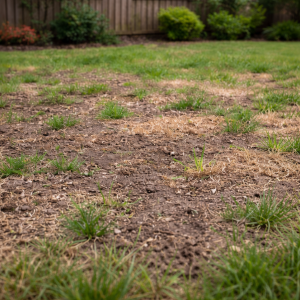
Crabgrass earns its name from the way its stems spread outward from a central base, low to the ground, resembling the legs of a crab. It is a summer annual grassy weed, which means it germinates from seed in spring, grows aggressively through summer, sets thousands of seeds by late summer, and then dies with the first hard frost. The dead straw-colored mats it leaves behind are often how homeowners first realize they had a crabgrass problem the season before.
The identification challenge is that several other weeds found in Idaho lawns share superficial similarities with crabgrass: wide leaf blades, clumping growth habits, or pale green coloration that looks out of place against desirable turf grass. Confusing these with crabgrass leads to treatments applied at the wrong time of year or with the wrong product, neither of which solves the problem.
The fastest way to start identifying a weed: Ask yourself whether it looks like a grass, a broadleaf plant, or a sedge. Grassy weeds have narrow blades and hollow or solid round stems. Broadleaf weeds have wider leaves with visible veining. Sedges have triangular stems you can feel by rolling them between your fingers. Each category requires a different treatment approach.
Crabgrass: The Benchmark for Comparison
Grassy Weed / Summer Annual
Crabgrass (Digitaria sanguinalis and Digitaria ischaemum)
Large crabgrass and smooth crabgrass are both common in Idaho. Large crabgrass has hairy leaf blades and sheaths, while smooth crabgrass is more hairless. Both grow in a prostrate spreading pattern with stems that root at nodes where they touch the soil. Leaf blades are wide relative to desirable turf grasses, typically 6 to 10 millimeters across, and have a folded or flat appearance coming out of the sheath. The ligule, a small flap at the base of the blade where it meets the stem, is membranous and jagged in crabgrass, a key detail that distinguishes it from look-alikes.
Crabgrass thrives in thin, stressed turf and in areas where soil has been disturbed. It loves the heat and drought conditions that Treasure Valley summers deliver, and it outcompetes weakened grass for space along driveways, sidewalk edges, and bare patches.
How to Identify
Wide flat blades, crab-like spreading stems, hairy sheaths on large crabgrass, pale to medium green color, finger-like seed heads by late summer
How to Treat
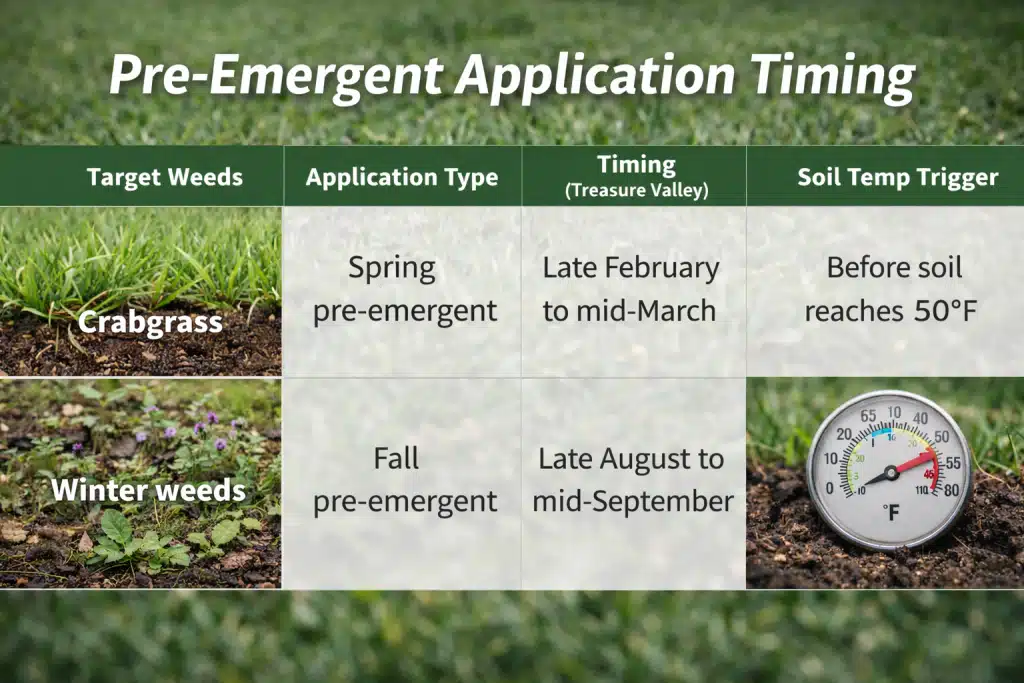
Pre-emergent herbicide before soil reaches 50 degrees Fahrenheit in spring; post-emergent products containing quinclorac or fenoxaprop for established plants; improve turf density long-term
Common Idaho Weeds Confused with Crabgrass
Grassy Weeds
Grassy Weed / Winter Annual or Perennial
Annual Bluegrass, Poa annua
Annual bluegrass is one of the most frequently misidentified weeds in Idaho lawns, and it is often mistaken for crabgrass by homeowners who notice a light-colored, clumping grass that looks out of place in their turf. The key difference is timing and texture. Poa annua is a cool-season weed, germinating in fall when temperatures drop and dying in summer heat. By the time crabgrass is in full swing, Poa annua is already gone. Its blades are soft, boat-shaped at the tip, and a noticeably lighter shade of green than Kentucky bluegrass or tall fescue. It produces tiny white seed heads even when mowed short, which crabgrass does not do until late summer.
How to Identify
Pale green clumps, boat-shaped leaf tips, white seed heads visible even when short, present in fall through early spring, absent by summer
How to Treat
Fall pre-emergent application timed to soil cooling; difficult to control post-emergent without harming desirable turf; improve turf density to crowd it out
Grassy Weed / Summer Annual
Goosegrass (Eleusine indica)
Goosegrass is perhaps the closest visual relative to crabgrass and is the weed most frequently confused with it. Both are summer annuals, both spread in a flat rosette pattern, and both appear in stressed, thin turf. The distinguishing features are in the details. Goosegrass has a white or silvery center at the base of the plant where the stems radiate outward, while crabgrass does not. Goosegrass also has a more flattened, folded stem and its seed heads form a distinctive zipper-like pattern compared to crabgrass’s finger arrangement. Goosegrass germinates two to three weeks later than crabgrass, which matters significantly for pre-emergent timing.
How to Identify
White or silvery stem base, flattened stems, zipper-patterned seed heads, flat rosette growth, appears slightly later in spring than crabgrass
How to Treat
Same pre-emergent timing as crabgrass covers early germination; post-emergent products containing fenoxaprop; goosegrass is more resistant to quinclorac than crabgrass
Grassy Weed / Perennial
Tall Fescue Clumps (Festuca arundinacea)
This one surprises homeowners. Tall fescue is a desirable lawn grass, but when it appears as isolated clumps in a Kentucky bluegrass lawn, it looks like a weed because its wide, coarse blades contrast sharply with the fine texture of bluegrass. These off-type clumps are often attributed to seed contamination or patches left over from a previous lawn. They are not crabgrass, they do not respond to herbicide without killing the surrounding grass, and the only reliable way to remove them is manual digging or spot-treating with a non-selective herbicide followed by reseeding.
How to Identify
Coarse, wide dark green blades, present year-round unlike seasonal weeds, clumping growth, no spreading stems or rooting nodes
How to Treat
No selective herbicide available; spot treat with glyphosate, allow area to die, then reseed with matching turf variety
Broadleaf Weeds
Broadleaf Weed / Perennial
Dandelion (Taraxacum officinale)
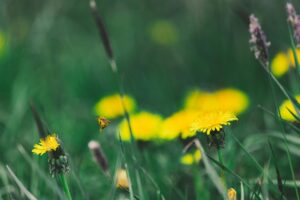
Dandelions are so familiar that most homeowners identify them correctly, but they are worth including here because they represent the single most common broadleaf weed in Idaho lawns and their treatment is completely different from any grassy weed. Dandelions are perennials with a deep taproot that can regrow from root fragments left in the soil. The bright yellow flowers and hollow stems filled with milky sap are unmistakable. Their seeds travel long distances on the wind from neighboring properties, making them a recurring pressure even in well-maintained lawns in Meridian and Eagle.
How to Identify
Rosette of deeply toothed leaves at ground level, hollow stem with milky sap, bright yellow flowers, white puffball seed heads
How to Treat
Broadleaf post-emergent herbicides containing 2,4-D, MCPP, or dicamba; best applied in fall when dandelions are actively translocating nutrients to roots; manual removal effective if taproot fully extracted
Broadleaf Weed / Annual
Spurge (Euphorbia maculata and Euphorbia supina)
Spotted spurge and prostrate spurge are among the most aggressive summer annual broadleaf weeds in Idaho. They form dense mats that hug the soil surface and can smother thin grass in a matter of weeks. Like dandelion, the stems produce milky sap when broken. Spurge leaves are small and oval, often with a distinctive reddish spot in the center on spotted spurge. The plant roots at nodes along its stems, making it competitive even in compacted soil where other weeds struggle. It is a reliable sign that your lawn has thin spots that need attention through a stronger lawn care program.
How to Identify
Flat mat-forming growth, small oval leaves, milky sap when broken, reddish leaf spot on spotted spurge, summer presence only
How to Treat
Pre-emergent herbicide in spring prevents germination; post-emergent broadleaf herbicides for established plants; improving turf density is the best long-term solution
Broadleaf Weed / Annual
Henbit (Lamium amplexicaule)
Henbit is a winter annual that appears in Idaho lawns in late winter and early spring, producing small purple flowers in February and March before most homeowners have started thinking about their lawn. Because it appears and sets seed before crabgrass ever germinates, treating it requires a completely different calendar. Its square stems, a trait it shares with other members of the mint family, are the quickest identification feature. Leaves are rounded, scalloped, and clasp the stem without a petiole on the upper leaves. By late spring it dies back and homeowners often assume the problem resolved itself, but the seeds it deposited will return next fall.
How to Identify
Square stems, rounded scalloped leaves, small purple flowers in late winter and early spring, present only in cool seasons
How to Treat
Fall pre-emergent application prevents winter germination; broadleaf post-emergent herbicides effective before flowering; hand-pulling also works when soil is moist
Sedge Weeds
Sedge / Perennial
Yellow Nutsedge (Cyperus esculentus)
Yellow nutsedge is frequently mistaken for a grassy weed or even for crabgrass because it has narrow, grass-like leaves and grows in clumps. The confusion dissolves the moment you roll a stem between your fingers. Sedge stems are triangular, and the old saying in turf management holds true: sedges have edges. Nutsedge is a perennial that spreads through underground nutlets or tubers, making it far more difficult to eradicate than an annual weed. It thrives in wet or poorly drained areas and is a common problem in low spots in Treasure Valley lawns or anywhere irrigation runs long. A healthy sprinkler system that waters correctly and evenly, without creating saturated zones, removes the conditions nutsedge prefers.
How to Identify
Triangular stems you can feel when rolled, bright yellow-green color lighter than surrounding turf, grows faster than grass after mowing, thrives in wet areas
How to Treat
Selective sedge herbicides containing halosulfuron or sulfentrazone; standard broadleaf and grass herbicides do not work on sedge; multiple applications typically needed; improve drainage to reduce pressure
Side-by-Side Identification Reference
| Weed | Type | Season | Quick ID Feature | Treatment Category |
| Crabgrass | Grassy annual | Summer | Crab-like spreading stems, wide blades | Grassy pre/post-emergent |
| Goosegrass | Grassy annual | Summer | White stem base, zipper seed heads | Grassy pre/post-emergent |
| Poa annua | Grassy annual | Cool season | Pale green, white seed heads when short | Fall pre-emergent |
| Tall fescue clumps | Grassy perennial | Year-round | Coarse dark green, no spreading | Non-selective spot treatment |
| Dandelion | Broadleaf perennial | Spring and fall | Toothed leaves, milky sap, yellow flower | Broadleaf post-emergent |
| Spurge | Broadleaf annual | Summer | Mat-forming, milky sap, reddish leaf spot | Pre-emergent or broadleaf post |
| Henbit | Broadleaf annual | Winter/early spring | Square stems, purple flowers in February | Fall pre-emergent or broadleaf post |
| Yellow nutsedge | Sedge perennial | Summer | Triangular stem, bright yellow-green | Sedge-specific herbicide |
Why Correct Identification Changes Everything About Treatment
The practical consequence of misidentifying a weed is spending money on the wrong product at the wrong time. A broadleaf herbicide applied to crabgrass produces no result. A grassy weed pre-emergent applied in spring does nothing to henbit that already germinated in October. A sedge herbicide is the only product that reliably controls nutsedge, while standard post-emergent products applied to it are a waste of time and money.
This is one of the clearest arguments for professional weed control services. A trained eye identifying your specific weed pressure before any product is selected saves application costs, reduces unnecessary chemical use, and produces better results. Our team at Idaho Organic Solutions identifies exactly what is growing in your lawn before recommending or applying anything, which is the only way to build a plan that actually works.
Effective weed management is also inseparable from overall lawn health. Weeds exploit weaknesses: thin turf, compacted soil, improper irrigation, low fertility. A comprehensive lawn care routine that includes proper fertilizing, correct mowing height, and timely watering creates the dense turf that gives weeds nowhere to establish. Weed control and lawn health are two sides of the same coin, which is why our lawn care program addresses both together rather than treating them as separate problems.
We serve homeowners and businesses across Nampa, Boise, Kuna, and throughout the Treasure Valley. If you are unsure what is growing in your lawn or you have been treating a weed for a season without results, a fresh identification is the best place to start.
Frequently Asked Questions
How can I tell crabgrass from regular lawn grass before it gets big?
Young crabgrass can be difficult to distinguish from desirable grass seedlings in early spring, but a few features give it away even at a small size. The leaf blades on crabgrass are noticeably wider than Kentucky bluegrass or fine fescue, and the growth pattern tends to sprawl rather than grow upright from the start. If you look at the base of the plant with a magnifying glass, large crabgrass has distinctly hairy sheaths. Another reliable signal is location: crabgrass almost always appears first along sidewalks, driveways, and the edges of bare or thin spots where the soil warms fastest, not in the middle of healthy dense turf.
Can I use one herbicide to treat multiple weed types at once?
For broadleaf weeds, combination products containing two or three active ingredients like 2,4-D, MCPP, and dicamba cover a wide range of common broadleaf weeds in a single application and work well as a general broadleaf treatment. However, no single product effectively controls grassy weeds, broadleaf weeds, and sedges at the same time without risking damage to desirable turf. Grassy weeds like crabgrass require selective grass herbicides, and sedges require their own category of active ingredient entirely. Trying to cover everything with one product usually means either missing weeds or harming your lawn, which is why knowing which weeds you have matters before you buy anything.
My neighbor has crabgrass. Will it spread into my lawn even if I treat mine?
Yes, crabgrass seeds travel. A single mature crabgrass plant produces tens of thousands of seeds that spread by wind, foot traffic, mowing equipment, and water movement. If a neighboring lawn has heavy crabgrass that goes untreated through the seed-setting stage in late summer, some of those seeds will land in your lawn regardless of how well you managed yours. This is one reason consistent pre-emergent applications year after year matter more than a single treatment. Keeping your own turf dense and healthy also reduces the chances those seeds find a bare spot to germinate in, which is your best practical defense against pressure from neighboring properties.
Why does nutsedge keep coming back even after I pull it?
Yellow nutsedge reproduces primarily through underground tubers called nutlets rather than through seeds. When you pull the visible plant, the nutlets remain in the soil and each one can generate a new plant. A single nutsedge plant can produce hundreds of nutlets in a season, meaning hand-pulling without addressing the underground root system actually spreads the problem rather than solving it. Effective nutsedge control requires a sedge-specific herbicide that is translocated down into the root system to suppress nutlet development, along with multiple applications over time. Addressing drainage issues that create the wet soil conditions nutsedge prefers also reduces how aggressively it returns each season.
Is it worth treating weeds in fall or should I wait until spring?
Fall treatment is one of the most underused and most effective windows in Idaho lawn care. Dandelions and other perennial broadleaf weeds are actively moving nutrients down into their root systems in fall, which means broadleaf herbicides applied in September and October are translocated more efficiently and kill the root rather than just the top growth. For winter annual weeds like henbit and Poa annua, a fall pre-emergent application prevents germination entirely. Many homeowners who skip fall treatment end up fighting a heavier weed load the following spring because they missed the window when their treatments would have been most effective and most efficient.
Not Sure What Is Growing in Your Lawn?
Weed identification is the foundation of effective treatment. If you have been applying products without results, or if you want a professional assessment of exactly what you are dealing with before spending another season guessing, our team is ready to help.
Idaho Organic Solutions has identified and treated Idaho weeds for over 20 years across Nampa, Boise, Meridian, Eagle, Caldwell, Kuna, Star, and Middleton. We know what grows here, when it grows, and what stops it.