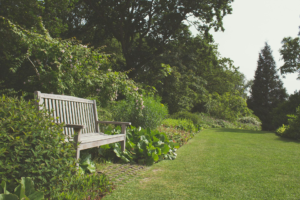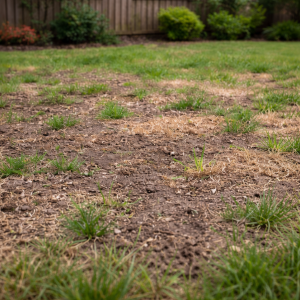
According to the City of Nampa, it gets 11 inches of rain annually. During that 11 inches, most falls in spring and early winter. Summer is bone-dry. When temperatures hit 100°F and there’s no rain for weeks, your lawn faces genuine survival stress. A drought-resistant lawn is a necessity, not a luxury.
The question isn’t whether you can have a green lawn during drought. The question is whether you’re building a lawn that survives drought, or one that depends on constant irrigation to fake health. Here are some tips from our experts at Organic Solutions to make an Idahoian drought season-proof lawn.
Choosing the Right Grass Type
Not all cool-season grasses handle Idaho heat equally. For maximum drought resistance in the Treasure Valley, match your grass to your conditions.
- Tall fescue is the best all-around choice for southern Idaho drought resistance. It has a deep root system – 4-6 feet into the soil – that accesses water other grasses can’t reach. It tolerates heat better than most cool-season varieties and establishes quickly. The trade-off is coarse texture and higher maintenance (requires frequent mowing). For a property that values survival over appearance, tall fescue wins.
- Kentucky bluegrass is hardy and has excellent self-repair from damage, but it’s less drought-tolerant than tall fescue. Mix it with tall fescue (60% tall fescue, 40% Kentucky bluegrass) to get the best of both.
- Fine fescue has good drought tolerance but struggles with Nampa’s summer heat. It often goes dormant (turns brown) during peak summer despite adequate water. Not ideal for southern Idaho.
- Perennial ryegrass germinates quickly and establishes fast, making it good for overseeding. But it’s not drought-tolerant alone and needs mixing with other varieties to survive Nampa summers.
- Buffalograss is a warm-season alternative with exceptional drought and heat tolerance. It stays green through summer heat that kills cool-season grasses. The trade-off: it goes dormant October-April, meaning your lawn will be brown 6+ months per year. For homeowners willing to accept seasonal dormancy, buffalograss is the ultimate low-water option.
For most Nampa properties, a tall fescue and Kentucky bluegrass blend is the drought-resistant sweet spot. It’s green year-round, handles heat stress, and needs less water than other cool-season mixes.
Deep, Infrequent Watering: The Foundation
This is the single most important practice. How you water matters more than how much you water.
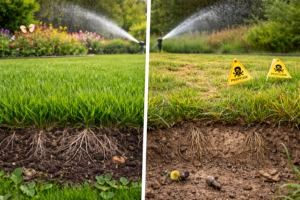
- Shallow, frequent watering trains grass roots to stay near the surface. The grass becomes dependent on constant moisture and collapses quickly when water stops. You’re teaching it weakness.
- Deep, infrequent watering forces roots to grow deeper seeking moisture. By mid-summer, established lawns are accessing water 4-6 feet down that shallow-rooted grasses can’t reach. This is drought resistance.
Aim for 1-2 inches of water per week during active growth (spring and early summer), applied in one or two deep sessions rather than daily light watering. Once summer really heats up, increase to 2 inches per week if conditions allow, but maintain the “deep and infrequent” pattern.
You can also try the finger test as a quick and easy way to test if you’re doing this correctly. Stick your finger about 3 to 4 inches into the soil. If it feels dry, water deeply. If it’s still moist, wait.
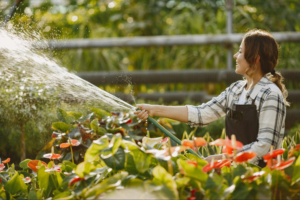
Early morning watering (before 7 AM) can minimize evaporation. Evening watering leaves foliage wet overnight, inviting fungal disease, so watering in the morning is always better.
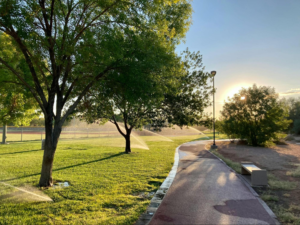
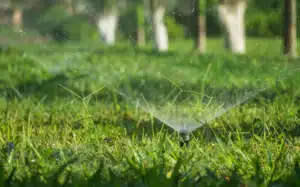
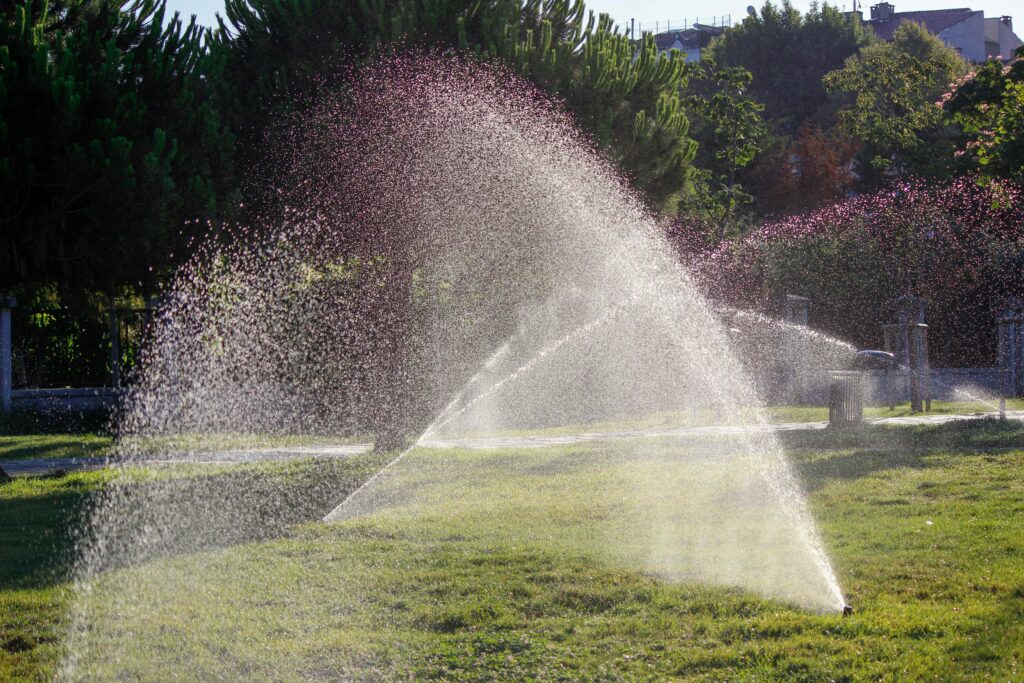
Last but not least, check irrigation coverage. Dry spots aren’t always insufficient water overall – they’re usually coverage gaps. Head-to-head overlap (where spray from one sprinkler reaches the next) is essential.
Building Soil That Holds Water
Alkaline clay soil in Nampa has a paradox: it drains slowly during rain but dries out fast under summer heat and drought. The clay structure works against you.
Organic matter incorporation gradually improves this. Compost added to aeration holes introduces material that improves both drainage (in clay) and water retention (compared to pure clay). Over time, soil structure changes from hard clay to crumbly aggregates that hold moisture better.
This isn’t quick. But a lawn with 2-3% organic matter (vs. the 0.5% typical in Nampa) holds significantly more plant-available water. That’s survival insurance during drought.
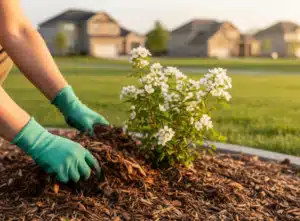
Mulch-mowing contributes too. Grass clippings add organic matter and create a protective layer that reduces soil moisture evaporation.
Aeration for Deep Water Infiltration
Compacted clay doesn’t accept water readily. It runs off instead of soaking in. Core aeration removes small plugs of soil, breaking compaction and creating pathways for water to reach deep.
Schedule aeration for spring (April-May) or fall (September-October). Spring aeration gets your lawn ready for summer stress. Fall aeration supports root growth through winter and into spring.
Combined with organic matter (compost worked into aeration holes), aeration transforms water infiltration and root depth within a season.
Mowing Height for Survival
Taller grass shades soil, reducing water loss to evaporation. Keep grass at 3-4 inches during summer instead of the 2-inch manicured look. Longer grass also photosynthesizes better, producing more energy for root growth.
Follow the one-third rule: never remove more than one-third of the blade height at once. This prevents shock to stressed grass.
During peak summer heat, increase mowing intervals – every 2 weeks instead of weekly – to minimize stress on the plant.
Building Drought Muscle: Strategic Stress
This sounds counterintuitive, but controlled stress builds drought tolerance. Deep, infrequent watering creates mild stress that forces root growth. Once roots are deep, the grass can handle real drought.
Contrast this with shallow, daily watering that prevents any stress. That grass is water-dependent and collapses when irrigation stops.
The key is managed stress during favorable growing seasons (spring and fall), not emergency stress during peak summer drought.
Choosing a Fertilizer Strategy
For drought-resistant lawns, slow-release organic fertilizers outperform synthetics. They deliver steady nutrient availability without the growth flushes that synthetic fertilizers create. Those growth flushes increase water demand exactly when water is scarce.
Apply 4 applications per year: early spring, late spring, early fall, late fall. This supports steady growth without forcing aggressive demands during drought season.
Avoid high-nitrogen synthetic fertilizers during summer. They promote soft growth that heat kills quickly. Switch to balanced formulations in summer (if fertilizing at all).
Frequently Asked Questions (FAQs)
Why does deep watering matter more than frequent shallow watering?
Deep, infrequent watering forces grass roots to grow deeper seeking moisture. By mid-summer, established lawns access water 4-6 feet down that shallow-rooted grasses can’t reach. Shallow, frequent watering trains roots to stay near the surface, making grass dependent on constant irrigation and vulnerable when water stops.
Which grass type is best for Nampa’s heat and drought?
Tall fescue is the top choice – it has 4-6 foot deep roots and tolerates heat better than other cool-season varieties. For a balanced option, blend 60% tall fescue with 40% Kentucky bluegrass. Avoid fine fescue (goes dormant in summer heat) and perennial ryegrass alone (needs mixing with other varieties to survive).
How do I know if my lawn needs water?
Use the finger test: stick your finger 3-4 inches into the soil. If it feels dry, water deeply. If it’s still moist, wait. Aim for 1-2 inches per week during active growth, applied in one or two deep sessions rather than daily light watering.
How does building soil help with drought?
Organic matter incorporation improves both drainage and water retention in clay. A lawn with 2-3% organic matter (vs. the 0.5% typical in Nampa) holds significantly more plant-available water. This becomes survival insurance during dry periods.
Should I fertilize during summer drought?
Avoid high-nitrogen synthetic fertilizers during summer – they promote soft growth that heat kills quickly. If fertilizing at all, use balanced formulations. Slow-release organic fertilizers are better because they don’t create growth flushes that increase water demand exactly when water is scarce.
Plan Your Drought Strategy Now
These practices take time to establish. A lawn built for drought resistance isn’t created mid-drought – it’s built during normal years, so it’s ready when drought comes.
Start in spring. Choose appropriate grass types. Implement deep watering patterns. Aerate and amend soil. Build from there. By mid-summer of year one, you’ll see the difference. By year two or three, you’ll have a lawn that handles drought genuinely well instead of one that just survives it.
The ideal drought-resistant lawn in Nampa has tall fescue or fescue-bluegrass blend, gets watered deeply but infrequently, has soil with improved structure and organic matter, and is mowed at 3-4 inches with infrequent sessions.
That lawn will survive Nampa summers without the constant irrigation that lawns built on shallow, frequent watering demand.
Ready to build a drought-resistant lawn strategy for your specific property? Organic Solutions can assess your current conditions and create a plan tailored to water conservation and heat stress management in Canyon County’s climate.