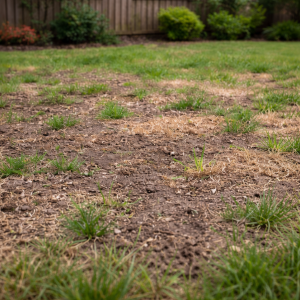
Most Idaho homeowners default to chemical lawn care simply because they don’t know there’s an alternative. Constant applications, high costs, and endless treatments feel inevitable – part of owning a lawn here.
Organic lawn care breaks that cycle. It requires patience upfront, but by year three, your costs drop and your maintenance demands plummet. Organic Solutions has guided hundreds of Nampa properties through this transition. Here’s how each approach actually performs in our climate.
Chemical Lawn Care: Pros & Cons
| Pros | Cons |
| Speed: A synthetic nitrogen application greens up grass visibly within 3–7 days. If you want immediate results for an event or showing, chemicals deliver. | Cost escalation: Chemical lawns require 6–8 applications per year instead of 4–6, driving annual costs to $800–$1,600. As soil health declines, you need more intervention to maintain results. |
| Simplicity: You hire someone, they show up on a schedule, they apply products. You don’t need to understand soil health or growing seasons. The service company handles everything from A to Z. | Alkaline soil complications: Nampa’s pH 7.9 soil locks up nutrients that chemical fertilizers are supposed to provide. You end up applying iron chelate repeatedly and fighting an uphill battle. Chemicals work less efficiently in our region. |
| Broad-spectrum solutions: A “weed and feed” product handles fertilization and broadleaf weeds in one application. One insecticide addresses several pest types. | Dependency: Stop applications for one season and the lawn deteriorates quickly. The soil ecosystem remains suppressed, so it can’t support grass naturally. You’re trapped in a cycle of ongoing expense. |
| Health and environmental concerns: Chemical treatments are genuinely toxic and carry re-entry restrictions. Groundwater contamination is a documented risk, especially in areas with alkaline, clay-based soils. Canyon County depends heavily on well water. | |
| Variable effectiveness in heat stress: During Nampa’s brutal summers (regularly 100°F+), chemically dependent lawns struggle. Shallow roots and weak soil structure can’t handle the stress. Synthetic fertilizers create soft growth that heat kills quickly. |
Organic Lawn Care: Pros & Cons
| Pros | Cons |
| Long-term cost advantage: Year one costs $1,200–$1,800 for foundation work. By year three, costs stabilize at $600–$900 annually – substantially less than conventional programs that never get cheaper. | Timeline: Results take 2–3 years. Year one you might see weed pressure increase as thick grass is being established. You need patience and consistency. If you want instant green, organic isn’t the answer. |
| Drought resistance: Organic methods encourage deep root systems and improve water-holding capacity in soil. By year two or three, organically managed lawns need 20–30% less water than chemical-dependent lawns. In dry Nampa summers, this is genuinely valuable. | Technique sensitivity: Organic methods require better timing awareness. Corn gluten meal application must happen before weed germination windows. Aeration, composting, and amendment incorporation all have specific timing windows. Mistakes cost you a season. |
| Soil health improvement: Instead of suppressing the soil ecosystem, organic approaches rebuild it. Your soil becomes naturally fertile. Nutrient availability improves. Compaction decreases. By year three, your soil is actually better than it was when you started. | Variable regional effectiveness: Organic methods that work in humid climates don’t always translate to arid regions. Idaho’s unique combination of alkaline soil, clay content, and semi-arid climate means you need an approach specifically designed for these conditions. |
| Independence from external inputs: Once established, an organic lawn can largely maintain itself because soil biology handles nutrient cycling. You still need to fertilize, but less frequently and at lower cost. You’re building a system, not maintaining a dependent plant. | Effort required for transition: If DIY-ing any portion, you’re doing more physical work. If hiring professionals, you need to communicate specific needs clearly because generic organic programs don’t work as well as customized ones. |
| Environmental safety: No toxicity risks to kids, pets, and groundwater. No warning labels. No re-entry restrictions. No chemical contamination concerns. |
How These Approaches Fare in Idaho Specifically
Idaho Soil and Weather Aren’t a Good Fit for Chemical Treatments
In Nampa and Canyon County’s conditions, the comparison shifts significantly – and not in favor of the chemical approach. If anything, organic is even a better idea here.
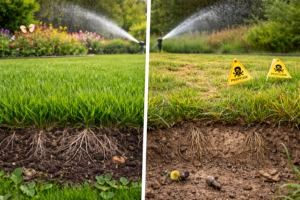
In a chemically-treated lawn, the alkaline soil that’s native to the area makes nutrient availability unpredictable even with heavy fertilization. The clay-based soil also doesn’t drain well, creating disease pressure that chemicals can only relieve, but not solve the issue entirely (Idaho Geographical Survey). Come summer, the heat will stress the chemically dependent lawn to its breaking point because it lacks deep roots and a healthy soil structure.
Because of this, you’ll be in a downward spiral of having to invest more and more money into repeated applications to the point where owning a lawn is a huge strain on your finances.
Why Organic Approaches Thrive Here
Organic amendments can gradually moderate alkaline pH in the soil without harsh swings that’d stress out the ecosystem relying on it. A good organic solution provider will also incorporate compost to improve clay structure long-term to help you address drainage and compaction issues.
With better soil health that encourages deep root growth, grass can handle heat stress better when summer or dry periods hit. Needing less water and maintenance over time, you’ll see the costs of maintaining an organic lawn going down over time instead of up like with chemicals.
The Hybrid Approach: Why It Usually Fails
Some people have asked us if it’s possible to do both chemical and organic at the same time.
Yes, you can – but it’s definitely not ideal.
Some homeowners use hybrid strategies by doing organic fertilization with targeted chemical pest control, or organic soil management with selective herbicide use. This can make sense for specific problems, but it muddies the benefits of both approaches. You’re investing in soil health while simultaneously suppressing soil biology.
In our experience, most success comes from picking one philosophy and committing to it fully. Half-measures deliver the drawbacks of both without the benefits of either.
Direct Cost Comparison Over 5 Years
So, what will your lawn (and your check book) look like in five years? Here’s our projections:
| Scenario: 7,500 sq ft Nampa Property | |||
| Year | Chemical Approach | Organic Approach | Difference |
| Year 1 | $1,200 | $1,500 | +$300 (organic) |
| Year 2 | $1,300 | $1,100 | –$200 (organic saves) |
| Year 3 | $1,350 | $800 | –$550 (organic saves) |
| Year 4 | $1,400 | $750 | –$650 (organic saves) |
| Year 5 | $1,450 | $700 | –$750 (organic saves) |
| 5-Year Total | $6,700 | $5,450 | $1,250 organic savings |
Plus: 20–30% water bill reduction with organic approach (additional $200–$400 annually by year 3)
FAQ
Why do chemical lawns cost more in the long run despite cheaper upfront pricing?
Chemical lawns require 6–8 applications per year ($800–$1,600 annually) because soil health continues declining, requiring more intervention. Organic programs start at $1,200–$1,800 year one but drop to $600–$900 by year three as soil improves. After five years, organic typically costs 20–30% less annually and uses significantly less water.
What makes organic management better suited to Nampa’s alkaline soil?
Nampa’s pH 7.9 soil locks up nutrients that chemical fertilizers are supposed to provide, forcing repeated iron chelate applications. Organic amendments gradually moderate alkalinity without harsh swings, and compost addresses the underlying pH problem instead of treating symptoms repeatedly.
Will switching to organic mean my lawn looks worse at first?
Year one often shows increased weed pressure as thick grass is being established – this is normal, not a sign of failure. Real improvement appears in year two when weeds decline and costs drop. The homeowners who succeed understand year one is uncomfortable but necessary for year three’s payoff.
Can I use both organic and chemical methods together?
Technically yes, but it’s not ideal. Hybrid approaches muddy the benefits of both – you’re investing in soil health while simultaneously suppressing soil biology. Most success comes from picking one philosophy and committing fully rather than half-measures that deliver drawbacks without benefits.
What’s the realistic timeline if I switch from chemical to organic?
Year one is frustrating with higher costs and possible weed pressure increases. Year two shows real payoff – weeds decline, soil changes become visible, costs drop 15–20%. By year three, costs stabilize at lower levels, water usage drops 20–30%, and maintenance decreases significantly. By year five, you’re spending less and maintaining more with less effort.
Get an Honest Assessment
Organic Solutions offers free assessments for Canyon County properties. We’ll explain the benefits and drawbacks of both approaches and help you make an informed decision before committing. We won’t push you toward organic if chemical makes sense for your situation – we’ll recommend what actually fits your property and timeline.