If you’ve ever tried to grow the same grass your neighbor in Oregon swears by or followed generic lawn advice from a national gardening website you’ve probably discovered the hard way that Idaho plays by different rules. The Treasure Valley has alkaline soil, low annual rainfall, extreme temperature swings, and water that’s harder than most of the country. Not every grass species handles all of that gracefully.
After more than 20 years of working with lawns throughout Nampa, Meridian, Boise, and the surrounding region, we’ve seen what thrives here and what struggles no matter how much care you give it. Here’s the honest breakdown.
Understanding What Idaho Soil and Climate Actually Demand
Before getting into specific grass types, it helps to understand what you’re asking any grass to endure:
- Soil pH of 7.5–8.5 in most of the Treasure Valley alkaline enough to lock out iron and manganese, causing chronic yellowing in pH-sensitive species
- Annual rainfall of 11–12 inches in the Nampa/Boise area far below what most lawn grasses need to survive on rainfall alone
- Summer highs regularly exceeding 100°F, sometimes for weeks at a time
- Cold winters that can drop below 0°F in exposed areas, with late spring frosts possible through April
- Hard, mineral-rich irrigation water that deposits salts in the soil over time
Any grass you plant here needs to handle drought, heat, alkalinity, cold, and periodic irrigation with mineral-heavy water. That narrows the field considerably.
Our lawn care program is built around the specific grasses that work in this environment, with timing and treatment protocols tailored to Idaho conditions, not generic national guidelines.
Cool-Season Grasses: The Workhorses of the Treasure Valley
Idaho sits in the transition zone leaning toward cool-season grass territory. The Treasure Valley’s hot summers make it challenging, but cool-season grasses are still the dominant choice for most residential lawns here. They green up early in spring, go semi-dormant in peak summer heat, and recover in fall.
Kentucky Bluegrass (Poa pratensis)
The verdict: Best-looking, most demanding.
Kentucky bluegrass is the standard by which most homeowners judge a beautiful lawn dense, dark green, with a fine texture that looks like a golf course fairway. In Idaho, it can absolutely deliver that look, but it demands more from you in return.
Bluegrass has a shallow root system that makes it highly dependent on consistent irrigation. In Treasure Valley summers, it typically needs 1.5–2 inches of water per week to stay green rather than going dormant. It is somewhat sensitive to alkaline soil conditions and benefits significantly from regular fertilizing and occasional soil acidification.
Where bluegrass truly excels in Idaho is its winter hardiness and its ability to recover from dormancy in spring with vigorous, beautiful growth. It spreads via rhizomes, which means it can fill in thin spots and self-repair over time, a significant advantage.
Best for: Homeowners who want a premium-looking lawn, are willing to invest in irrigation and fertilization, and have good sun exposure.
Watch out for: Necrotic ring spot fungus, which is particularly common in alkaline soils and tends to show up in bluegrass lawns during wet spring periods followed by heat.
Tall Fescue (Festuca arundinacea)
The verdict: Best overall performer for Idaho conditions.
If we had to recommend one grass for most Treasure Valley homeowners, it would be a modern, improved tall fescue variety. Tall fescue has a deep root system often reaching 2–3 feet into the soil that gives it dramatically better drought tolerance than bluegrass. It handles Idaho’s alkaline soil better, tolerates heat stress more gracefully, and stays green longer into summer with less irrigation.
The texture is coarser than bluegrass, which some homeowners don’t love, but newer turf-type tall fescue varieties (like Titan, Raptor, or Barleven) have much finer blades than the old pasture-style fescues and make an attractive lawn.
Tall fescue does not spread via rhizomes, so it doesn’t self-repair thin spots that need overseeding. But its overall resilience in Idaho’s challenging conditions makes it the most practical choice for the majority of situations.
Our lawn care services include specific protocols for tall fescue lawns, which have different fertilization timing and irrigation needs than bluegrass.
Best for: Most Idaho homeowners especially those on water budgets, in areas with some shade, or dealing with alkaline soil problems.
Watch out for: Brown patch fungus during hot, humid summer nights if irrigation is excessive.
Perennial Ryegrass (Lolium perenne)
The verdict: Great for overseeding, less ideal as a standalone.
Perennial ryegrass germinates faster than any other common lawn grass often showing green within 5–7 days and establishes quickly in fall. It’s commonly used to overseed bluegrass lawns and to fill in thin or damaged areas rapidly. Its fine texture and dark green color are attractive.
As a standalone lawn in Idaho, perennial ryegrass has a significant weakness: it’s less drought tolerant than tall fescue and doesn’t handle extreme heat as well as established bluegrass. During prolonged 100°F+ stretches, it can thin dramatically. It also doesn’t spread, so it requires overseeding to maintain density.
Where perennial ryegrass shines here is in mixes paired with bluegrass or tall fescue, it provides quick establishment while the other species fills in. Many of the best Idaho lawns are a blend of 80% Kentucky bluegrass and 20% perennial ryegrass.
Best for: Overseeding, quick establishment, high-traffic sports areas that need rapid repair.
Fine Fescues (Festuca rubra, F. ovina, F. brevipila)
The verdict: Excellent for shade and low-maintenance situations.
The fine fescue group including creeping red fescue, sheep fescue, and hard fescue are the best option for shaded areas where bluegrass and tall fescue struggle. They’re also the most drought-tolerant of the cool-season grasses once established and require less fertilizer than other species.
Fine fescues are soft, fine-textured, and attractive, but they do not handle heavy foot traffic or high heat well. They’re best used in low-traffic shaded areas or as a component of a shade-mix blend. They tend to thin out in Idaho’s hottest, most exposed sites.
If you have mature trees creating significant shade over part of your lawn, fine fescues are likely the best choice for those areas.
Warm-Season Grasses: Proceed With Caution
Warm-season grasses like bermudagrass, zoysia, and buffalo grass are increasingly common in warmer parts of the country and are sometimes marketed as water-saving options. In the Treasure Valley, they are a gamble.
Bermudagrass can survive Idaho winters in protected locations but will turn completely tan and dormant from October through May typically five to six months of the year. For most homeowners, that’s not acceptable. It also doesn’t handle alkaline soil as well as advertised.
Zoysia is even less cold-hardy than bermudagrass and struggles in most parts of Idaho outside of the mildest microclimates.
Buffalo grass is the most drought-adapted option and genuinely native to North America, but it’s a warm-season species with a very long dormancy period in Idaho and is best suited to unmaintained natural areas rather than traditional lawns.
For homeowners who truly want a low-maintenance option without the dormancy tradeoffs, artificial turf is a more realistic and practical solution than trying to grow warm-season grasses in Idaho’s climate.
The Soil Factor: Why the Same Grass Fails Differently Here
Even with the right grass species, Idaho’s alkaline soil creates challenges that don’t exist in most other parts of the country. Here’s what that means practically:
Iron chlorosis (yellowing from iron lockout) is common in bluegrass and perennial ryegrass lawns in high-pH soils. Tall fescue handles alkalinity somewhat better but isn’t immune.
Salt accumulation from hard irrigation water gradually increases soil salinity and electrical conductivity over years. This stresses all grass types and can cause patchy dieback in older lawns that have never been flushed or amended.
Compaction in clay-based soils reduces root development and water infiltration, a particular problem for bluegrass, which already has a shallow root system.
Our weed control and soil health services address these underlying conditions, because the best grass variety still won’t perform well if the soil chemistry is working against it.
Irrigation: The Variable That Overrides Everything
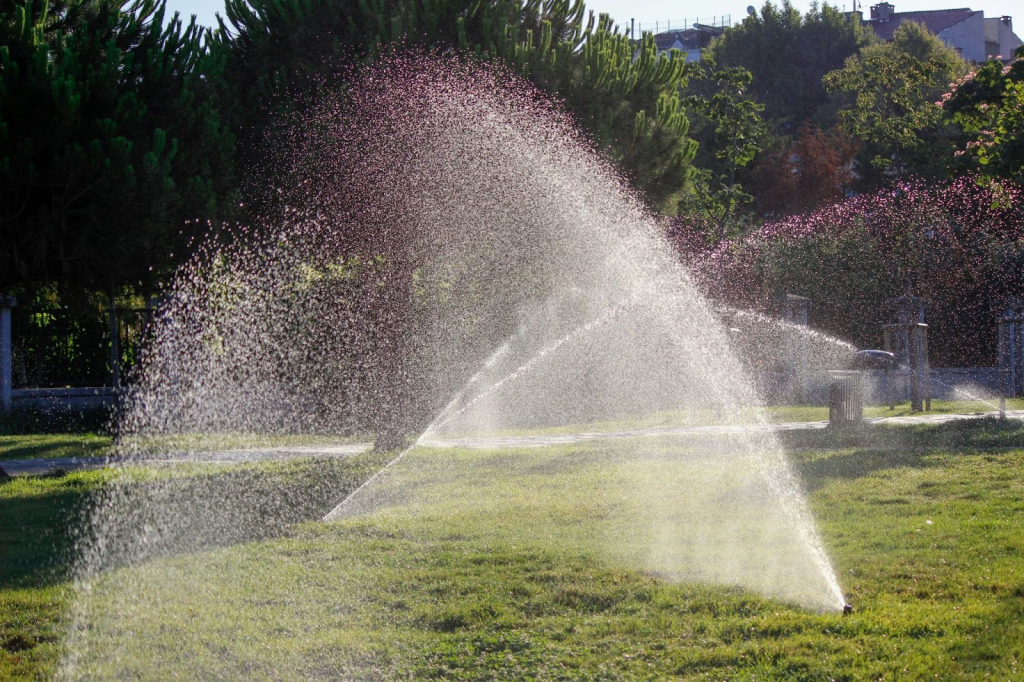
In a region that gets 11 inches of rain per year, irrigation isn’t optional; it’s the most important factor in whether any grass survives. The best-matched grass species in the wrong irrigation setup will still fail.
A properly designed sprinkler system that delivers even coverage, runs in the early morning, and cycles deeply (rather than shallowly and frequently) is as important as your grass selection. Our sprinkler installation and repair team calibrates systems specifically for Idaho’s conditions and the water needs of different grass types.
Choosing the Right Grass for Your Specific Situation
Here’s a quick guide based on common Idaho lawn scenarios:
| Situation | Best Choice |
| Full sun, high traffic, premium look | Kentucky Bluegrass (irrigate well) |
| Full sun, drought/water budget concerns | Turf-type Tall Fescue |
| Partial shade | Fine Fescue blend or Tall Fescue |
| Heavy shade | Fine Fescue mix |
| Quick repair/overseeding | Perennial Ryegrass |
| Low-maintenance, no-mow areas | Fine Fescue or native groundcovers |
| Persistent problem areas | Consider Artificial Turf |
For homes in specific service areas, local microclimate factors matter too. Our teams serving Nampa, Meridian, Boise, and Eagle know the soil and drainage conditions particular to each area.
Frequently Asked Questions
Can I mix different grass species in one lawn?
Yes, and in Idaho it often makes sense. Kentucky bluegrass and perennial ryegrass blends are very common because they complement each other well. Kentucky bluegrass provides rhizome-based recovery and dense coverage, while perennial ryegrass offers quick germination and strong traffic tolerance. Turf-type tall fescue is usually best used as a monostand because its broader blades can look uneven when mixed with finer grasses. Humanity invented lawn aesthetics just to create arguments about grass texture. Remarkable species.
When is the best time to seed a new lawn or overseed in Idaho?
Late August through mid-September is the ideal seeding window for cool-season grasses in the Treasure Valley. Soil temperatures remain warm enough for germination while cooler air temperatures reduce stress on young seedlings. Spring seeding from April to May is the next best option. Summer seeding is generally not recommended because heat stress and inconsistent moisture often kill new grass before it establishes.
My lawn has been the same grass for 20 years and is thinning badly. Should I reseed or start over?
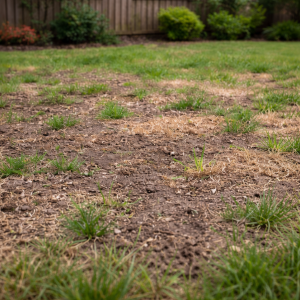
If more than 40 to 50 percent of the lawn is bare or heavily overtaken by weeds, a full renovation is often the more cost-effective solution. That usually means removing the existing lawn and starting fresh. If healthy grass is still reasonably present, core aeration combined with overseeding can restore density without a complete reset. Lawns age like people, except people usually do not get detached once a year. Usually.
Does organic lawn care work for Idaho’s alkaline soil challenges?
Organic lawn care can work very well in Idaho’s alkaline soils, especially over the long term. Synthetic fertilizer salts may gradually worsen high-pH conditions, while organic amendments such as compost and humates help improve soil structure and naturally buffer pH levels. Organic programs typically take longer to show visible results, but the improvements are more sustainable and less dependent on repeated chemical inputs.
I have dogs that are hard on my lawn. Which grass holds up best?
For lawns with heavy pet activity, turf-type tall fescue is usually the best choice. It handles wear better than most cool-season grasses and recovers reasonably well from damage. In areas with intense traffic or frequent urine burn, many homeowners combine natural grass with artificial turf in high-use zones. Civilization reached a point where dogs get custom turf strategies while humans still cannot merge correctly in traffic.
Get the Right Grass Established Right
Choosing the right grass is only the beginning. Proper seedbed preparation, soil amendments, irrigation setup, and establishment care in those first critical weeks determine whether your new or overseeded lawn takes hold or fails. Doing it right the first time costs less than redoing it after a failed establishment.
Idaho Organic Solutions has helped Treasure Valley homeowners establish, restore, and maintain lawns for over 20 years. We know which grasses perform in Idaho’s soil and climate and we have the organic soil health practices to give them the best possible start.
Ready for a lawn that actually works in Idaho? Request your free estimate todayor call 208-884-8986. We serve Nampa, Meridian, Boise, Caldwell, Eagle, Kuna, Star, and the greater Treasure Valley.