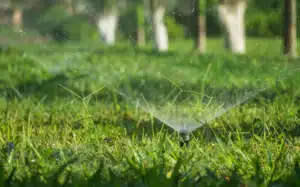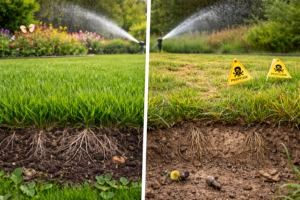
A sprinkler system is one of the best investments you can make in an Idaho lawn. It keeps grass consistently watered through the Treasure Valley’s hot, dry summers without requiring you to drag hoses around the yard. But irrigation systems also develop problems, and those problems can quietly undermine everything else you’re doing for your lawn. A broken head in one zone leaves a dry patch that no amount of fertilizer will fix. A stuck valve wastes hundreds of gallons and drives up your water bill. A poorly calibrated system waters the sidewalk more than the grass.
Most irrigation problems are easier to diagnose and fix than homeowners assume. You don’t need specialized equipment to spot the majority of them. You just need to know what to look for.
This guide walks through the most common sprinkler system issues Idaho homeowners encounter, how to identify them, and how to approach the fix, whether that’s a DIY repair or a call to a professional.
Running Your System Through a Visual Inspection
The most valuable thing you can do for your irrigation system at the start of each season is a full manual inspection. Turn on each zone individually and walk the entire coverage area while it runs. Most problems announce themselves visually if you’re present to observe them.
Do this in early spring before the lawn greens up, and again in midsummer when the system is working hardest. In Idaho, irrigation systems are typically winterized by mid-October and restarted in late March or April, making the spring startup inspection especially important after a season of dormancy, freeze-thaw cycles, and soil movement.
During your zone-by-zone walkthrough, you’re looking for heads that aren’t popping up fully, arcs that seem off, areas of pooling water, heads spraying in the wrong direction, and any part of the lawn that remains visibly dry after a full cycle.
Problem 1: Dry Patches That Won’t Respond to Watering
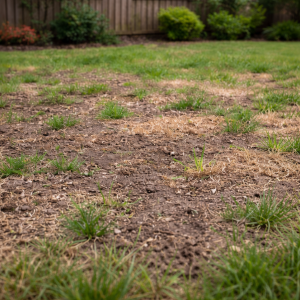
A zone that appears to be running but leaves dry patches behind is one of the most common irrigation complaints. There are several possible causes, and the right diagnosis depends on where the dry patches appear.
If the dry patch is near a sprinkler head: The head may be partially clogged, not rotating properly, or installed at the wrong height. Pop-up heads need to extend fully above the turf surface to spray effectively. If grass has grown over the head housing or surrounding soil has settled, the head may be spraying into the turf instead of over it. Raising or cleaning the head usually resolves this.
If the dry patch is in the center of a zone: This often indicates a pressure problem. Low pressure prevents heads from throwing their full arc, leaving the center of the zone under-watered while the outer edge near the heads receives adequate coverage. Check the pressure at your backflow preventer or system controller.
If the dry patch is large and irregular: A partially broken lateral line (the underground pipe feeding that section of the zone) may be diverting water away from some heads. Run that zone and look for any area where water is bubbling up from the ground or the soil appears unusually wet, which would indicate a pipe break underground.
For persistent dry patches that don’t respond to obvious repairs, our sprinkler installation and repair team can perform a pressure and flow test to identify where the system is losing efficiency.
Problem 2: Sprinkler Heads Not Popping Up
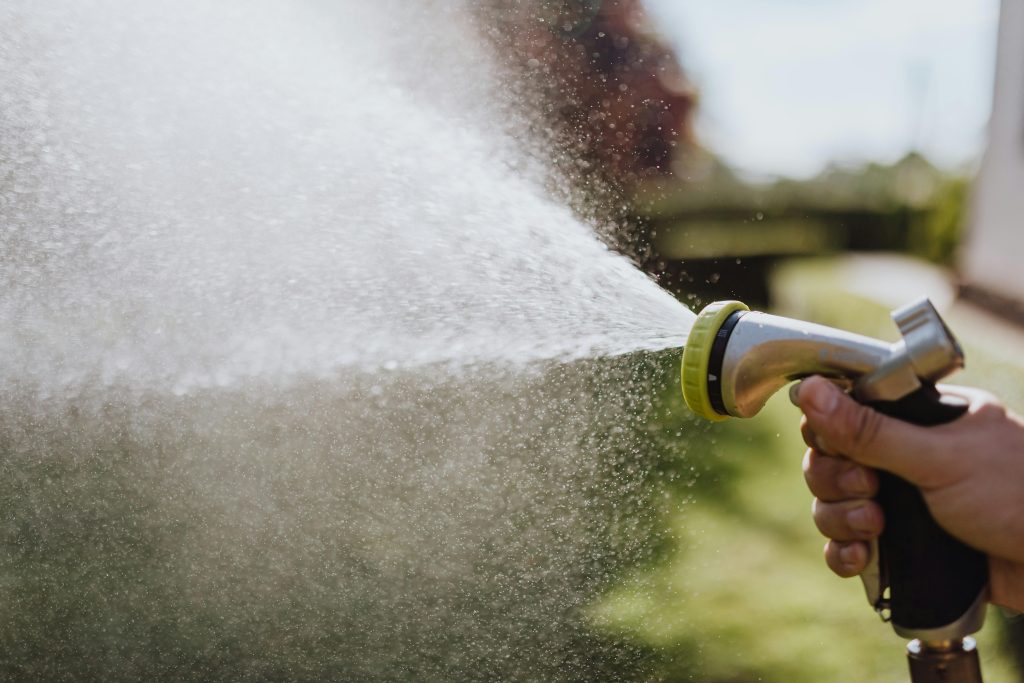
A head that fails to rise fully when its zone activates either isn’t receiving adequate pressure or is physically obstructed.
Start by checking the soil level around the head. Idaho’s clay soils shift during freeze-thaw cycles, and heads that were correctly installed can end up below grade after a few seasons. If the housing is buried, excavate the area around the head and adjust its depth.
Check for debris inside the head. Grass clippings, dirt, and small stones work their way into pop-up heads through the gap around the riser. A head with a clogged filter or obstructed riser will not extend fully. Remove the head from the housing (most unscrew counterclockwise with light hand pressure), rinse the filter under running water, and reinstall.
If the head is clear and at the right depth but still won’t rise, the problem is likely pressure. A zone running too many heads for the available flow will leave some heads under-pressured. This is particularly common in older Idaho irrigation systems where homeowners have added coverage areas to an existing system without accounting for the increased demand.
Problem 3: Heads Spraying in the Wrong Direction or With a Broken Arc
Rotary heads and fixed spray heads can both develop arc and direction problems over time. A head pointing toward the house, driveway, or sidewalk instead of the lawn wastes water and can cause concrete staining from mineral deposits in Idaho’s hard water.
For adjustable arc heads, direction and arc width are controlled by a small adjustment slot on top of the head (most require a flat screwdriver or a proprietary adjustment tool specific to the manufacturer). Hunter and Rain Bird heads, the most common brands in Idaho, both include adjustment instructions in their product documentation.
Fixed spray heads that have physically rotated in the ground, usually due to soil movement or being struck by equipment, need to be physically repositioned. Turn off the zone, excavate slightly around the head housing, and rotate it to the correct orientation before tamping the soil back into place.
If you’re consistently finding that heads are shifting position over multiple seasons, the lateral lines may not be anchored adequately or the soil is unusually unstable. This is worth having a professional evaluate rather than repeatedly repositioning heads.
Problem 4: Low Water Pressure Throughout the System
Pressure problems affect the entire system’s efficiency and are often missed because the system appears to be running normally. Heads are popping up, zones are activating on schedule, but coverage is incomplete because spray arcs are falling short of their designed radius.
In Idaho, the most common causes of system-wide low pressure are seasonal changes in municipal supply pressure, a partially closed main shutoff valve, or a malfunctioning pressure regulator at the backflow preventer.
Start by checking that the main irrigation shutoff valve is fully open. A valve that’s 90 percent open rather than fully open creates significant pressure loss that affects the entire system.
Check the backflow preventer for any visible damage or mineral buildup. Idaho’s hard water deposits calcium carbonate on irrigation components over time, and the backflow preventer is a common accumulation point. If it’s coated in white scale deposits, professional cleaning or replacement may be needed.
If your home has a pressure regulator on the main water supply and it has been in place for 10 or more years, it may be failing and reducing supply pressure to the irrigation system along with everything else in the house.
Zone-specific pressure problems point to the individual zone valve or the lateral lines feeding that zone rather than the main supply.
Problem 5: A Zone That Won’t Turn Off
A zone that continues running after its scheduled time, or runs when the controller shows it should be off, is either a stuck valve or a controller malfunction.
The zone solenoid valve is an electromechanical device that opens when the controller sends a signal and closes when the signal stops. Over time, the diaphragm inside the valve can tear or debris can prevent it from seating properly, keeping the valve partially or fully open even with no signal from the controller.
To confirm the valve is the problem rather than the controller, manually close the valve by turning the flow control screw or handle on the valve body. If this stops the flow, the valve itself is the issue, not the controller. Solenoid valves are relatively inexpensive components, typically in the range of $15 to $40, and replacing the diaphragm kit or the entire solenoid is manageable for mechanically inclined homeowners.
If manually closing the valve doesn’t stop flow, or if closing the valve fully shuts off water to other zones that should be running, the valve box wiring or controller may be involved and professional diagnosis is more efficient than continued DIY troubleshooting.
Problem 6: A Zone That Won’t Turn On
The opposite problem, a zone that fails to activate, usually points to one of three things: a wiring break, a failed solenoid, or a clogged valve.
First check the obvious: confirm the controller is programmed correctly for that zone and that the timer is functioning. Some controllers reset to default programming after power outages, wiping your custom schedule.
Next, test the solenoid with a multimeter. A functioning solenoid should read 20 to 60 ohms of resistance. A reading of zero indicates a short; a reading of infinite resistance indicates an open circuit (broken wire inside the solenoid). Solenoids that fail this test need replacement.
If the solenoid tests correctly but the zone still won’t activate, check the wiring connection at the valve and at the controller. Idaho’s soil movement and freeze-thaw cycles work wire connections loose over time, and a disconnected or corroded wire is a common cause of zone failure.
Valve clogging is less common but occurs in systems drawing from irrigation canals or wells with sediment. A clogged inlet port prevents the valve from opening regardless of signal. Disassembling and flushing the valve resolves this.
Problem 7: Controller or Timer Malfunctions
The controller is the brain of your system, and malfunctions here cause cascading problems across all zones. Common controller issues include:
Incorrect programming after power outages. If your area experiences power interruptions during the season, the controller clock may reset, causing your schedule to run at wrong times or not at all. Invest in a controller with battery backup if this is a recurring issue in your neighborhood.
Failed station outputs. Controllers have individual relay outputs for each zone, and these can fail individually. If one zone consistently fails to activate despite correct programming and a functioning solenoid, the station output on the controller may be burned out. This requires controller replacement or, for some commercial-grade units, a replacement module.
Faulty rain sensors. Most Idaho irrigation systems include a rain sensor that overrides the controller during and after rain events. If the sensor is malfunctioning or improperly positioned, it may be preventing your system from running even during dry periods. Disconnect the sensor temporarily to test whether it’s the cause of unexpected shutdowns.
Modern smart controllers that adjust schedules based on weather data and evapotranspiration rates are worth considering for replacement upgrades. They typically reduce water use by 20 to 50 percent compared to fixed-schedule controllers, which matters significantly during Idaho’s summer water restrictions.
Problem 8: Uneven Coverage and Overwatered Areas
Irrigation inefficiency in one direction is often matched by inefficiency in another. While some areas receive too little water, others receive too much, creating the soggy, fungus-prone patches that encourage lawn disease and waste water.
Overlapping coverage from adjacent zones or adjacent heads is normal in good system design, but excessive overlap from misaimed heads can waterlog sections of the lawn. Check for areas of consistently wet soil or unusually green growth concentrated around specific heads.
Run time calibration is also worth evaluating. The amount of water each zone delivers per hour varies significantly based on head type, pressure, and spacing. Rotary heads deliver water much more slowly than fixed spray heads. Running both types for the same duration in the same zone massively overwatered the spray head area and underwatered the rotary area.
A simple catch cup test, placing empty tuna cans around the lawn during a cycle, lets you measure actual water delivery per zone and calibrate run times accordingly. This is one of the most effective and underutilized tools for improving irrigation efficiency without any equipment investment.
Our sprinkler installation and repair team performs full system audits that include pressure testing, coverage mapping, and run time recommendations calibrated to Idaho’s evapotranspiration rates by season.
Spring Startup and Fall Winterization in Idaho
Two seasonal service points deserve attention beyond the regular in-season maintenance described above.
Spring startup should happen after the last hard freeze risk in your area, typically late March to mid-April in the Treasure Valley. Turn zones on gradually rather than all at once to avoid pressure spikes. Walk each zone during the first run of the season to catch any winter damage before it compounds through the season. Check the backflow preventer for freeze damage, which can include cracked housings or damaged valves.
Fall winterization is not optional in Idaho. Pipes left with water in them through winter freeze and crack, creating expensive damage that isn’t always visible until spring startup. Blow out the system with compressed air before the first hard freeze, which typically arrives in October in the Nampa and Meridian areas. Professional winterization is recommended because improper compressed air technique can damage heads, valves, and pipe connections.

When to Call a Professional
Most of the problems covered above are diagnosable through a patient visual inspection and basic testing. The repair itself is often simple once you know what’s wrong. A few situations, however, warrant professional involvement rather than extended DIY troubleshooting.
Call a professional when you have a suspected underground pipe break. Locating the break requires pressure testing equipment and experience reading soil moisture patterns. Digging in the wrong spot to find a break wastes time and damages the lawn.
Call a professional when electrical troubleshooting leads into the controller wiring. Irrigation wiring operates at low voltage, but diagnosing wiring problems across a complex system requires a multimeter, wire tracing equipment, and experience with irrigation controller logic.
Call a professional when you’re adding coverage to an existing system. Adding new zones or heads without calculating the system’s flow capacity is one of the most common causes of chronic pressure problems in Idaho irrigation systems.
Our landscaping and sprinkler team handles everything from single-head repairs to complete system redesigns for Treasure Valley properties.
Frequently Asked Questions
How often should a sprinkler system be inspected?
Once per year, ideally in spring. Older systems or those with past issues may need a mid-season check. Regular inspections prevent water waste and lawn damage.
Can my irrigation system cause a high water bill without visible leaks?
Yes. Slow leaks or valves that don’t fully close can waste water without obvious signs. A pressure test is the best way to identify the issue.
How do I know if I have the right sprinkler heads?
It depends on zone size and pressure. Spray heads suit small areas, while rotary heads work better for larger spaces. Mixed head types in one zone cause inefficiency. A professional audit can confirm proper setup.
Why is there white buildup on sprinkler heads?
Hard water leaves calcium deposits. It’s mostly cosmetic but can affect performance over time. Clean with diluted vinegar and replace filters yearly.
Can drip irrigation be added to the same controller?
Yes. Drip zones can share a controller with lawn zones but need longer run times and proper pressure regulation to avoid damage.
Get Your Irrigation System Running Right This Season
A well-functioning sprinkler system is foundational to everything else your lawn needs. Inconsistent water delivery undermines fertilization, overseeding, and weed control programs regardless of how well those are executed. Getting your irrigation system dialed in is one of the highest-leverage improvements you can make for your lawn’s overall health.
Idaho Organic Solutions provides professional sprinkler installation, repair, and seasonal service throughout Nampa, Meridian, Boise, Eagle, Caldwell, Kuna, Star, and Middleton.
Call us at 208-884-8986 or email office@idahoorganicsolutions.com to schedule your irrigation inspection or repair.
Serving Nampa, Meridian, Boise, Eagle, Caldwell, Kuna, Star, and Middleton, Idaho.