If your dog spends half its life rolling around in the backyard, or your cat treats the lawn as its personal territory, the products going onto your grass matter a lot more than most homeowners realize. Lawn care chemicals that are safe for turf can be seriously harmful to the animals that live on it. And in Idaho, where we’re outdoors with our pets for much of the year, the risk of exposure is higher than in climates where people stay inside more.
The good news is that keeping a healthy, attractive lawn and keeping your pets safe are not competing goals. You just need to know what to look for, what to avoid, and how to think about lawn care differently when animals are part of the picture.
This guide covers the specific risks of conventional lawn products, what pet-safe alternatives actually work in Idaho conditions, and how to build a lawn care routine that protects the animals that share your yard.
Why Pets Face Higher Exposure Risk Than Humans
Before getting into specific products, it helps to understand why pets are more vulnerable to lawn chemical exposure than adult humans.
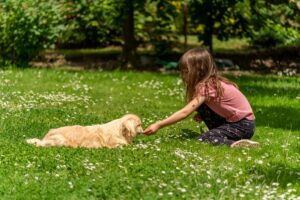
Pets spend far more time in direct contact with treated grass than people do. Dogs sniff the ground constantly, pressing their noses directly into treated turf. They lick their paws after walking across the lawn. They roll, dig, and lie directly on the grass surface. Cats groom themselves meticulously after coming inside, ingesting anything that transferred to their coats from the lawn.
Body weight matters too. A 20-pound dog receives a much higher dose per pound of body weight from the same surface contact as a 180-pound adult. Compounds that fall well below a harmful threshold for humans can reach significant concentrations in smaller animals with the same exposure.
Paw pads are also highly permeable. The soft tissue between a dog’s toes absorbs chemicals far more readily than human skin, meaning compounds applied to lawns enter the bloodstream of animals walking across treated surfaces even if the animal never ingests anything directly.
For cats, add grooming to the equation. A cat that walks across a freshly treated lawn and then grooms its paws has directly ingested whatever was on that grass, concentrated through the grooming process.
None of this means every lawn product will harm your pet. It means the margin of safety is smaller than many people assume, and choosing the right products is worth the effort.
Conventional Lawn Products That Pose the Highest Risk
Not all synthetic lawn products carry the same risk profile for pets. Some are relatively low-concern with normal handling. Others have well-documented histories of animal health problems. These categories deserve the most attention.
Synthetic Herbicides
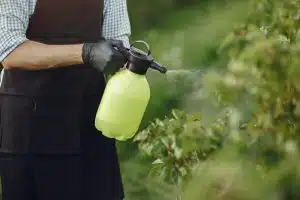
Broadleaf herbicides are among the most commonly used lawn products and among the most researched from a pet safety standpoint. The active ingredient 2,4-D appears in hundreds of weed control products and has been associated with increased lymphoma risk in dogs in multiple epidemiological studies. Pets in homes with treated lawns show detectable urine levels of 2,4-D days after application, even following the typical re-entry waiting periods printed on labels.
Dicamba and MCPP, which commonly appear alongside 2,4-D in combination herbicide products, carry similar concerns. The challenge with these products is that re-entry intervals on labels are set for human safety standards, not for animals with much higher surface contact and smaller body mass.
This doesn’t mean a single application will harm your dog. What the research suggests is that cumulative exposure over multiple seasons, from multiple products, carries meaningful health risk. Reducing or eliminating synthetic herbicide use protects against that accumulated burden.
Our weed control program uses approaches specifically selected to minimize chemical load for households with children and pets.
Synthetic Pesticides and Insecticides
Organophosphate and carbamate insecticides are highly toxic to dogs and cats and should never be used on lawns where pets have access. These classes of chemicals, which include products like chlorpyrifos, are increasingly restricted but still available in some formulations. Even products that have been discontinued commercially sometimes show up in older product stockpiles.
Pyrethroids (synthetic versions of naturally occurring pyrethrin) are widely used and marketed as relatively safe for mammals. They are acutely toxic to cats, however, even in small doses. A cat that walks across a lawn treated with a pyrethroid insecticide and then grooms can ingest enough to cause serious neurological symptoms. If you have cats, pyrethroids on the lawn present a real risk.
Granular Fertilizers and the Salt Problem
Synthetic granular fertilizers are often assumed to be low risk for pets because they’re nutrients, not pesticides. The concern is different: the high soluble salt content of synthetic fertilizers can cause gastrointestinal irritation if ingested, and concentrated granules sitting on the turf surface before irrigation can attract dogs that mouth or eat them.
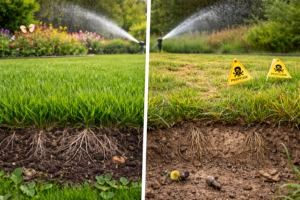
More practically, the salt load from synthetic fertilizers damages beneficial soil microbes over time, creating the compacted, biology-depleted soil conditions that make lawns harder to maintain and more dependent on chemical inputs. For pet-owning households, this fertilizer-to-soil damage connection matters because healthier soil grows grass that’s more resilient, thicker, and better at crowding out the weeds that would otherwise require herbicide applications.
What to Look for in Pet-Safe Lawn Products
When evaluating any lawn product for pet safety, these are the questions worth asking.
Is the active ingredient derived from natural sources? Products based on iron, citric acid, acetic acid (vinegar), corn gluten, essential oils, or microbial compounds generally pose much lower risk to pets than synthetically manufactured molecules with no biological precedent.
Does the product have a meaningful re-entry restriction? Pet-safe products should either have no re-entry interval at all or carry a very short one. Any product requiring 24 to 72 hours before pets can safely use the lawn should be evaluated carefully.
Is there transparency about all ingredients? Some “natural” products still contain surfactants, dyes, or preservative compounds that can cause skin irritation or gastrointestinal upset. Fully disclosed ingredient lists are a better sign than vague “proprietary blend” language.
Has the product been reviewed by the ASPCA Animal Poison Control Center or similar bodies? This isn’t a guarantee, but some organic fertilizer and lawn care brands have specifically sought evaluation from veterinary toxicology organizations. That level of scrutiny is worth noting.
Organic Lawn Care Practices That Are Pet-Safe
Shifting to an organic lawn care approach doesn’t mean accepting a worse-looking lawn or working harder. It means building your lawn program around inputs that support long-term soil health while eliminating the compounds that create the most meaningful risk for your animals.
Organic Fertilization
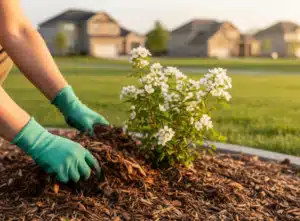
Compost-based fertilizers, feather meal, blood meal, and kelp meal provide all the nitrogen, phosphorus, potassium, and micronutrients your Idaho lawn needs without the salt load or chemical additives of synthetic products. Most of these materials are either non-toxic to pets or toxic only in very large ingested quantities, not from surface contact.
The smell of some organic fertilizers, particularly blood meal and feather meal, can attract dogs to dig in treated areas. Watering them in immediately after application minimizes this. Compost topdressings are essentially inert from a toxicity standpoint and carry no meaningful risk.
Our fertilizing services focus on organic inputs specifically because they deliver results for Idaho’s alkaline soils while keeping the yard safe for every member of the household.
Iron-Based Weed Control
Iron-based herbicides (typically ferrous sulfate or chelated iron products) kill broadleaf weeds by exploiting the different metabolic pathways in dicot versus monocot plants. They’re remarkably effective on dandelions, clover, and many common Idaho lawn weeds, and they carry virtually no toxicity risk for dogs or cats at typical application rates.
These products also deliver a secondary benefit in Idaho’s iron-deficient alkaline soils: they help correct the iron chlorosis (yellowing) that’s extremely common in Treasure Valley lawns. You’re treating weeds and improving turf color at the same time.
Corn Gluten Meal as Pre-Emergent Weed Control
Corn gluten meal applied in early spring, when soil temperatures reach 50 to 55 degrees Fahrenheit, inhibits the root formation of germinating weed seeds, including crabgrass. It also provides slow-release nitrogen to feed the existing lawn.
Corn gluten is derived from corn processing and is essentially non-toxic to pets. Dogs may find the smell interesting and attempt to eat it, which is undesirable from a lawn care standpoint but poses no meaningful health risk other than potential digestive upset from eating a large quantity of any dry organic material.
Beneficial Nematodes for Grub Control
If you’re dealing with lawn damage from grubs, Japanese beetle larvae, or other soil-dwelling pests, beneficial nematodes are a genuinely pet-safe biological control. These microscopic organisms seek out insect larvae in the soil and parasitize them, dramatically reducing pest populations without any chemical application.
Beneficial nematodes are completely harmless to mammals, birds, and earthworms. They require some care in application, as UV light kills them quickly, but they represent the gold standard of pet-safe insect control for lawns.
Proper Mowing and Irrigation Practices
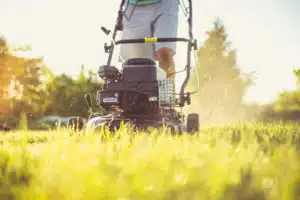
Some of the most effective pet-safe lawn care isn’t about what you apply. A lawn mowed at the correct height (3 to 4 inches for most Idaho cool-season grasses) develops deeper roots and shades the soil surface, naturally reducing weed germination without herbicide. Deep, infrequent irrigation encourages the same deep root development while making conditions less favorable for surface-dwelling pests.
Consistent mowing and smart irrigation form the foundation of a lawn that needs fewer chemical interventions of any kind. Our lawn care team manages these fundamentals as part of our complete service programs.
Practical Steps for Pet-Owning Idaho Homeowners
Even if you’re not ready to switch entirely to organic lawn care, these practices reduce your pets’ exposure risk immediately.
Keep pets inside during and immediately after any lawn chemical application, regardless of what the label’s re-entry interval says. The label interval is designed for adult humans, not for animals with paw-to-mouth exposure pathways.
Wipe down your dog’s paws when they come inside after spending time on a recently treated lawn. This removes surface residue before grooming can concentrate it.
Water in granular products thoroughly before allowing pet access. Getting granules off the surface and into the soil eliminates the most direct exposure pathway.
Ask your lawn service provider what products they’re using and request the Safety Data Sheets. Any reputable company should be able to provide this information without hesitation. If you get vague answers, that’s informative.
Consider a buffer period even with organic products. While organic applications carry much lower risk, giving any new application a day to settle and water in before pets resume normal lawn use is a reasonable precaution.
Keep the Treasure Valley Veterinary Emergency and ASPCA Animal Poison Control (888-426-4435) numbers accessible. If you suspect your pet has had significant exposure to any lawn product, having those numbers on hand matters.
Making the Full Transition: What the Process Looks Like
Many Idaho pet owners want to move entirely away from synthetic lawn care but aren’t sure how to get from where they are to a fully organic program. The transition is straightforward.
Start with a soil test. Knowing your Idaho soil’s specific pH, organic matter content, and nutrient levels tells you exactly what your organic program needs to accomplish and in what order. University of Idaho Extension offers affordable testing.
Replace synthetic fertilizers with organic equivalents first. This is the easiest switch and the one that most immediately reduces the chemical load your pets encounter. Organic fertilizers are available at garden centers and through lawn care providers.
Tackle weed control second. Shift to iron-based products for broadleaf weeds and corn gluten for pre-emergent crabgrass control. Accept that weed suppression in the first year may be slightly less complete than with synthetics, and focus on building the thick turf that eventually crowds out most weeds on its own.
Address soil compaction with annual aeration. Compacted soil is the root cause of most Idaho lawn problems. Aerating annually, ideally in fall, combined with compost topdressing, builds the soil biology that makes organic programs more and more effective with each passing season.
Our lawn care program is designed exactly for this kind of systematic transition. We build a schedule that addresses Idaho’s specific soil conditions while reducing chemical exposure for your family and pets throughout the process.
Frequently Asked Questions
How long should pets stay off the lawn after treatment?
Most synthetic treatments require 24 to 72 hours. For pets, add at least another day due to higher exposure. Watering the lawn before re-entry helps reduce residue. Organic treatments are usually safe once dry or within a few hours.
Is organic lawn care necessary if my dog eats grass?
Yes. Grass-eating dogs ingest whatever is on the lawn. Even dried chemical residues can reactivate with moisture and be consumed. Organic care reduces that risk.
Are fertilizer spikes safer than granular products?
No. Spikes can attract digging and contain concentrated chemicals. Granular organic fertilizers, watered into the soil, are generally safer for homes with pets.
Can vinegar be used as a pet-safe weed killer?
Household vinegar is weak and may harm grass. Strong horticultural vinegar is more effective but can irritate skin and eyes. Iron-based herbicides are a safer and more effective alternative.
How can I tell if my lawn service is pet-safe?
Ask for product names and Safety Data Sheets. Trustworthy companies will provide them and explain their choices. If they avoid the question, that’s your cue to move on.
Ready for a Lawn That’s Safe for Every Member of Your Family?
Your pets deserve to enjoy your yard as much as you do, without the risk that comes from conventional chemical lawn care. Idaho Organic Solutions has been helping Treasure Valley homeowners build healthy, beautiful lawns using organic methods that are safe for kids and pets for more than 20 years.
We serve Nampa, Meridian, Boise, Eagle, Caldwell, Kuna, Star, and Middleton with lawn programs designed from the ground up for Idaho’s soil conditions.
Call us at 208-884-8986 or email office@idahoorganicsolutions.com to schedule your free lawn assessment.
Serving Nampa, Meridian, Boise, Eagle, Caldwell, Kuna, Star, and Middleton, Idaho.