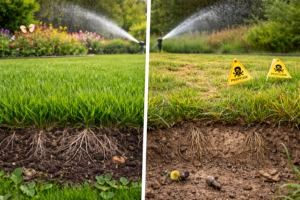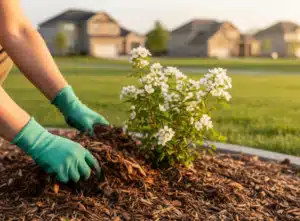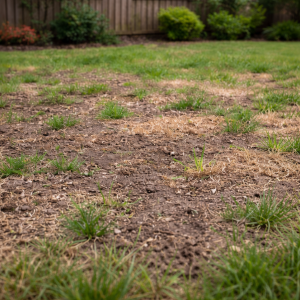
Most chemical lawn care schedules ignore the growing season and just apply the same products on the same schedule regardless of what’s actually happening in your soil. Not for organic lawn care in Nampa!
Organic care follows the calendar closely: spring growth, summer stress, and fall recovery – everything’s taken into account here at Organic Solutions to give you the most resilient, low-maintenance lawn possible. Here’s how it works..
Spring (April–May): Foundation Building
Spring is when organic lawn programs start making real progress. The soil is warming, roots are beginning to grow actively, and grass is waking up from winter dormancy. This is when you do the foundational work that determines how healthy your lawn will be through summer stress.
| Task | Timing | Why It Matters | Cost |
| Soil Testing | April | Reveals pH, nutrient levels, and organic matter. In Nampa’s alkaline soil, pH testing is critical to determine if you need sulfur or other amendments. | $65–$100 (sometimes waived with professional treatment) |
| Core Aeration | Late April–Early May | Opens compacted clay soil, creating pathways for water, air, and nutrients to reach roots. Essential after winter weight and spring runoff. | Typically $150–$200 |
| First Fertilizer Application | When soil reaches 45–50°F | Temperature-based timing is critical. Applying before this wastes fertilizer since microbial activity hasn’t started. | Included in program |
Spring Results Checklist (By Late May)
Your lawn should show:
- Noticeably thicker growth
- Healthier color
- Fewer bare patches
If you’re not seeing improvement by end of May, your program doesn’t match your soil’s actual needs – get a reassessment.
Early Summer (June): Sustained Growth
The challenge is maintaining spring momentum while heat and reduced rainfall create stress.
| Task | Details | Target |
| Watering Strategy | Water deeply and infrequently. Apply early morning to minimize evaporation. Deep, infrequent watering forces roots deeper. | 1–1.5 inches per week |
| Second Fertilizer Application | Apply in late June to support continued growth. Leave clippings on lawn to return nutrients. | Late June |
| Mowing Height | Keep at 3 inches or slightly higher. Longer grass is more heat tolerant. | 3+ inches |
| Pest Monitoring | June is when billbug adults lay eggs and grub activity becomes visible. A thick, healthy lawn resists damage naturally. Watch but hold treatment unless pressure is heavy. | Monitor only |
Mid-Summer (July–August): Stress Management
Mid-summer is survival mode. You’re keeping grass alive and healthy through heat stress, not forcing growth.
| Task | Action | Why It Matters |
| Increase Watering | Increase to 2 inches per week if temps exceed 85°F. Use finger test at 3–4 inches deep to verify soil moisture. | Don’t rely on sprinkler timing alone – confirm water reaches the root zone. |
| Skip Fertilizer | Avoid fertilizer unless grass shows obvious nutrient deficiency. | Fertilizing stressed grass is counterproductive – it promotes soft growth that’s heat-sensitive and increases water demands. |
| Adjust Mowing Height | Increase to 4 inches if possible. | Taller grass shades soil and reduces water loss. |
| Pest Control | Address billbug or grub populations if heavy. Use beneficial nematodes or insecticidal soaps. | Early intervention prevents major damage in fall. |
Fall (September–October): Recovery & Preparation
Fall is when your organic program rebuilds strength for next year. Cool-season grasses grow actively again as temperatures drop. This is the second-best growing season in Nampa, after spring.
| Task | Timing | Details | Priority |
| Overseeding | Late August–September | Fills bare spots and thickens lawn. Cool weather and natural moisture give seed the best chance to establish. Keep soil moist 10–14 days until germination. | High |
| Fall Aeration | Late September–Early October | Opens compacted soil, creates channels for amendments. Supports root growth through fall and winter. | Medium |
| Third Fertilizer Application | Early September | Supports recovery from summer stress and continued growth. | High |
| Fourth Fertilizer Application | Late October–Early November | Builds root carbohydrate reserves for winter dormancy. Sets up strong spring growth. | High |
Important Timing Note
Do overseeding first, then aeration – or space them several weeks apart. Doing both simultaneously means aeration removes newly planted seed (wasteful).
Real-World Seasonal Timeline for Nampa
Here’s what an actual organic lawn care calendar looks like for a typical Treasure Valley property:
| Month | Tasks |
| April | Soil test, aeration, first fertilizer, compost topdressing |
| May | Overseeding if needed, corn gluten meal, second fertilizer if using split spring applications |
| June | Regular watering, second fertilizer, mowing at 3 inches, pest monitoring |
| July–August | Increased watering, reduced mowing frequency, possibly grub/billbug treatment |
| Late August | Begin fall transition, second corn gluten application if needed |
| September | Third fertilizer, overseeding, possible fall aeration |
| October | Fourth fertilizer, final compost application, leaf management |
| November–March | Dormancy, minimal maintenance, planning for next year |
Why Temperature-Based Timing Matters
Soil temperature determines when microbial activity and grass growth actually begin. Applying fertilizer before soil reaches 45–50°F wastes product because microbes aren’t active yet. Calendar dates vary by year depending on spring weather.
Temperature-based timing ensures you’re applying treatments when they’ll actually work instead of guessing by the calendar.
Spring vs. Fall Aeration: Which Should You Choose?
Both work, but each has advantages:
Spring aeration prepares the lawn for summer stress and helps remediate winter compaction damage.
Fall aeration supports root growth throughout fall and winter, setting up strong spring growth.
Choose based on your property’s biggest need: if summer stress is the concern, aerate in spring; if you want to maximize root development before winter dormancy, choose fall. Many properties benefit from both.
FAQ
Why avoid fertilizing during July–August heat?
Fertilizing stressed grass during peak heat is counterproductive. Fertilizer promotes growth flushes, and new soft growth is heat-sensitive and increases water demands exactly when water is scarce. Mid-summer is maintenance mode – keep grass alive and healthy through heat stress, not forcing growth.
Can I overseed in spring or only fall?
Fall (late August–September) is the best time for Nampa’s cool-season lawns. Soil is still warm enough for germination, cooler air temperatures reduce heat stress on seedlings, and natural fall moisture helps establish seed. Roots develop throughout fall and winter, creating strong plants by spring. Spring overseeding is possible but less ideal because seedlings face immediate summer heat stress.
What does “don’t do aeration and overseeding simultaneously” mean?
If you overseed first, then aerate, the aeration removes some of your newly planted seed – wasteful. If you aerate first, then overseed, new seed falls into the aeration holes and gets excellent soil contact. Plan the order (typically overseed first, then aerate, or do one in early fall and one in late fall) to maximize seed establishment.
Why is temperature-based timing so important for fertilizer applications?
Soil temperature determines when microbial activity actually begins. Applying fertilizer before soil reaches 45–50°F wastes product because the microbes that break down organic fertilizer aren’t active yet. Using soil temperature as your guide – not calendar dates – ensures applications work when the soil is ready.
What if my lawn doesn’t show improvement by late May?
This usually means your program doesn’t match your soil’s actual condition. Common issues: insufficient aeration for clay-heavy soil, pH not adjusted to address nutrient lockup, or watering not reaching the root zone. Get a soil reassessment or consult with a professional to adjust your approach.
Ready to Start?
Understanding the seasonal rhythm is the key to organic lawn success in Nampa. Every property is different – your soil pH, clay content, sun exposure, and starting condition affect the exact timeline.
Get a custom seasonal plan tailored to your specific Nampa property from Organic Solutions. We’ll assess your soil and create a timeline that works with your lawn’s natural growing cycles.
Call Organic Solutions! Inc.: 208-884-8986